
By Devin Jones January 19, 2026
There’s a special kind of thrill in spotting vintage cameras tucked between brass candlesticks, mismatched teacups, and old postcards in a Montreal bric-à-brac stall. These markets and secondhand corners don’t just sell objects—they sell stories.
A scuffed leather case might hide a perfectly usable 35mm body. A dusty box labeled “electronics” might contain a classic prime lens worth far more than the handwritten sticker price.
And because bric-à-brac shopping is built on variety and surprise, you never know whether you’ll walk out with a budget-friendly point-and-shoot or a collectible rangefinder that makes film photographers weak in the knees.
What makes this city especially rewarding is the mix of cultures, eras, and neighborhoods. You’ll find sellers who specialize in estate clear-outs, vendors who know every detail of a lens mount, and casual stallholders who simply want to move inventory.
That diversity creates opportunity—especially for shoppers who can do quick inspections, negotiate politely, and recognize what’s repairable.
This guide is built to help you confidently find, evaluate, buy, restore, and actually use vintage cameras discovered in Montreal bric-à-brac, while keeping things easy to read and practical for real weekends and real budgets.
Why Montreal Bric-à-Brac Is a Goldmine for Vintage Cameras
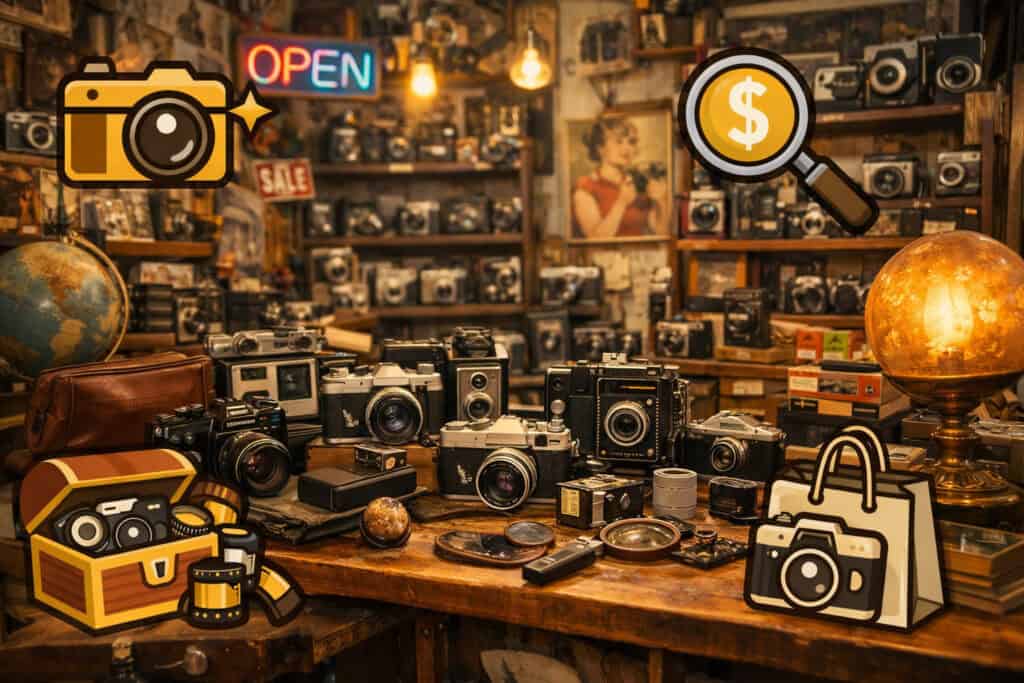
A bric-à-brac scene works differently than a dedicated camera shop. Camera shops price based on testing, demand, and condition. Bric-à-brac vendors price based on space, speed, and what they believe the average shopper will pay.
That mismatch is exactly why vintage cameras show up at surprisingly reasonable prices. The city’s strong collector culture also means a steady flow of objects from downsizing households, estate sales, studio clean-outs, and hobbyists rotating their gear.
When those items land in a mixed-goods market, they sometimes lose their “camera collectible” label and become just another item on a crowded table.
Another reason the hunt is so productive: vintage cameras are durable, long-lived tools. Many models were built to survive professional use, travel, and decades of storage.
Even cameras that look rough can be revived with basic cleaning, replacement light seals, or a routine service. That matters because bric-à-brac finds are often “untested,” and the best buyers are the ones who can separate cosmetic wear from mechanical failure.
Finally, bric-à-brac shopping rewards curiosity. The person who opens cases, checks battery compartments, and looks through viewfinders has an edge. Over time, you’ll start recognizing brand shapes, lens rings, and era-specific design cues from a few feet away—turning a chaotic market into a very searchable landscape for vintage cameras.
The Bric-à-Brac Mindset: How to Shop Like a Camera Hunter
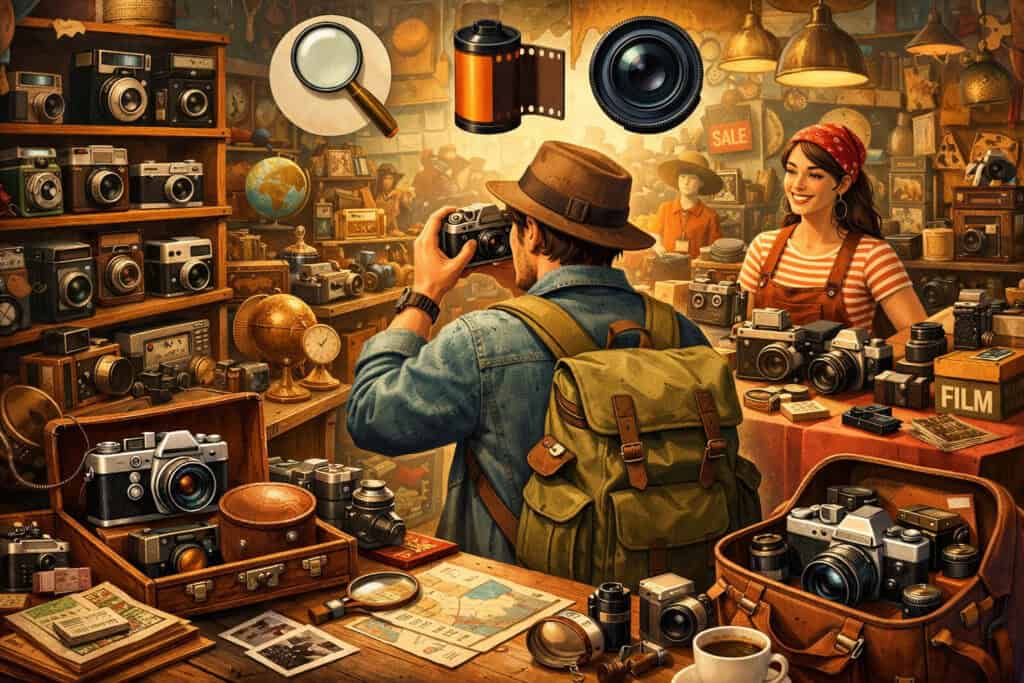
To consistently score vintage cameras, you need a mindset that balances speed with patience. Speed matters because good items get picked up quickly. Patience matters because the best finds rarely appear right at the front of a table, perfectly lit, and labeled correctly. The bric-à-brac advantage comes from your willingness to do small, careful checks that most shoppers skip.
Start by treating every stall like a “maybe.” Scan for camera cases, lens caps, old straps, flashes, and film boxes—accessories are often the clue that vintage cameras are nearby.
If you see photography items, ask if there are “any more camera things under the table” or “in a box behind the counter.” Sellers frequently store fragile items away from the crowd. If the vendor doesn’t specialize in cameras, they may not display them prominently.
Also, accept that “untested” is normal in bric-à-brac. Your goal isn’t to avoid untested gear—it’s to price it correctly. You’re buying probability. A clean battery chamber and smooth winding lever increases probability.
Fungus haze in a lens lowers it. When you adopt that probabilistic thinking, negotiations become calm and rational, and you’ll build a consistent track record of bringing home vintage cameras that actually work.
When and Where the Best Finds Appear (Timing, Seasonality, and Patterns)

The bric-à-brac cycle has rhythms. Weekends are obvious, but the best timing is more specific. Early arrival often gets you first pick, especially at busy flea markets. Late-day visits can produce better prices because sellers don’t want to pack up fragile gear.
In indoor markets, mid-afternoon can be a sweet spot: the rush slows, vendors are more willing to chat, and you can inspect vintage cameras without someone hovering over your shoulder.
Seasonality matters too. Spring and early summer often bring more household clean-outs and moving-related sales, which can translate into cameras resurfacing. Cooler months can be great for indoor flea markets because foot traffic concentrates, and vendors bring more inventory to fill stalls year-round.
Some sellers rotate stock on predictable schedules—every couple of weeks, or after they buy a new estate lot. If you revisit the same market regularly, you’ll start noticing which booths refresh most often and which ones are worth checking every single time for vintage cameras.
One more pattern: cameras often appear in “mixed tech” piles. A bric-à-brac vendor may group old radios, VCRs, camcorders, and cameras together. Don’t ignore those piles. Even if the camera body is basic, the lens attached might be the prize. This is how patient browsing turns into repeat wins for vintage cameras.
The Most Reliable Places to Find Vintage Cameras in Montreal Bric-à-Brac
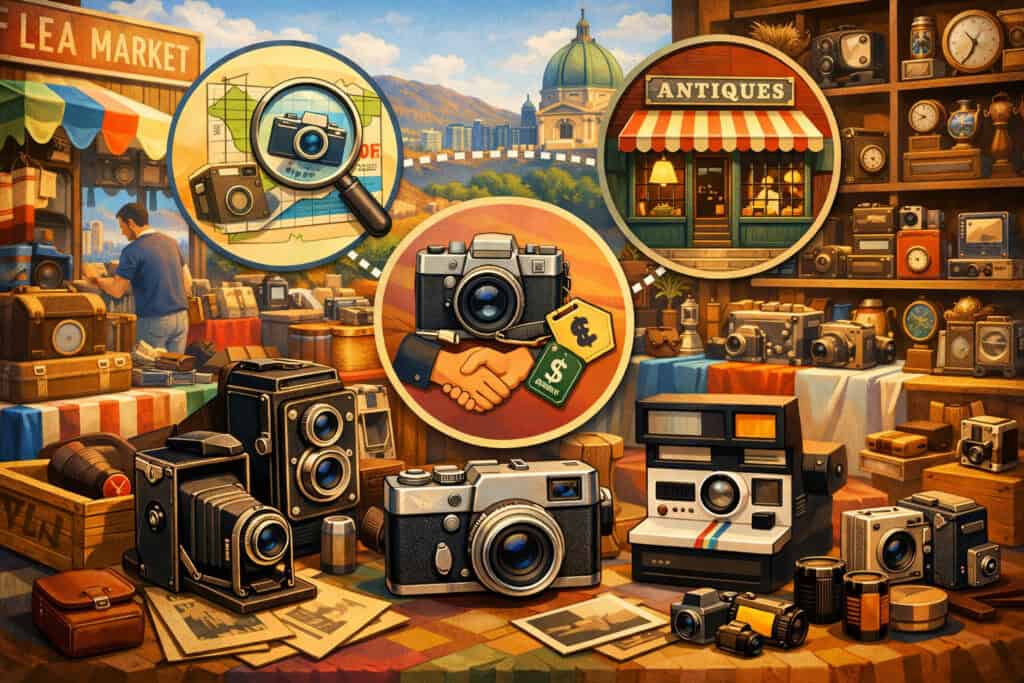
There are many secondhand options across the city, but a few stand out for repeatable camera-hunting potential. A major anchor is Marché aux Puces Saint-Michel, an indoor flea market known for antiques, collectibles, and year-round browsing—exactly the kind of environment where vintage cameras show up regularly.
The market is commonly listed as operating on Friday, Saturday, and Sunday, making it easy to build a routine around weekend hunts.
Beyond that, “bric-à-brac” also includes thrift stores, antique corridors, pop-up bazaars, and estate-sale style vendors that appear in community events. Lists of notable flea markets and secondhand shopping options can help you plan a route, especially if you’re mapping a full-day hunt.
The key is not treating this like a single location strategy. The best hunters combine one dependable flea market with a rotating set of smaller stops.
That variety increases your odds because vintage cameras enter the secondhand ecosystem in unpredictable ways. One week, it’s an estate batch. Another week, it’s a hobbyist downsizing. Your strategy should be designed to catch both.
Marché aux Puces Saint-Michel: How to Hunt It Efficiently for Vintage Cameras
If you want the highest-probability single stop for vintage cameras, Marché aux Puces Saint-Michel is a practical starting point. It’s widely described as an iconic indoor flea market offering antiques and collectibles, and it runs through the weekend, which aligns perfectly with photography hobby time.
To hunt it efficiently, do a fast first lap. Your first lap is not for deep inspection—it’s to identify which stalls have any photo-related items. Look for camera straps, flashes, filters, film developing reels, old photo albums, lens pouches, or even branded boxes.
Mark those stalls mentally. On your second lap, do the detailed checks. This two-pass system prevents you from spending twenty minutes on a mediocre camera while someone else finds the best vintage cameras two aisles away.
Also, be prepared for variety. You might find classic 35mm SLR bodies, compact point-and-shoot film cameras, older digital compacts that are now “vintage” by style, and medium-format gear that slips into the market when someone sells off a collection.
If you build rapport with a vendor, ask them to keep an eye out for cameras in future lots. Many sellers are happy to do it because cameras are easy for them to resell when they have a known buyer.
Thrift Stores, Estate Clear-Outs, and Pop-Ups: The “Hidden Lane” of Bric-à-Brac Finds
Flea markets are the obvious route. The less obvious route is the broader bric-à-brac ecosystem: thrift racks, charity shops, neighborhood bazaars, community pop-ups, and estate-style vendors who sell household contents rather than curated collectibles.
These places can be even better for vintage cameras because pricing may be less informed, and inventory can be more random.
In these environments, your advantage comes from recognizing partial signals. A single lens in a glass cabinet might imply a camera body somewhere else. A camera manual in a book bin can be a clue that the camera itself is nearby.
Even empty film canisters might suggest a photography household donation. The more signals you learn, the more quickly you’ll locate vintage cameras without needing a perfectly organized camera section.
This is also where negotiation can feel friendlier. Smaller pop-ups often have sellers who simply want items gone. If you find a camera with missing parts, corrosion, or unknown functionality, you can calmly explain the risk and offer a fair price.
The goal isn’t to “win” a negotiation—it’s to price the uncertainty correctly so you can afford repairs or accept the possibility of a display-only piece. Over time, these smaller bric-à-brac sources become the places where your most surprising vintage cameras appear.
A Practical Inspection Checklist for Vintage Cameras (Fast, Non-Technical, Effective)
Bric-à-brac shopping doesn’t give you an hour per item. You need a fast checklist that catches major deal-breakers without requiring tools. Start with the lens: look through it toward a bright surface.
Mild dust is normal. Haze, web-like fungus, or heavy scratches reduce value and usability. Then check the aperture blades by moving the aperture ring (if accessible) and looking for oil or sluggish movement. Clean, snappy blades are a positive sign for vintage cameras.
Next, check the body mechanics. For an SLR, advance the lever and fire the shutter at multiple speeds if possible. You’re listening for consistency and watching for sticky behavior. Open the film door: examine light seals (crumbly foam is common and replaceable).
Check the battery compartment for corrosion—this is one of the biggest “walk away or price very low” indicators. For rangefinders, check that focusing moves smoothly and the viewfinder isn’t severely hazed.
Finally, assess completeness: does it have a cap, case, strap lugs, battery door, and functioning rewind? Missing caps are common and not fatal. Missing battery doors or broken hinges are more serious.
Your goal is to quickly label each item as: (1) ready to shoot, (2) needs minor work, or (3) parts/display. This simple system makes you far more consistent at buying vintage cameras that match your risk tolerance.
Common Problems in Bric-à-Brac Vintage Cameras and What’s Actually Fixable
Many bric-à-brac vintage cameras fail in predictable ways. The good news: several common problems are fixable, and knowing which ones can be solved cheaply gives you a huge edge.
Light seal decay is extremely common in older film cameras. It looks messy—sticky foam or crumbly black residue—but it’s typically repairable with inexpensive kits or careful DIY replacement.
Stuck shutters can happen from old lubricants; sometimes gentle exercise frees them, but often it requires professional servicing. Corroded battery compartments are a bigger risk. Light surface corrosion can be cleaned, but severe corrosion can break electrical connections and make metering unreliable.
Lenses frequently show dust, which is usually fine. Fungus is the riskier one because it can etch coatings. Mild fungus may be cleanable, but heavy fungus often leaves permanent marks.
Viewfinder haze varies: some is just dirt; some indicates internal deterioration. Leatherette peeling is cosmetic. Dents can be cosmetic or structural, depending on whether they affect lens mounts or film doors.
If your goal is to shoot film, prioritize fixable issues like seals and cosmetic wear. If your goal is collecting, you might accept more mechanical risk in exchange for rarity. Either way, you’ll buy better vintage cameras when you don’t overreact to normal aging—but you also don’t ignore the few issues that truly break a deal.
Understanding the Main Types of Vintage Cameras You’ll Find (and Why It Matters)
Not all vintage cameras are equal for beginners, collectors, or everyday shooters. In bric-à-brac settings, you’ll commonly see several categories, and knowing them helps you instantly predict usability, maintenance needs, and value.
35mm SLRs are popular because they’re plentiful and often affordable. They use interchangeable lenses and typically have through-the-lens viewing, which makes composition intuitive.
Many have built-in light meters, but those meters rely on batteries that may be hard to find—or may not work if corrosion occurred. Fully mechanical SLRs can be excellent because they function without batteries (except sometimes the meter).
Rangefinders can be compact and high quality, but they require that the rangefinder patch is clear and aligned. Misalignment can be fixable, but it’s a cost consideration.
Point-and-shoot film cameras are easy to use, but they’re often electronic; if the electronics fail, repair may not be practical. Medium format cameras appear less often, but they’re a dream for image quality—at the cost of heavier bodies and more expensive film.
When you recognize the category quickly, you stop buying “mystery cameras” and start buying vintage cameras that match your purpose. That single change improves your success rate more than any negotiation tactic.
The Smart Buyer’s Price Strategy: How to Negotiate Without Being Pushy
Negotiation is normal in bric-à-brac, but the best approach is respectful and evidence-based. Start by asking questions rather than making demands: “Has it been tested?” “Do you know if the shutter fires?” “Does it come with the lens cap?” Then do your inspection calmly and visibly. If you find issues—sticky shutter, corrosion, fungus—explain what that means in simple terms: “It might need servicing, and that can cost more than the camera.”
Then make an offer that reflects risk. A bric-à-brac seller may not care about precise market value, but they understand uncertainty. If you’re buying two items, bundle: “Would you take X for both?” Bundles work especially well with vintage cameras because sellers often have related accessories they want to move.
Also, know when not to negotiate. If you find a clean, complete camera at a fair price, paying it can be the smartest move—especially in a busy market where someone else will buy it immediately.
Consistency matters more than “winning.” Over time, fair dealing builds relationships, and relationships are one of the most powerful tools for finding better vintage cameras before they hit the table.
Building a Simple Starter Kit from Bric-à-Brac Finds (Camera + Lens + Essentials)
A practical starter kit doesn’t need to be complicated. For most people, the ideal bric-à-brac setup is: one reliable body, one sharp standard lens, fresh batteries (if needed), and a strap. The mistake beginners make is buying too many vintage cameras too fast. Instead, buy one that you can test, learn, and enjoy—then expand.
For an SLR, a 50mm-style “normal” lens (or similar standard focal length) is a common, flexible choice for portraits, street scenes, and everyday photos. If you find a body with a lens attached, treat the lens as half the value. A great lens on a mediocre body can still be a strong buy if you plan to upgrade bodies later.
Essentials include a basic cleaning blower, microfiber cloth, and a protective bag. If light seals are degraded, add a seal kit or budget for service. If the camera uses unusual batteries, plan ahead—battery availability can make or break whether you can actually use certain vintage cameras regularly.
The goal is not building a museum. The goal is building a kit that gets you outside shooting—because the best “value” from a bric-à-brac camera is the photos you take with it.
Where to Service, Repair, and Keep Film Photography Alive Locally
Even the best bric-à-brac vintage cameras sometimes need help. The good news is the city has strong photography infrastructure, including analog-focused services.
Studio Argentique, for example, positions itself around analog photography services like processing, scanning, printing, and selling cameras and film—useful when you want to bring a bric-à-brac find back to life.
For higher-end gear and boutique support, Camtec Photo emphasizes photography equipment and services, which can be relevant when you move beyond beginner cameras or want careful handling of premium items.
It’s also worth paying attention to changes in the local camera retail landscape. Coverage in late 2025 reported that Photo Service, a long-running Old Montreal camera store, was closing after many decades—an example of how the market evolves and why repair and lab communities matter.
A Mount Royal Photo Walk with Your Vintage Camera (Routes, Light, and Viewpoints)
After you buy vintage cameras, the best next step is using them in a place that rewards slow photography. Mount Royal is perfect for that. The climb encourages you to shoot deliberately, and the overlooks give you dramatic skyline compositions.
A standout destination is the Kondiaronk Belvedere, a well-known viewpoint near the Chalet du Mont Royal that offers a broad panorama of the city and beyond.
For film shooters, Mount Royal is also a light lesson. Early mornings can be gentle and forgiving, especially for slower films. Late afternoon creates richer contrast and long shadows—beautiful, but trickier if your camera meter is inaccurate.
If you’re using fully manual vintage cameras, bracket exposures: take one shot at your best guess, one slightly brighter, one slightly darker. That simple habit dramatically improves results.
Bring a small notebook or keep notes in your phone: film type, lighting, shutter speed, aperture. With vintage gear, learning your camera’s personality matters. Mount Royal gives you multiple lighting scenarios in one outing—forest shade, open paths, and skyline brightness—so it becomes a natural testing ground.
When you pair bric-à-brac finds with a consistent photo walk, you stop guessing and start mastering your vintage cameras.
The “Latest” Reality of Buying Vintage Cameras in 2026: Trends, Prices, and What’s Changing
The market for vintage cameras keeps shifting. Film photography remains popular, and social media trends continue to boost demand for certain point-and-shoot models and stylish compacts.
That demand can push prices up in curated shops and online marketplaces, which is why Montreal bric-à-brac still matters: it’s one of the remaining places where pricing can lag behind hype.
Another change is the knowledge level of sellers. More vendors now quickly check online listings before pricing. That doesn’t eliminate deals—it just means the best deals come from condition advantages, bundle strategies, and quick recognition rather than hoping someone priced a famous model at ten bucks.
Expect repair and service to become even more important. As inventory ages, more cameras will need maintenance to remain usable. Communities that support processing, scanning, and repair keep the ecosystem alive, and local analog-focused services make it easier to actually shoot what you buy.
Future Predictions: What Vintage Camera Hunters Should Watch Next
Looking forward, several forces will shape how people find and use vintage cameras. First is availability. Every year, more cameras reach the point where seals degrade, shutters slow, and electronics fail. Mechanical cameras may gain more value because they’re serviceable longer. Second is film supply and pricing.
Film availability tends to fluctuate, and that influences what people shoot. Many photographers respond by shooting fewer rolls but with more intention—making reliable cameras and accurate metering more desirable.
Third is the blending of analog and digital workflows. More labs and home setups focus on high-quality scanning and hybrid editing. That makes bric-à-brac cameras more attractive, because you can shoot film and still share results quickly.
Fourth is education: more beginners enter film through trends, then stick around once they understand the craft. That keeps demand steady for approachable vintage cameras—SLRs with simple controls and lenses that are easy to find.
If you want to stay ahead, watch for undervalued “non-hype” models, learn one system deeply, and invest in one good service. In the future, the most rewarding bric-à-brac hunters won’t be the ones who own the most cameras—they’ll be the ones who use their vintage cameras constantly and know exactly what they’re looking for.
FAQs
Q.1: What is the safest first vintage camera to buy from bric-à-brac?
Answer: A mechanical 35mm SLR with a common lens mount is often the safest because it can work even if the meter fails and because lenses and accessories are easier to find. The key is buying something complete, with smooth winding and a clean battery compartment.
If you’re nervous about repairs, pick a camera that at least fires reliably at multiple shutter speeds. “Safe” in bric-à-brac doesn’t mean perfect—it means predictable risk.
Q.2: How can I avoid buying a camera with hidden damage?
Answer: Do the fast inspection: lens clarity check, battery compartment check, shutter check, and film door/seal check. If the seller allows it, listen for shutter consistency. Look for dents around the lens mount and signs of impact.
Hidden damage often shows up as misaligned parts, stiff controls, or uneven gaps in doors. When uncertain, negotiate based on “untested” status and assume you might need service.
Q.3: Are point-and-shoot film cameras worth buying from bric-à-brac?
Answer: Yes, but treat them as higher risk. Many are electronic, and repair isn’t always practical. If you buy one, prioritize cameras that power on, extend the lens normally, and respond to shutter presses. If you can’t test it, pay a price that won’t sting if it becomes a shelf piece.
Q.4: Where should I go if I want film processing and analog support after buying?
Answer: Analog-focused services can help you process and scan film so you can evaluate your camera’s performance quickly. Studio Argentique is one example of an analog-centered shop and lab service that highlights processing and scanning support.
Q.5: What if I’m visiting from outside the country—can I still hunt effectively?
Answer: Absolutely. Build your day around one reliable indoor flea market and a few nearby secondhand stops. Keep your inspection checklist simple, carry small batteries if relevant, and plan to test your camera quickly after purchase by shooting a short roll.
If you’re traveling from outside Canada, remember voltage and plug needs only matter for older powered accessories—most cameras themselves won’t care.
Conclusion
Finding vintage cameras in Montreal bric-à-brac is part treasure hunt, part skill-building, and part creative reset. The joy isn’t only the deal—it’s learning how cameras work, how to judge conditions quickly, and how to bring older tools back into everyday life.
When you shop with a plan—timing your visits, using a fast inspection checklist, and negotiating based on risk—you dramatically increase the odds that your purchase becomes a usable camera rather than a mystery object in a drawer.
Then, the city rewards you for using what you found. A Mount Royal walk, a skyline shot from Kondiaronk Belvedere, street scenes, winter light, summer shade—these are the moments where vintage cameras stop being collectibles and start being companions.