
By bric-a-brac-montroyal January 19, 2026
Antique furniture in Mont-Royal can feel like a secret language: a curve that “looks right,” a drawer that glides with a certain weight, a finish that tells you decades of living here.
The good news is that you don’t need to be a museum curator to shop confidently. You need a repeatable process—one you can use in a quiet boutique, at an estate clearing, or when a seller is eager to close a deal.
This guide is built for real-life shopping in Mont-Royal: quick checks you can do on the spot, deeper verification you can do at home, and smart questions that protect your wallet.
You’ll learn how to spot antique furniture in Mont-Royal by reading construction details, understanding local buying channels, and recognizing the red flags that often show up in “too good to be true” listings.
Along the way, you’ll see how the Mont-Royal market connects to nearby “antique corridors,” appraisal pros, and vintage-focused shops, so you can compare prices and authenticity across multiple sources.
For example, local and nearby directories and review platforms routinely point shoppers toward antiques and vintage furniture options in and around the Town of Mount Royal, and also toward well-known antique-shopping stretches nearby.
If your goal is to buy antique furniture in Mont-Royal that holds value, looks incredible, and won’t surprise you with hidden repairs, treat this article like your checklist. Bring it on your phone. Re-read the construction section before a weekend hunt.
And remember: the best antique furniture in Mont-Royal isn’t just old—it’s honest, well-made, and correctly represented.
What “Antique Furniture” Means in Mont-Royal (and Why Definitions Matter)
In everyday conversation, “antique” gets used loosely. In serious buying, antique furniture generally means pieces old enough to have historical and material significance—often around the 100-year mark—while “vintage” commonly refers to newer pieces that still reflect a distinct era or design movement.
In the Mont-Royal market, you’ll see both labels used together, especially in shops that blend antiques, vintage décor, and secondhand finds.
Why does this matter when you’re shopping for antique furniture in Mont-Royal? Because age affects everything: value, restoration approach, insurance appraisal needs, and even what materials might be regulated in cross-border movement (more on that later).
Sellers may honestly use “antique” as a marketing word, not a technical category. Your job is to translate the listing into facts.
Start by deciding what you want before you evaluate a piece:
- Do you want true antique furniture (museum-era workmanship, scarce materials, higher value volatility)?
- Or do you want vintage furniture (mid-century, post-war, strong usability, easier maintenance)?
- Or do you want “antique-style” reproductions (newer builds that copy older forms)?
In Mont-Royal, all three show up in the same browsing session—especially in resale and bric-à-brac style stores that advertise a mix of antiques and vintage treasures.
When you learn how to spot antique furniture in Mont-Royal, the biggest skill is separating design style from construction era. A Louis XV-inspired chair can be 18th century—or a 1970s revival.
A “farmhouse” table can be 1890—or last year. The only reliable answer comes from evidence: joinery, tool marks, oxidation, hardware, finish, and provenance.
Dating Antique Furniture by Era Clues You Can Actually Verify
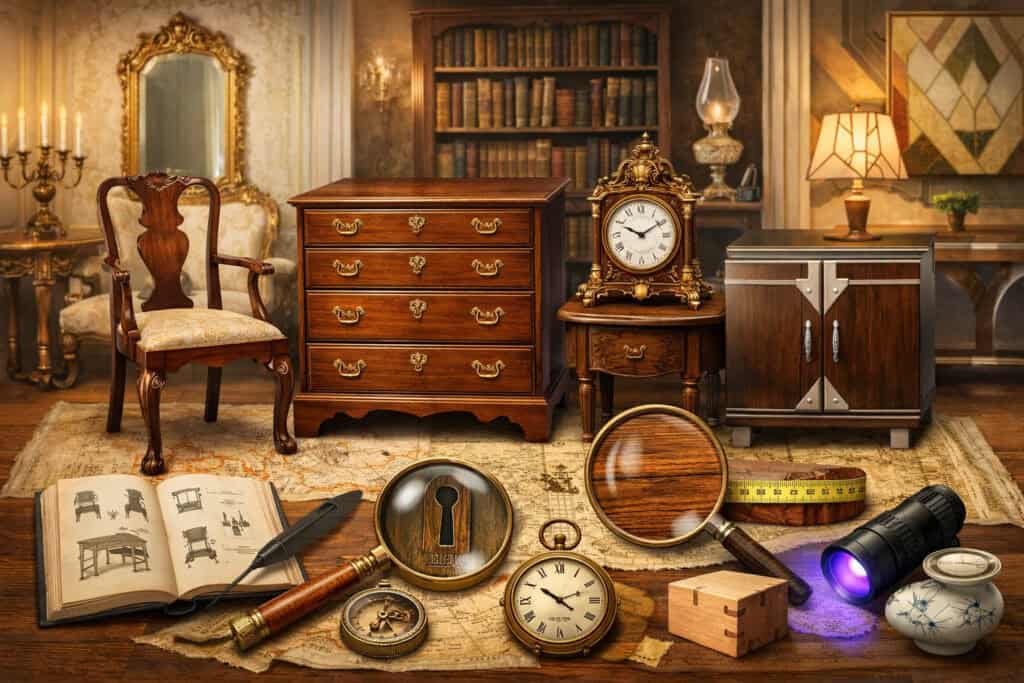
A lot of shoppers get stuck on style names. Style matters, but evidence matters more. When you’re trying to spot antique furniture in Mont-Royal, build your dating method around elements that are difficult (and expensive) to fake convincingly.
First, look at the back, underside, and inside. Serious antique furniture almost always reveals itself where no one expected buyers to check. Use your phone flashlight.
Key dating clues:
- Saw marks: Straight, uniform machine marks often suggest later production; irregular or earlier tool patterns may suggest older work.
- Joinery types: Hand-cut dovetails tend to be slightly uneven; later machine-cut dovetails look identical and perfectly spaced.
- Hardware and screws: Older screws may show irregularities; newer screws are consistent and standardized.
- Wood movement allowances: Older makers often built to accommodate expansion and contraction in solid wood; cheap reproductions fight the wood and crack sooner.
In the Mont-Royal area, you’ll encounter everything from high-end European-style antiques to practical heritage pieces meant for daily use. Nearby antique-shopping districts are known for carrying 18th–19th century European furniture alongside later period pieces.
To keep your dating realistic, use a two-step approach:
- Identify the likely “design period.” (Victorian, Arts & Crafts, Art Deco, mid-century modern, etc.)
- Confirm the “build period” using construction evidence.
This is the difference between buying antique furniture in Mont-Royal and buying antique-looking furniture in Mont-Royal. The first can appreciate, hold value, and become an heirloom. The second might still be beautiful—but you should pay accordingly.
Age Markers That Buyers in Mont-Royal Should Prioritize
If you remember nothing else, remember this: age is a pattern, not a single clue. One old-looking screw does not make a piece antique. One new hinge does not automatically make it fake (many antiques have replaced hinges).
When you’re inspecting antique furniture in Mont-Royal, prioritize markers that tend to align together when a piece is genuinely old:
- Patina consistency: Natural wear patterns show gradual handling: edges, drawer pulls, foot rails, chair stretchers.
- Oxidation in protected areas: The underside may show darker oxidation where dust and air exposure occurred slowly over decades.
- Shrinkage and settling: Old wood often shows tiny gaps or slight drawer looseness due to long-term movement.
- Repair history: Real antique furniture often has repairs. The question is whether repairs are honest and structurally sound.
Local vintage and thrift-style shops that carry “antique and vintage finds” can be great training grounds because you’ll see a wide variety of eras and conditions in one place. That variety helps your eyes learn the difference between real age and artificial distress.
The Mont-Royal advantage is volume and access: you can compare multiple pieces in a day across different sellers. Every comparison improves your accuracy—and helps you avoid paying antique prices for vintage-grade furniture.
Style vs. Construction: How Reproductions Fool Smart Shoppers
Reproductions don’t fool people because they’re “perfect.” They fool people because they’re familiar. If you’ve seen a style in films, cafés, or curated interiors online, your brain wants it to be true.
To avoid that trap while shopping antique furniture in Mont-Royal, test the piece against questions that style alone cannot answer:
- Does the underside show the same finishing quality as the front?
- Are the drawer sides thin and old-growth tight-grain, or thick modern stock?
- Do you see mismatched woods (a common cost-saving method)?
- Are decorative elements (carvings, appliqués) glued on like “costume jewelry”?
Also watch for “hybrids.” Many sellers assemble antique furniture from parts: an old base with a newer top, or an old case with reproduction doors. These can still be worthwhile buys—if priced as composites and disclosed honestly.
In active antiques markets, you’ll also see businesses that buy and evaluate antiques quickly, including home estimates and immediate payment services. That ecosystem increases the flow of mixed-quality items, so buyers need solid verification habits.
If your mission is to spot antique furniture in Mont-Royal reliably, your best protection is evidence-based thinking. Style starts the conversation. Construction ends it.
Where Antique Furniture in Mont-Royal Actually Comes From (and Where to Hunt)

Buying antique furniture in Mont-Royal is less about one “perfect store” and more about understanding the local pipeline.
Pieces show up through multiple channels: specialty antique dealers, vintage-focused shops, estate dispersals, private downsizing, and the broader nearby antiques scene that feeds inventory into Mont-Royal-area sellers.
A smart hunting strategy looks like this:
- Start with variety-heavy shops to train your eye and compare eras.
- Then move to specialized dealers for higher confidence, documentation, and curated condition.
- Use appraisal professionals when a purchase crosses a price threshold where mistakes are expensive.
- Keep a short list of reliable neighborhoods/streets nearby known for antiques, so you can cross-check pricing and authenticity.
Travel and review platforms regularly reference well-known antiques stretches nearby—like the so-called “Antique Alley” on Rue Notre-Dame Ouest—where shoppers report seeing substantial 18th–19th century French furniture among other periods.
Meanwhile, directory and review sources show that “antiques near Mount Royal” searches often point to multiple options around the area, including shops known for vintage furniture and collectibles.
Your goal is to treat Mont-Royal as your base, and the surrounding antiques ecosystem as your verification lab: compare similar items across locations, note price differences, and learn which sellers consistently describe pieces accurately.
Mont-Royal Shops and Nearby Antique Corridors to Know
In practical terms, antique furniture in Mont-Royal often overlaps with vintage, secondhand, and décor. That’s not a flaw—it’s an opportunity. Mixed-inventory shops can surface underpriced gems because not every item is treated like a museum piece.
For example, Mont-Royal-focused vintage/thrift shops may explicitly advertise antiques and vintage finds, and they can be useful places to practice identification skills and discover smaller accent pieces.
When you’re ready for deeper antique inventory, nearby areas with a reputation for antiques offer broader selection and higher concentration of dedicated dealers. The benefit is comparison: you might see five versions of a similar commode in one afternoon, and the differences in construction become obvious fast.
A strong Mont-Royal hunting routine looks like:
- One day a week: browse mixed shops for surprise finds and skill-building.
- Twice a month: visit concentrated antiques streets nearby for serious comparison.
- Ongoing: save photos of joinery, hardware, labels, and profiles you trust.
And when you find something promising, don’t rush. Antique furniture in Mont-Royal rewards buyers who verify first and negotiate second.
Estate Sales, Downsizing, and “Quiet Inventory” in Mont-Royal
Some of the best antique furniture in Mont-Royal never hits a showroom floor. It moves through private channels: downsizing, estate clear-outs, and in-home evaluations. If you’re willing to be patient, these channels can deliver excellent value—especially for larger case goods that are expensive to move and store.
This is also where conditions vary wildly. Estate pieces may be untouched for decades. That can mean intact finishes and original hardware—or it can mean hidden water damage, pest issues, and unstable joints.
In the wider Mont-Royal area, there are firms advertising certified appraisal services tied to estate sale and valuation work, including accredited personal property appraisers who handle furniture among many categories.
There are also antiquaire-style businesses that promote fast evaluation and home estimates for antiques in the broader area.
If you want to spot antique furniture in Mont-Royal via estate channels, bring structure:
- Ask for photos of undersides, backs, and drawer interiors.
- Ask what repairs were done and when.
- Ask whether the piece was moved recently (movement can reveal looseness).
- If the seller seems unsure, price your offer assuming hidden work will be needed.
Estate sourcing can be the best value path for antique furniture in Mont-Royal—but only if you inspect like a professional.
Construction Clues: Wood, Joinery, and Tool Marks That Reveal the Truth

If there’s one skill that upgrades your ability to spot antique furniture in Mont-Royal, it’s construction literacy. The structure tells you when something was made, how it was made, and whether it was built to last.
Start with wood:
- Old-growth wood often shows tighter grain and greater density than modern fast-grown lumber.
- Secondary woods (used inside drawers or back panels) can reveal the maker’s habits and the era.
- Veneer patterns can indicate period methods and whether a surface has been replaced.
Then look at joinery:
- Dovetails: Older handwork often shows slight variation.
- Mortise-and-tenon: Common in chairs and tables; look for snug fit and long-term stability.
- Pegged joints: Can indicate traditional building methods.
- Corner blocks: In upholstered seating, corner blocks (especially if old and well-fitted) can be a positive sign.
Tool marks matter because they’re hard to fake without time and skill. A reproduction can be distressed, but it often lacks the organic logic of real use and real building methods.
In active antiques regions feeding the Mont-Royal market, dealers and appraisers emphasize decorative arts and furniture evaluation as specialty categories. That professional focus exists because construction details are central to value.
When you combine wood knowledge with joinery inspection, you stop guessing. You start reading.
Joinery and Hardware Tests You Can Do in Under Five Minutes
Here’s the fast routine you can use in a shop aisle without making it awkward. These checks are practical for antique furniture in Mont-Royal because many sellers are used to serious buyers inspecting details.
1) Drawer test
Open a drawer fully. Look at the sides and back:
- Are dovetails hand-cut (varied) or machine-cut (uniform)?
- Is the drawer bottom slotted into grooves (often older) or stapled/nailed in a modern way?
- Are there thin “scribe lines” or plane marks inside?
2) Screw and hinge reality check
Look at hinge screws and backplate screws:
- Are screw heads consistent and crisp (newer), or do they show wear and slight irregularity?
- Do hinges look period-appropriate, or are they modern replacements?
3) Back panel honesty
Turn or peer behind:
- Thin plywood backs often indicate newer manufacture (or later repair).
- Solid boards or older paneling can be consistent with older builds.
- Watch for brand-new wood on the back of an otherwise “old” piece.
4) Movement and wobble
Gently test stability:
- A little looseness can be normal in antique furniture (and fixable).
- Severe racking (twisting) can mean joint failure or wood damage.
If you’re buying higher-value antique furniture in Mont-Royal, these quick checks tell you whether the piece deserves deeper verification or whether it’s a “nice look, wrong price” situation.
Veneer, Finishes, and Patina: The Surface Tells a Story
A lot of buyers fear veneer. Don’t. High-quality antique furniture often uses veneer deliberately: to create dramatic grain patterns, to stabilize surfaces, and to elevate aesthetics. The key is whether the veneer is period-correct and intact.
What to look for:
- Veneer thickness: Older veneer can be thicker than modern paper-thin sheets.
- Edge wear: Natural wear on edges can look smooth and consistent over time.
- Bubbling or lifting: Indicates glue failure or moisture exposure—repairable, but affects price.
Finishes:
- Shellac and French polish often appear on older fine furniture and can show a warm depth.
- Modern polyurethane often looks glassy and uniform.
- Refinished antiques may lose value if sanding erases crisp edges and detail.
Patina isn’t “dirt.” It’s the visible record of time: micro-scratches, softened corners, and subtle color shifts where hands touched wood. Artificial distressing tends to look repetitive—like someone tried too hard.
In Mont-Royal’s mix of antiques and vintage retail, you’ll find plenty of refinished pieces. Some are beautifully restored and worth buying. Others are over-sanded. Your job is to notice whether the surface work preserved the furniture’s geometry and proportions.
Provenance and Paper Trails: How to Confirm a Story Without Getting Played
A seller’s story can be helpful—but it’s not proof. Provenance means verifiable history: maker identity, purchase history, prior appraisals, estate documentation, or credible dealer records.
In the Mont-Royal area, professional appraisal services advertise valuations for furniture in contexts like insurance, estate planning, and charitable donation—exactly the situations where documentation tends to exist.
Provenance can include:
- Receipts from reputable dealers
- Old appraisal documents
- Estate inventory lists
- Maker labels, stamps, or branded marks
- Photos showing the piece in a home over time
- Restoration invoices from known craftspeople
When you’re shopping for antique furniture in Mont-Royal, ask for whatever exists—but don’t punish honest sellers who have none. Many real antiques lost paper trails long ago. The solution is to shift weight back to construction evidence and pricing discipline.
A useful “trust but verify” approach:
- If the price is modest, rely mostly on physical evidence.
- If the price is high, require evidence plus appraisal or dealer documentation.
- If the story is dramatic (royalty, famous designer, “museum quality”), it requires strong proof.
The goal isn’t to become cynical. It’s to buy antique furniture in Mont-Royal with confidence that your money is going into real craftsmanship, not a well-told tale.
Labels, Maker Marks, and What They Really Prove
Marks can be powerful—but they can also be misleading. Some labels are original. Some are later dealer tags. Some are reproduction stickers added to increase value.
How to evaluate marks:
- Placement: Original maker marks often appear in consistent locations for that workshop (inside case sides, under tabletops, behind drawers).
- Aging: Real old labels show natural wear, oxidation, and edge lifting consistent with the rest of the piece.
- Fasteners: Staples and modern adhesives can indicate a later-added label.
- Mismatch risk: If the style screams one era but the label claims another, investigate.
Also, remember that many genuinely antique pieces were made by regional workshops without famous names. No label doesn’t mean no value.
If you’re new to spotting antique furniture in Mont-Royal, photograph any marks you find. Then compare them later—calmly—against reputable references or by consulting an appraiser. Don’t let a label rush you into a purchase.
Using Appraisers and Accredited Pros in the Mont-Royal Area
Appraisers can be a cheat code—if you use them strategically. For major purchases, an appraisal or consult can prevent expensive mistakes and strengthen insurance coverage.
In the broader area, you can find providers who explicitly offer antique furniture appraisal services for insurance, estate planning, and related needs.
There are also established antiques businesses that mention accredited membership in professional personal property appraisal associations while listing furniture among specialties.
And some certified appraisers in the area promote estate appraisal services that include furniture in their categories.
How to use an appraiser well:
- Use them when the piece is expensive enough that an error would hurt.
- Ask whether they provide written documentation and what standards they follow.
- Clarify if you want fair market value, replacement value, or auction estimate (different numbers for different purposes).
- If you’re buying, consider a conditional agreement: purchase is finalized after verification.
In short: if you want to buy top-tier antique furniture in Mont-Royal, professional validation is often cheaper than regret.
Red Flags: The Most Common “Fake Antique” Patterns in Mont-Royal Listings
Most fake antiques aren’t evil. They’re just misrepresented, misunderstood, or marketed aggressively. Still, when you’re trying to spot antique furniture in Mont-Royal, you need a radar for the patterns that repeat.
High-frequency red flags:
- “Antique style” priced as antique.
- Perfect uniform distressing (especially on edges that would naturally wear unevenly).
- Brand-new hardware with no disclosure.
- Plywood where you’d expect solid boards on older casework.
- Suspicious symmetry in “hand-carved” details that look machine repeated.
- Overpowering stain smell (recent refinishing sometimes hides repairs).
Another red flag is vague language: “I don’t know much about it, but it’s definitely antique.” That doesn’t mean the seller is lying, but it means you must rely on your own inspection.
Use this buyer mindset:
- If the piece is priced like antique furniture in Mont-Royal, it should behave like antique furniture in Mont-Royal under inspection.
- If it behaves like vintage, pay vintage pricing.
- If it behaves like modern, pay modern pricing.
Platforms that list a wide range of “antiques near Mount Royal” options show just how mixed the market can be—from serious antique dealers to general resale and vintage outlets.
This mix is why your process matters. Antique furniture in Mont-Royal is absolutely findable—but so are reproductions. The difference is whether you verify.
The Reproduction Traps in Popular Styles
Certain looks are reproduced constantly because demand is high:
- French provincial and “Paris apartment” looks
- Farmhouse tables and rustic sideboards
- Mid-century modern silhouettes
- Campaign-style chests
- Victorian-inspired tufted seating
The trap isn’t that reproductions exist. The trap is that reproductions are often photographed in soft light with styling that implies age. Online listings may hide backs, undersides, and drawers for a reason.
To beat these traps, insist on the unglamorous evidence:
- drawer joints
- underside photos
- back panel photos
- close-ups of hardware and wear points
If a seller refuses basic documentation while asking premium pricing, walk away. There will be other pieces. The Mont-Royal ecosystem is active enough that patience often pays.
Condition and Restoration: How to Judge Value Without Overreacting
Condition is where many buyers either overpay (because the piece looks clean) or under-buy (because the piece looks rough). Antique furniture in Mont-Royal can be worth buying in a wide range of conditions—if the condition matches the price and your intended use.
Separate issues into categories:
1) Cosmetic wear (often acceptable)
- surface scratches
- finish dullness
- minor veneer edge wear
- small chips in non-structural areas
2) Structural concerns (price must reflect repairs)
- loose chair joints
- wobbling tables
- cracked legs
- drawer runners failing
3) High-risk damage (often deal-breakers)
- active woodworm/pest evidence
- severe water damage and rot
- warped panels that prevent function
- major missing components that are hard to reproduce
Remember: restoration can either protect value or destroy it. Heavy sanding can erase crisp edges and carvings—reducing the very character that makes antique furniture in Mont-Royal desirable.
Meanwhile, sensitive repairs (tightening joints, stabilizing veneer, conserving finish) can extend life and keep the piece historically honest.
If you buy antique furniture in Mont-Royal for daily use, you may prefer pieces that have already been responsibly restored. If you buy as a collector, you may prefer original surfaces even with imperfections.
Restoration Ethics in the Mont-Royal Market
In a market where antiques, vintage, and décor overlap, sellers sometimes restore pieces to match modern interior trends. That’s not automatically bad. It becomes bad when restoration hides identity or weakens structure.
Ethical restoration usually means:
- preserving original tool marks where possible
- replacing only what is necessary for stability
- documenting what was changed
- avoiding “fake aging” meant to deceive
If you’re investing in antique furniture in Mont-Royal, ask:
- Was the finish stripped or conserved?
- Were parts replaced (feet, pulls, drawer bottoms)?
- Was the veneer re-glued or replaced?
- Are there invoices or photos from restoration?
If the seller can’t answer, assume restoration quality is unknown and price accordingly.
When to Walk Away (Even If You Love the Look)
Some pieces are heartbreakers: beautiful shape, wrong reality. Knowing when to walk away protects your budget for the right find.
Walk away (or drastically discount) when:
- the piece smells strongly of mildew or ongoing moisture
- drawers don’t align due to case warping
- legs are cracked near load points
- upholstery hides a weak frame and the seller won’t allow inspection
- the seller blocks you from checking backs/undersides
Antique furniture in Mont-Royal is an abundance game. The best buyers are the ones who don’t “force” a purchase. They verify, negotiate, and only commit when the piece passes structural truth.
Pricing and Negotiation: How to Pay the Right Amount in Mont-Royal
Pricing antique furniture in Mont-Royal is part art, part math. The art is knowing what you love and what fits your space. The math is knowing what condition and authenticity are worth.
Your strongest pricing tool is comparison. That’s why it helps that nearby areas are known for concentrated antiques shopping—where you can view multiple similar items and learn the pricing bands.
General pricing drivers:
- authenticity and confirmed age
- maker or provenance
- condition and quality of restoration
- rarity (wood type, form, craftsmanship)
- scale (large case goods can be cheaper per “quality unit” because moving is hard)
Negotiation in Mont-Royal works best when you’re respectful and specific:
- Point to objective issues: loose joints, veneer lifting, missing hardware.
- Ask what flexibility exists based on needed repairs.
- Offer a clean close: “If we can do X, I can take it today.”
Also budget for the hidden costs that affect your “real price”:
- delivery and stair carries
- humidity control (especially for solid wood)
- restoration or upholstery quotes
- insurance if value is high
Antique furniture in Mont-Royal becomes a great deal when the total cost still makes sense after these add-ons.
A Negotiation Checklist That Actually Works
Use this simple structure when you want to negotiate without offending:
- Confirm what the seller claims (age, origin, restoration).
- Present your evidence-based concerns (show, don’t accuse).
- Ask for a revised price that reflects repairs or uncertainty.
- If they can’t move on price, ask for value adds (delivery, hardware replacement, repair credit).
Example concerns you can cite:
- “The veneer is lifting on the front edge.”
- “The chair has lateral wobble; it will need tightening.”
- “The back panel looks newer than the rest.”
- “The finish looks recently applied and I can’t verify what’s underneath.”
This approach keeps the conversation professional—and it signals that you know how to spot antique furniture in Mont-Royal without turning it into a confrontation.
Legal and Sustainability Considerations (and When the Country Name Becomes Necessary)
Most of the time, buying antique furniture in Mont-Royal is straightforward: you pay, you move it, you enjoy it. Legal complexity increases when furniture includes regulated materials (ivory, rhino horn, certain protected species) or when you plan to move the piece across borders.
This is where it becomes necessary to mention the country context: Mont-Royal sits within Canada, and cross-border movement into or out of Canada can trigger rules for protected species materials under international frameworks like CITES and national enforcement policies.
Why this matters for antique furniture:
- Some antiques include ivory inlays, tortoiseshell, mother-of-pearl, or rare woods.
- Even if a piece is old, permits may be required for import/export.
- Documentation becomes critical if materials are regulated.
Canada’s federal guidance notes stricter measures and new permit requirements for items containing elephant ivory and rhinoceros horn moving across the Canadian border as of January 8, 2024, including impacts on “worked” personal and household effects.
This doesn’t mean you can’t buy such items locally. It means you should be careful about:
- what materials are present
- what documentation exists
- where you plan to take the piece
Sustainability also matters locally. Buying antique furniture in Mont-Royal is inherently sustainable—reusing solid wood craftsmanship avoids new manufacturing emissions and landfill waste. But sustainability also means avoiding illicit materials and supporting legitimate, transparent sellers.
Protected Materials in Antique Furniture: What to Watch For
You don’t need to panic, but you do need awareness. Antique furniture can contain small decorative elements that trigger regulation.
Materials to notice:
- Ivory (often in small inlays, piano keys, decorative plaques)
- Tortoiseshell (sometimes in marquetry)
- Certain exotic woods (used in veneers or inlays)
Collector-focused guidance on CITES highlights that antiques can include rare woods and inlays that are tightly regulated under international law. And official federal information in Canada emphasizes permit requirements for specific protected materials when crossing borders.
Practical steps for Mont-Royal buyers:
- Ask the seller what materials are present—specifically.
- If the item may include regulated materials, ask for any documentation.
- If you plan cross-border travel, research permit needs before buying.
- When in doubt, choose pieces without questionable materials unless documentation is strong.
This approach protects you legally and ethically—and keeps your antique furniture in Mont-Royal journey stress-free.
Future Predictions: Where Antique Furniture in Mont-Royal Is Headed Next
The antique furniture market in Mont-Royal is likely to keep evolving in three big ways: digital sourcing, authenticity verification, and lifestyle-driven demand.
1) Digital sourcing gets more competitive: More inventory will be listed online first, even by small sellers. That means faster turnover on the best pieces—and more pressure on buyers to inspect efficiently.
2) Verification becomes a selling feature: As buyers get smarter, sellers who provide better photos, restoration documentation, and appraisal connections will win trust. In the Mont-Royal area, appraisal services already market structured valuation for insurance and estates, and that professional layer supports a documentation-first future.
3) Demand shifts toward “usable antiques”: Many buyers want pieces that work in modern apartments: compact case goods, strong dining chairs, storage pieces, and desks. That favors antique furniture in Mont-Royal that blends craftsmanship with function.
Expect certain categories to rise:
- solid wood storage (armoires, commodes, buffets)
- quality seating with repairable frames
- small tables and accent pieces
At the same time, very large or fragile pieces may stay undervalued due to transport difficulty and space constraints. This can be good news for buyers with room and logistics.
Authentication Tech and the Next Generation of Antique Buying
One of the most interesting near-future shifts is how technology supports verification.
Trends likely to grow:
- better provenance tools: digital records of appraisal, restoration, and sale history
- material detection tools: improved ways to identify ivory vs bone, and wood species, without invasive testing
- AI listing quality improvements: platforms may flag missing angles (no underside photos) or inconsistent descriptions
But technology won’t replace your hands and eyes. The core skill will still be knowing how to spot antique furniture in Mont-Royal by construction, patina, and structural truth.
The upside is that the market may reward educated buyers even more. When sellers know you can verify, prices become more rational—and truly antique pieces stand out against decorative reproductions.
FAQs
Q.1: How can I tell if a piece is truly antique or just vintage?
Answer: Use multiple signals: joinery (dovetails, mortise-and-tenon), tool marks, hardware age, and consistent patina. Style alone isn’t enough. Antique furniture in Mont-Royal often includes vintage pieces in the same shops, so compare several examples to train your eye.
Q.2: Is refinished furniture still considered antique furniture in Mont-Royal?
Answer: It can be, but refinishing can reduce value if it removes original surfaces or rounds crisp details. Ask what was done, whether parts were replaced, and how the work was performed. Price should reflect originality.
Q.3: Where should I shop if I’m new and afraid of getting scammed?
Answer: Start with established shops and curated dealers, then expand into estate and private channels. Nearby concentrated antiques areas referenced by travelers can also help you compare inventory and pricing.
Q.4: Should I always get an appraisal before buying?
Answer: Not always. Use appraisers for high-value purchases or when materials/provenance claims are complex. The Mont-Royal area has multiple appraisal options advertising furniture valuations for estates and insurance.
Q.5: What are the biggest red flags in online listings?
Answer: No underside/back photos, vague dating claims, “antique style” priced as antique, perfect uniform distressing, and refusal to answer construction questions.
Q.6: Can I negotiate prices for antique furniture in Mont-Royal?
Answer: Yes, especially when you can point to objective repair needs. Be respectful and specific. If the price won’t move, ask for delivery help or repair credits.
Q.7: What materials might cause legal trouble if I travel with a piece?
Answer: Items containing protected materials (like ivory) can require permits when crossing borders. Canada has stricter measures for certain ivory and rhino horn items moving across the Canadian border as of January 8, 2024.
Q.8: What’s the best “starter antique” to buy?
Answer: Small, solid wood pieces with simple construction: side tables, small chests, or sturdy chairs with repairable joints. They’re easier to inspect, move, and live with while you build expertise.
Conclusion
To spot antique furniture in Mont-Royal with confidence, ignore hype, inspect construction, verify materials and history when the price demands it, and only pay “antique” money when the evidence behaves like a true antique.
The Mont-Royal advantage is access: a steady mix of vintage shops, resale sources, nearby antique corridors, and professional appraisal services that support serious buying.
If you follow the routines in this guide—flashlight checks, joinery inspection, surface evaluation, and documentation discipline—you’ll quickly move from “hoping it’s real” to knowing what you’re buying.
And that’s how the best buyers consistently land the kind of antique furniture in Mont-Royal that feels timeless, functions beautifully, and holds its value for years to come.