
By Devin Jones April 26, 2026
Bric-à-brac shopping is not always about finding the most expensive thing on the shelf. Sometimes the best purchase is a chipped little vase that makes your entryway feel warmer, a quirky ceramic bird that reminds you of your grandmother’s kitchen, or a small framed print that pulls a room together for less than the price of lunch.
That is why understanding value vs charm bric a brac matters. A piece can be financially valuable, personally meaningful, decorative, practical, collectible, or simply fun. The mistake many shoppers make is assuming those qualities are the same thing.
They are not.
A valuable item may have strong resale demand but feel too formal for your home. A charming item may have little resale value but bring joy every time you see it. A practical item may not be rare, yet still be worth buying because you will use it often.
The goal is not to turn every shopping trip into an appraisal session. The goal is to know what you are looking at, what you are paying for, and why it belongs in your life.
This guide will help shoppers, collectors, decorators, resellers, and beginners understand the difference between market value, decorative appeal, personal charm, and long-term usefulness when buying bric-à-brac.
What “Value” Means in Bric-à-Brac
In bric-à-brac, value usually refers to what an item might reasonably sell for in the current secondhand market. That value is shaped by demand, condition, age, maker, materials, scarcity, quality, and whether similar pieces are actually selling—not just being listed.
A common mistake is looking at one high online asking price and assuming a similar item is worth the same. Asking prices are hopes. Sold prices are evidence. A true bric a brac pricing guide begins with recent comparable sales, condition checks, and realistic expectations.
Value can show up in different ways:
- Resale value: What someone may pay for it now.
- Collectible item value: What collectors pay because of maker, pattern, rarity, or category.
- Material value: What it is made from, such as sterling silver, bronze, hardwood, wool, linen, crystal, or quality ceramics.
- Decorative market value: What decorators may pay because the piece fits a desirable look.
- Functional value: How useful it remains, such as a sturdy lamp, serving tray, chair, mirror, or storage box.
When you determine the value of vintage items, remember that “old” does not automatically mean valuable. Many older items were mass-produced. Some are beautiful but common. Others are collectible only in excellent condition or only when part of a complete set.
What “Charm” Means in Bric-à-Brac
Charm is different from market value. It is the personality an item brings into a room, collection, display, or memory. Charm can come from color, shape, wear, humor, nostalgia, patina, handmade irregularity, or the way an item fits your style.
A slightly uneven handmade bowl may be more charming than a perfect factory-made one. A faded floral tin may have little resale value but look wonderful on a kitchen shelf. A small framed landscape print may not be collectible art, yet it can make a hallway feel finished.
Charm often comes from:
- A distinctive silhouette
- Cheerful or unusual color
- Visible age or patina
- Handmade character
- Nostalgia
- A story or memory
- A pleasing texture
- A useful size
- A connection to your personal style
This is where bric a brac value vs decorative appeal becomes important. Decorative appeal does not always translate into resale value. Something may look beautiful in your home but have limited demand online. That does not make it a bad purchase. It simply means you are buying it for enjoyment, not investment.
Charm is personal, but it should still be thoughtful. If you buy every charming object you see, your home can quickly feel cluttered. The best charming items earn their place because they fit your space, serve a purpose, or add a feeling you genuinely want.
Value vs Charm Bric a Brac: The Key Difference

The key difference is simple: value is what the market recognizes; charm is what you recognize.
Market value depends on other people. Charm depends on your eye, your memories, your home, and your taste. Both matter, but they should not be confused.
| Factor | Financial Value | Personal Charm |
| Main question | “What would someone pay for this?” | “Do I enjoy living with this?” |
| Based on | Demand, rarity, maker, condition, materials | Style, feeling, color, nostalgia, uniqueness |
| Best evidence | Sold listings, appraisals, collector demand | Fit with your home, taste, and use |
| Risk | Overpaying for weak resale demand | Buying clutter because it feels cute |
| Strongest for | Resellers, collectors, serious buyers | Decorators, casual shoppers, personal collections |
| Ideal purchase | Valuable, well-priced, desirable | Loved, useful, visually pleasing |
The best finds often combine both. A signed piece of studio pottery in excellent condition can have collectible item value and antique and vintage charm. A well-made brass lamp may have resale value of vintage items and practical usefulness. A small antique mirror may be decorative, functional, and desirable.
But many items lean more heavily one way. A rare collectible pattern may be valuable but not your style. A quirky ceramic frog may be charming but common. A worn footstool may look wonderful in a cozy room but need repairs that exceed its resale potential.
Neither value nor charm is automatically better. The right choice depends on your purpose.
How to Determine Value of Vintage Items Before You Buy

Learning how to determine the value of vintage items is less about memorizing every maker and more about developing a repeatable process. You want to slow down, inspect carefully, compare realistically, and separate evidence from wishful thinking.
Start by turning the item over. Many useful clues are on the bottom, back, underside, inside rim, tag, label, hinge, or frame backing. Look for maker marks, signatures, stamps, labels, country-of-origin marks, pattern names, dates, material indicators, and construction details.
Then examine quality. Does the item feel substantial? Are the edges finished? Is the decoration hand-painted, printed, engraved, molded, or applied? Are the joints strong? Does the glaze look even? Are screws, hinges, seams, and handles well made?
Next, check the condition. A valuable item in poor condition may be worth far less than expected. Chips, cracks, repairs, stains, missing parts, odors, and structural instability can reduce value sharply.
Finally, compare. Look for similar sold items, not just active listings. Match maker, size, pattern, material, age, and condition as closely as possible.
Look for Marks, Labels, and Signatures
Marks can help identify ceramics, glassware, metalware, art, books, textiles, and small furniture. A backstamp on a plate, a signature on a print, a label under a chair, or a maker’s mark on a silver spoon can change how you evaluate the item.
But marks are not magic. Some marks are common. Some are reproductions. Some items are unsigned but still well made. Others have impressive-looking stamps but little demand.
When you find a mark, photograph it clearly. Search the exact wording, initials, symbol, or pattern name. Compare the mark to reliable references and similar sold items. Pay attention to details such as font, placement, color, and wear.
For art, a signature does not automatically mean the piece is valuable. Many attractive works are by unknown artists. That can still be fine if the price reflects decorative value rather than famous-name value.
Study Materials and Construction
Materials affect both value and durability. Solid wood generally has more long-term usefulness than particleboard. Linen and wool often age better than synthetic blends. Sterling silver differs from silver plates. Brass differs from brass-plated steel. Hand-thrown pottery differs from lightweight souvenir ceramics.
Construction gives clues about quality. On small furniture, look for sturdy joints, real wood, smooth drawers, secure legs, and hardware that feels appropriate to the piece. On textiles, inspect seams, hems, embroidery, fading, and fabric strength. On lamps, check weight, wiring condition, shade fit, and stability.
For decorative collectibles, feel matters. Quality glass often has clarity and weight. Good ceramics may have balanced form and intentional glaze. Quality metalware often feels solid rather than flimsy.
Compare Sold Prices, Not Wishful Prices
A realistic bric a brac pricing guide should rely on completed sales whenever possible. Active listings can be misleading because anyone can ask any price. Sold listings show what buyers actually accepted.
When comparing prices, look for close matches:
- Same maker or brand
- Same pattern or design
- Similar size
- Similar material
- Similar condition
- Similar completeness
- Similar market demand
A complete set may sell well while one damaged piece does not. A rare color may command more than a common color. A signed version may sell higher than an unsigned one. A large piece may be valuable but difficult to ship, which can affect resale.
For more practical buying habits, it can help to read related guidance on how shoppers evaluate quality, movement through aisles, and pricing cues in a bric-à-brac setting, such as this guide on how to navigate a bric-à-brac store like a pro.
How Condition Affects Value and Charm
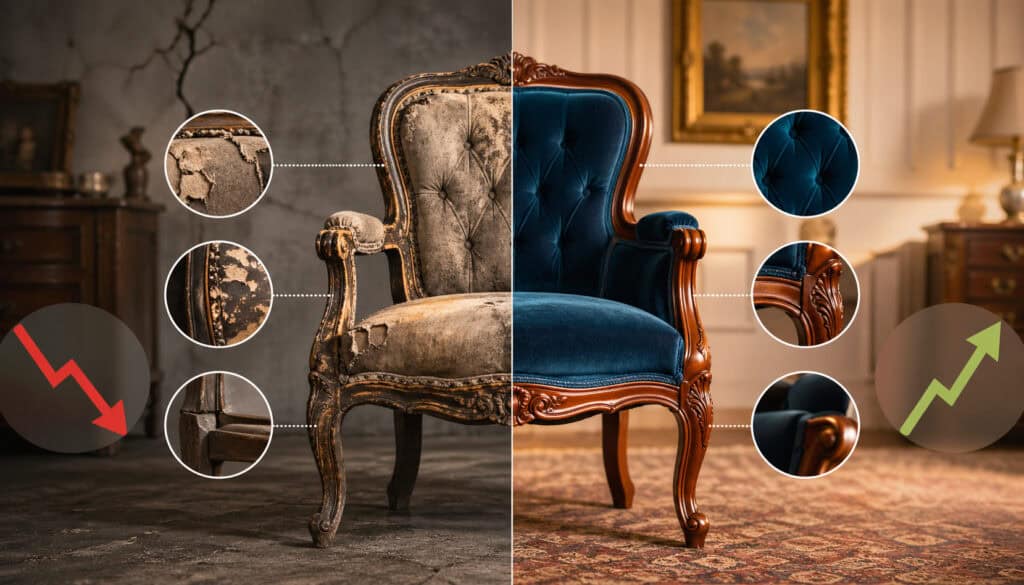
Condition is one of the biggest differences between financial value and personal charm. A chip may ruin resale value but barely matters for your bookshelf. A little fading may soften a textile beautifully. A repaired crack, however, may make a serving bowl unsafe or a vase unable to hold water.
The key is knowing which flaws are acceptable, which are negotiable, and which are deal breakers.
| Condition Issue | Effect on Value | Effect on Charm | Buy or Pass? |
| Small surface wear | Usually minor | Can add character | Often buy if priced fairly |
| Patina on metal | Can be acceptable or desirable | Often adds warmth | Buy if stable and attractive |
| Tiny ceramic chip | Can reduce resale value | May be hidden in display | Buy only at a discount |
| Hairline crack | Often significant | May still display well | Use caution |
| Strong odor | Major problem | Rarely charming | Usually pass |
| Missing parts | Can reduce value sharply | May limit use | Pass unless decorative only |
| Poor repair | Usually lowers value | Can look distracting | Usually pass |
| Structural wobble | Serious for furniture | Not worth the risk | Pass unless repairable |
| Fading on textiles | Lowers value | Can look soft and aged | Buy if fabric is strong |
Patina is often misunderstood. True patina is natural aging that gives an item depth, such as mellow brass, softened wood, or gently worn leather. Dirt, mold, corrosion, and sticky residue are not patina. They are condition problems.
When Imperfections Add Character
Imperfections can add antique and vintage charm when they feel honest, stable, and visually pleasing. A worn paint edge on a small stool, a soft crease in an old linen, or a little tarnish on a brass candlestick can make an item feel lived-in rather than sterile.
These flaws often work well when the item is being used decoratively. A chipped planter turned so the flaw faces the wall may still look lovely. A faded book spine may add warmth to a shelf. A slightly worn wooden tray may feel more inviting than a brand-new one.
Imperfections are easier to accept when:
- They do not affect safety
- They do not prevent normal use
- They are visible but not distracting
- They suit the age and style of the piece
- The price reflects the condition
- You genuinely like the worn look
When Damage Should Make You Walk Away
Some damage is not charming. It is expensive, unsafe, unhygienic, or impractical. Strong odors, mold, active rust, unstable furniture, broken electrical parts, pest evidence, sharp cracks, and missing structural components should make you pause.
Lamps with old wiring may need professional rewiring. Chairs with loose joints may fail during use. Textiles with dry rot can tear easily. Books with mildew can affect nearby shelves. Kitchen items with damaged surfaces may not be safe for food.
A piece can be beautiful and still be a bad buy.
Judging Decorative Appeal Without Confusing It With Value
Decorative appeal is about how an item works visually. It includes color, scale, proportion, texture, mood, and compatibility with your space. It matters greatly for decorators and casual shoppers, but it is not the same as collectible value.
A no-name ceramic vase in the perfect shade of green may be worth more to your room than a collectible plate you dislike. A stack of worn books may add warmth even if none are rare. A simple brass bowl may style beautifully on a coffee table despite having modest resale value.
When judging decorative appeal, ask:
- Does the color work with my room?
- Is the size right for the shelf, wall, table, or corner?
- Does it add texture or contrast?
- Does it feel intentional with what I already own?
- Can I use it in more than one place?
- Will I still like it after the shopping excitement fades?
Good thrifted home décor does not need to be expensive. It needs to look considered. The difference between charming and cluttered often comes down to editing.
A helpful approach is to imagine the item already in your home. Where exactly will it go? What will it sit beside? Does it solve a styling problem, or is it just another cute object?
For shoppers building confidence, this article on how to spot quality items at thrift shops offers useful habits that apply to décor, clothing, furniture, and fragile finds.
Charming but Not Especially Valuable Items
Many bric-à-brac pieces are charming without being financially important. That does not make them lesser. It simply means they should be priced and purchased as personal décor, not investment pieces.
Examples include quirky ceramics, handmade mugs, small framed prints, colorful glassware, souvenir dishes, painted boxes, baskets, tins, novelty bookends, and worn-but-attractive décor. These items can bring personality to a room without having strong resale value.
A handmade object may be unsigned but full of character. A small print may not be original art but still create a calm mood. A bright glass bowl may be common but perfect for fruit, keys, or display. A faded tin may have no collector demand but look wonderful in a kitchen.
The best reason to buy these items is because they fit your life.
Charming low-value items are worth buying when:
- The price is modest
- You have a clear place or use for them
- The condition is acceptable
- They make your space feel more personal
- You are not pretending they are rare
- You would be happy keeping them, not reselling them
Valuable but Less Personally Charming Items
Some items may have real market value even if they do not immediately feel charming to you. These can include collectible china patterns, signed art glass, rare books, quality metalware, sought-after brands, first editions, designer small furniture, or discontinued decorative collectibles.
A reseller may see an opportunity where a casual shopper sees an outdated dish. A collector may value a specific pattern you would never display. A decorator may pass on a rare object because it does not fit the room.
This is where purpose matters.
If you are buying for resale, personal charm is less important than demand, condition, margin, and ease of selling. If you are buying for your home, market value may matter less than daily enjoyment. If you are collecting, value may come from completing a set, finding a rare variation, or preserving a category you love.
A valuable item may be worth buying even if it is not your style when:
- The price is clearly below realistic resale value
- Condition is strong
- Demand is established
- It is easy to store or ship
- You know the category well
- You are comfortable waiting for the right buyer
Still, avoid buying “valuable” items you do not understand. A large, fragile, slow-moving object can tie up money and space. A rare piece with damage may be difficult to sell. A famous name without proof can be risky.
Common Bric-à-Brac Categories and How to Evaluate Them
Different categories require different judgment. A chip on a decorative vase is not the same as a crack in a serving bowl. A faded book jacket matters more for collectors than for someone styling shelves. A rewired lamp may be safer and more useful than an untouched original with brittle wiring.
Ceramics and Pottery
Ceramics are among the most common bric-à-brac finds. They include vases, bowls, figurines, plates, mugs, planters, tiles, and studio pottery. Value may depend on maker, age, glaze, form, rarity, and condition.
Turn pieces over to check for marks, signatures, stickers, or impressed stamps. Look for chips on rims, bases, handles, and raised decoration. Hold the piece under light to spot hairline cracks. For functional pieces, consider whether the glaze is intact and whether the item is safe for its intended use.
Charm in ceramics often comes from glaze color, handmade form, whimsy, and scale. A small vase in the right color may be a wonderful decorative object even if it has no known maker.
Glassware
Glassware includes drinking glasses, bowls, vases, candlesticks, paperweights, serving pieces, and decorative art glass. Value can be influenced by maker, color, pattern, age, clarity, weight, and condition.
Inspect rims and bases carefully. Tiny chips can be hard to see but easy to feel. Cloudiness, scratches, cracks, and dishwasher damage may reduce value. For collectible patterns, one glass may be less desirable than a complete set.
Charm often comes from color and light. Amber, green, cobalt, pink, and smoke-toned glass can add warmth to shelves and tables. Even common glass can be useful if it looks good and functions well.
Small Furniture and Mirrors
Small furniture can be practical and decorative, but condition matters. Check wobble, joints, drawers, hardware, veneer, water damage, odors, and repairs. A charming side table is not a bargain if it cannot safely hold a lamp.
Mirrors should be checked for frame stability, backing, hanging hardware, silvering loss, and cracks. Some foxing can add antique and vintage charm, but too much may make the mirror hard to use.
Vintage décor value in furniture often depends on style, quality, wood type, size, and current demand. Small, useful pieces tend to be easier to place than oversized items.
Art, Prints, and Frames
Art is emotional and highly subjective. Original art, signed prints, vintage posters, small landscapes, botanical prints, needlework, and framed photographs can all have appeal.
Look at the back of the frame for labels, gallery tags, inscriptions, or age clues. Check for water damage, fading, foxing, broken glass, loose mats, and poor framing. A frame alone may be worth buying if it is well made and the size is useful.
Buy art you enjoy looking at. Unless you have strong evidence of artist demand, treat most small framed pieces as decorative rather than investment purchases.
Books and Paper Goods
Books can be valuable, charming, or both. Value may depend on edition, author, condition, dust jacket, signatures, illustrations, scarcity, and demand. Many old books are common, but they can still be beautiful decorative objects.
Check for odors, mildew, loose pages, writing, missing plates, broken bindings, and insect damage. A book that smells musty can affect nearby items.
For décor, books add texture, height, and color. For collecting, condition and edition details matter much more.
Textiles
Textiles include linens, quilts, scarves, rugs, tablecloths, embroidery, lace, cushions, and wall hangings. Value depends on material, age, handwork, condition, pattern, maker, and usability.
Inspect for stains, fading, odors, holes, thinning fabric, repairs, and dry rot. Some fading can be attractive. Strong smells, brittle fibers, and deep stains are harder to forgive.
Textiles can bring warmth to thrifted home décor, but they require more care than hard goods. Consider cleaning costs before buying.
Metalware, Lamps, and Kitchen Items
Metalware includes candlesticks, trays, bowls, flatware, boxes, bookends, and decorative figures. Look for weight, plating loss, dents, corrosion, maker marks, and stability.
Lamps require extra caution. A lamp may be charming and well made, but old wiring should be checked. Consider the cost of rewiring and shade replacement.
Kitchen items should be evaluated for safety and cleanliness. Decorative kitchenware can be wonderful, but items used with food need intact surfaces and materials suitable for use.
A Practical Bric a Brac Pricing Guide
Pricing bric-à-brac is part research and part judgment. You are not trying to find one perfect number. You are trying to decide whether the asking price makes sense for your purpose.
A useful bric a brac pricing guide compares three numbers:
- Asking price: What the seller wants.
- Likely resale price: What similar items have recently sold for.
- Personal-use value: What the item is worth to you because you will enjoy or use it.
If you are a reseller, you also need to subtract fees, packing materials, shipping effort, cleaning, repairs, storage, and your time. A $40 item that might sell for $55 is probably not a good resale buy. A $10 item that sells reliably for $45 may be better.
If you are a decorator, personal-use value matters more. A $28 vase that completes a room may be a better buy than a $12 vase you only sort of like.
If you are a collector, the question may be whether the item fills a gap, upgrades condition, or represents a hard-to-find variation.
For broader resale thinking, pricing habits, markdown awareness, and shopper behavior are also discussed in this guide to weekend thrifting strategies, which includes practical ideas about inventory, pricing, and flow.
How to Avoid Overpaying for Charm Alone
Charm can make shoppers impulsive. A warm color, nostalgic shape, or funny detail can make an item feel more special than it is. That emotional response is part of the joy of bric-à-brac shopping, but it can also lead to overpaying.
To avoid overpaying, pause before checkout and ask four questions:
- Would I still want this tomorrow?
- Do I know where it will go?
- Is the condition acceptable for the price?
- Am I buying the item or the shopping mood?
A charming item should still meet basic standards. It should be cleanable, usable, displayable, or meaningful. It should not create a storage problem. It should not need repairs you will never complete.
Also beware of “almost right” purchases. An almost-right lamp, almost-right frame, or almost-right bowl often becomes clutter. It is better to leave space for the right piece.
Secondhand décor shopping is most rewarding when you are selective. Passing on an item is not a failure. It is how you refine your eye.
How Different Shoppers Evaluate the Same Item
The same object can look completely different depending on who is evaluating it.
A reseller sees margin, demand, condition, shipping risk, and how quickly it may sell. A collector sees rarity, authenticity, maker, pattern, and completeness. A decorator sees color, scale, texture, and mood. A casual shopper sees usefulness, price, and emotional connection.
Imagine a vintage brass tray with light tarnish.
A reseller may check sold prices, weight, maker marks, and whether it photographs well. A decorator may love the warmth it brings to a coffee table. A collector may pass if it is not from a desired maker. A casual shopper may buy it because it holds candles beautifully.
None of these responses is wrong. They reflect different goals.
That is why understanding value vs charm bric a brac helps you shop with less confusion. You do not need to evaluate everything like a dealer if you are decorating your home. You do not need to buy every charming thing if your goal is resale. You do need to know which lens you are using.
Realistic Shopping Scenarios
Scenario 1: The Valuable Item You Do Not Love
You find a signed glass bowl from a maker with strong collector demand. It is in excellent condition and priced below recent sold listings. The color, however, does not fit your home.
If you are a reseller or collector, it may be worth buying. If you are shopping only for your own décor, it may not be the right piece. Value does not require personal charm, but your purpose should guide the decision.
Scenario 2: The Charming Item With Little Resale Value
You find a handmade ceramic creamer with an uneven glaze and no mark. It costs little, has no damage, and looks perfect on your breakfast tray.
Buy it if you love it. Do not buy it because you think it is rare. Its value is decorative and personal, not necessarily financial.
Scenario 3: The Item That Is Neither Valuable Nor Charming
You find a common figurine with chips, dust, and no strong visual appeal. It is cheap, but you do not collect the category and have no place for it.
Pass. A low price does not make an item a good buy.
Scenario 4: The Practical Piece With Modest Charm
You find a sturdy wooden stool. It is not rare, but it is well made, affordable, and useful as a plant stand.
This can be a smart purchase. Long-term usefulness is a real form of value, even when collectible demand is low.
Step-by-Step Checklist for Deciding Whether to Buy
Use this checklist when you feel unsure.
1. Identify Your Purpose
Are you buying for resale, collecting, decorating, gifting, or everyday use? Your purpose changes the standard.
2. Inspect the Item
Check the top, bottom, inside, back, seams, handles, rims, feet, hardware, labels, and surface. Do not rely on a quick glance.
3. Look for Value Clues
Search for maker marks, signatures, materials, quality construction, age indicators, and comparable sold prices.
4. Evaluate Charm
Ask whether the item has personality, beauty, nostalgia, color, texture, or a clear place in your space.
5. Check Condition Honestly
Separate acceptable wear from damage. Chips, odors, cracks, missing parts, and instability matter.
6. Compare Price to Purpose
A fair price for personal use may be too high for resale. A strong resale buy may not be right for your home.
7. Consider Cleaning, Repair, and Storage
Repairs cost money and time. Fragile items need storage. Large items need space.
8. Make the Final Call
Buy when value, charm, use, and price align with your goal. Pass when you are forcing the decision.
Building a Better Eye Over Time
A good eye develops through repetition. The more you handle objects, compare materials, study marks, and watch prices, the better your judgment becomes.
Visit different types of secondhand stores. Look at antique malls, flea markets, estate sales, charity shops, online marketplaces, and curated vintage shops. Notice how prices change by setting. A piece may be inexpensive in one place and expensive in another because of audience, location, presentation, and seller knowledge.
Study categories you enjoy. If you like glassware, learn common patterns and makers. If you love textiles, learn fiber types and signs of damage. If you like small furniture, learn joinery and wood quality. You do not need to know everything. You only need to build confidence in the categories you actually buy.
It also helps to read educational resources about the broader thrift scene, sustainable shopping, and how secondhand items circulate through local markets, such as this overview of the thrift scene and secondhand shopping habits.
Most importantly, keep your taste involved. Expertise should sharpen your enjoyment, not remove it.
FAQs
What is the difference between value and charm in bric-à-brac?
Value is usually tied to what the market may pay for an item based on demand, rarity, maker, condition, materials, and comparable sales. Charm is the personal or decorative appeal an item has because of its look, story, nostalgia, color, shape, or emotional connection.
How do I know if a bric-à-brac item is valuable?
Start by checking for marks, labels, signatures, materials, construction quality, age clues, and condition. Then compare the item with similar sold listings, not just asking prices.
Can an item be worth buying even if it has little resale value?
Yes. Many charming pieces have little resale value but are still worth buying for personal use. A colorful vase, handmade bowl, small framed print, or decorative tin can add warmth and personality to a room.
What flaws are acceptable in vintage décor?
Light surface wear, gentle patina, minor fading, and small signs of age can be acceptable, especially for decorative objects. Be more cautious with cracks, odors, missing parts, unstable furniture, mold, active rust, damaged wiring, and repairs that affect safety or use.
Is patina the same as damage?
No. Patina is natural aging that can make an item more attractive, such as mellow brass, softened leather, or gently worn wood. Damage is deterioration that affects appearance, safety, cleanliness, or function.
Should I buy bric-à-brac for investment?
Most bric-à-brac should not be treated as a guaranteed investment. Some collectible items hold or increase value, but markets shift and demand can be unpredictable.
How can I avoid clutter when buying charming items?
Before buying, decide where the item will go and what role it will play. If you cannot picture it in your home, consider passing. You can also set limits by category, shelf space, or budget.
What categories are best for beginners?
Beginners often do well with practical decorative items such as vases, bowls, trays, frames, small lamps, baskets, books, and sturdy small furniture. These categories are easier to use even when they are not highly collectible.
Conclusion
Understanding value vs charm bric a brac is not about removing the fun from secondhand shopping. It is about making better choices. When you know the difference between market value, decorative appeal, personal charm, and usefulness, you can shop with confidence instead of guessing.
Financial value matters when an item has resale demand, rarity, quality, condition, maker recognition, or collectible interest. Charm matters when an item brings personality, warmth, beauty, nostalgia, or pleasure into your space. Usefulness matters when a piece earns its place in daily life.
The smartest shoppers do not chase hype. They inspect carefully, compare realistically, trust their taste, and know when to walk away. Sometimes the right buy is the valuable collectible. Sometimes it is the charming little object that makes your home feel more like you.
The best bric-à-brac finds are not always the most expensive. They are the ones that make sense for your budget, your space, your purpose, and your eye.