
Bric-à-brac stores can look chaotic at first glance: crowded shelves, mixed eras, mismatched objects, odd little treasures, and plenty of pieces that seem interesting but hard to judge. That is exactly why they are so rewarding.
A careful shopper can walk past dozens of ordinary items and still find a hand-thrown ceramic bowl, a solid brass candlestick, a well-made side table, a signed print, or a beautifully stitched textile hiding in plain sight.
Learning how to spot quality items in bric-a-brac stores is not about memorizing every maker, mark, or design period. It is about slowing down, using your hands and eyes, asking the right questions, and understanding what quality looks like across materials, construction, condition, and usefulness.
For collectors, bric-à-brac shopping can uncover unusual pieces with character. For decorators, it can bring warmth and personality into a room. For resellers, it can reveal overlooked items with realistic resale value. For everyday shoppers, it can simply mean buying better things for less than new retail prices.
The key is knowing the difference between “old,” “interesting,” “damaged,” “well made,” “rare,” and “worth buying.” This vintage shopping guide will help you shop with more confidence, avoid common mistakes, and recognize quality before someone else grabs it from the shelf.
What Bric-à-Brac Means and Why It Can Hide Quality Finds
Bric-à-brac refers to small decorative, useful, unusual, or collectible objects often found in secondhand shops, antique malls, estate-sale booths, flea markets, charity shops, and resale stores.
The term usually covers a mixed range of goods rather than one strict category. You might see ceramic animals beside brass trays, framed art beside old books, small lamps beside handwoven baskets, and glassware beside vintage toys.
That mixed nature is what separates bric-à-brac from a traditional antique store. An antique shop may focus on older, higher-value pieces, often with more curation and higher pricing. A collectible shop may specialize in coins, toys, sports memorabilia, records, or figurines.
A thrift store may carry clothing, housewares, books, furniture, and everyday donated goods. Vintage décor shops often focus on items with style appeal from earlier design periods.
Bric-à-brac sits between all of these. It may include antiques, collectibles, thrift store treasures, decorative objects, kitchenware, art, books, lighting, and small furniture. Some pieces are common. Some are damaged.
Some are reproductions. And some are genuine quality items that were underpriced because the seller did not research them deeply or because they were mixed into a general house-clearance lot.
The best bric a brac shopping tips start with mindset. Do not assume everything is valuable, but do not dismiss an item just because it is dusty, oddly displayed, or surrounded by low-quality goods. Quality often shows up in small clues: a heavier feel, cleaner joinery, a maker’s stamp, hand-painted details, a tight weave, real wood, old hardware, or a label tucked underneath.
How to Spot Quality Items in Bric-a-Brac Stores: Start With the Big Picture
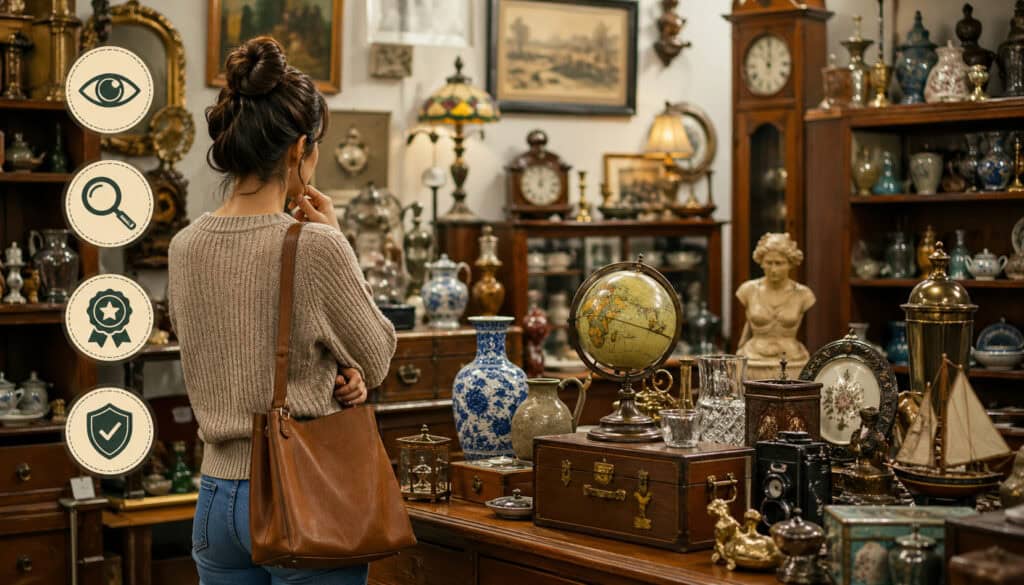
The fastest way to improve your eye is to scan for quality before you scan for price. Beginners often do the opposite. They see a low price and try to justify the purchase afterward. Experienced shoppers first ask, “Is this item well made, complete, usable, attractive, or collectible?” Then they decide whether the price makes sense.
Start by looking at the whole object. Does it have good proportions? Does it sit level? Does it feel balanced? Do the materials look consistent with its apparent age and purpose? A quality object usually feels intentional. Even if handmade, it should show care in shape, finish, and construction.
Next, check whether the piece has a clear use or display value. Collectible home décor does not have to be famous or expensive, but it should have something going for it: pleasing design, good material, recognizable style, skilled workmanship, scarcity, condition, or strong decorative appeal.
A useful first-pass method is the “five-second filter.” In five seconds, ask:
- Does it look better made than nearby items?
- Is the material solid, natural, heavy, or finely finished?
- Is there a mark, label, signature, or unusual detail?
- Is the damage minor or serious?
- Would I still want it if it had no resale value?
This last question matters. Resale value vintage pieces can be rewarding, but personal value is real too. A $12 handmade bowl you use daily may be a better purchase than a “maybe valuable” figurine that sits in a box.
For more route-planning and browsing strategy, a guide on how to navigate a bric-à-brac store like a pro can help you build a repeatable shopping system before you start inspecting individual pieces.
Materials Matter: How to Inspect Wood, Glass, Ceramic, Metal, Textiles, Leather, and Art
Material is one of the strongest quality signals in any secondhand object. Good materials do not automatically make an item valuable, but poor materials usually limit value, durability, and appeal. When trying to find quality antiques, vintage décor, or practical secondhand pieces, learn how different materials age.
Wood
Real wood usually has visible grain that continues around edges, drawers, and undersides. Solid wood feels denser and warmer than particleboard or MDF. Veneer is not automatically bad; many fine vintage furniture pieces use beautiful veneer over stable substrates. The issue is whether the veneer is intact, well matched, and properly applied.
Look underneath small tables, stools, boxes, frames, and shelves. Dovetail joints, pegged construction, old screws, and clean joinery can point to better craftsmanship. Avoid pieces with swollen particleboard, crumbling corners, heavy water damage, or structural wobble unless the price is very low and repairs are simple.
Glass
Quality glass often has clarity, good weight, polished edges, and balanced form. Hold it up to light. Look for chips around rims, cloudiness inside vases, cracks near handles, and rough mold seams. Hand-blown glass may have slight irregularities, bubbles, or a pontil mark on the base. Pressed glass can still be collectible, but condition is critical.
Ceramic and Pottery
Ceramics require careful vintage item inspection. Check rims, handles, spouts, bases, and glaze. Hairline cracks can be hard to see, so tilt the piece under light.
Crazing, which appears as fine crackling in the glaze, may be normal in older pieces but can reduce value if stained or severe. Hand-thrown pottery often shows subtle wheel marks and an artist signature or studio stamp.
Brass, Silver, Copper, and Other Metals
Metalware can be tricky because plated pieces may imitate solid metals. A magnet can help: brass, copper, and sterling silver are generally not magnetic, though mixed components can complicate this test. Look for plate loss, green corrosion, dents, pitting, and worn seams. Silverplate can still be beautiful, but sterling usually carries more value if marked.
Textiles and Leather
For textiles, inspect stitching, weave, stains, fading, moth holes, odors, and dry rot. Natural fibers often feel better and age more attractively, but they can also be fragile. Leather should feel supple, not sticky, cracked, or powdery. Check seams, linings, zippers, straps, and hardware.
Framed Artwork
Artwork deserves a slow look. Check for signatures, edition numbers, gallery labels, old framing materials, quality matting, and condition behind glass. Water stains, foxing, fading, torn paper, and warped boards can reduce value. Still, a modest print or painting can be a strong décor find if it is well framed, visually appealing, and priced fairly.
Craftsmanship Clues That Reveal Better Pieces
Craftsmanship is the difference between something merely decorative and something made with skill. You do not need to be an appraiser to notice it. Your goal is to compare the item against similar objects nearby and ask whether it shows better construction, finishing, design, and durability.
Joinery, Construction, and Fit
On small furniture, boxes, frames, and wooden objects, look at how pieces are joined. Dovetails, mortise-and-tenon joints, pegged joints, and tight seams are usually better signs than staples, glue globs, or loose nail-only construction.
Drawer interiors can be especially revealing. A drawer with solid sides, smooth movement, and tight joints usually signals better quality than one with thin fiberboard and rough stapled corners.
For lamps, clocks, toys, and decorative objects, check how components fit together. Quality items tend to have parts that line up cleanly. Hinges should move smoothly. Lids should sit properly. Handles should feel secure. Bases should be stable.
Weight, Balance, and Finish
Weight is not everything, but it often helps. A solid brass candlestick, heavy art glass bowl, dense hardwood stool, or thick ceramic vase often feels more substantial than a cheaper imitation. Balance matters too. A vase that tips easily, a lamp with a flimsy base, or a chair with uneven legs may not be worth the trouble.
Finish also tells a story. Look for smooth sanding, even glaze, polished edges, clean stitching, well-applied paint, and thoughtful details. Hand-painted ceramics may show brushwork, variation, and depth. Cheap transfers may look flat or pixelated.
Stitching, Hardware, and Small Details
On textiles, bags, leather goods, and upholstered stools, inspect stitching. Even, tight, reinforced stitching is a good sign. Loose threads, weak seams, and peeling bonded leather are warning signs.
Hardware can also reveal quality. Brass hinges, old screws, metal zippers, carved pulls, and sturdy clasps often outlast cheaper fittings. On framed art, the backing, hanger, mat, and frame corners can help you judge whether the piece was treated as something worth preserving.
Identifying Valuable Vintage Items Through Marks, Labels, Signatures, and Provenance
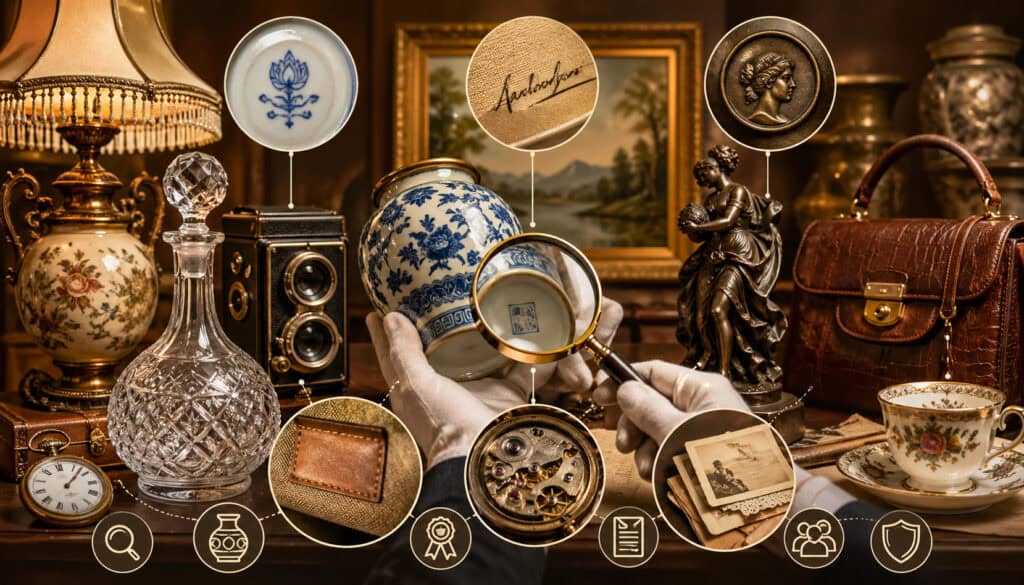
Identifying valuable vintage items often starts with marks, but marks should never be your only evidence. A maker’s mark, label, stamp, signature, pattern number, or registration mark can help you research origin and value. It can also be misleading if the mark is copied, incomplete, or associated with a common low-value line.
Look for marks on:
- Ceramic bases
- Glass bottoms
- Silver, brass, and pewter undersides
- Furniture drawer interiors or backs
- Textile labels and tags
- Book title pages and copyright pages
- Print margins and frame backs
- Toy bodies, wheels, and packaging
- Lamp sockets, bases, and shades
A signature on art can be handwritten, printed, stamped, or part of the plate. A numbered print may have an edition number, such as 45/250, but edition size alone does not guarantee value. A pottery mark may identify a studio, region, or artist, but some marks are decorative rather than identifying.
Provenance means the history of ownership or origin. In bric-à-brac stores, provenance is often limited, but clues still matter. Old gallery labels, exhibition stickers, handwritten notes, estate tags, original boxes, instruction sheets, receipts, and repair labels can all add context.
When researching, use your phone carefully. Search exact wording from labels, marks, and pattern names. Use image search for distinctive shapes, but confirm with multiple sources. Asking prices online are not the same as sold prices. A seller may list a vase for $300, but that does not mean buyers are paying that amount.
For furniture-specific research, especially when comparing style, construction, and market appeal, this article on understanding the value of mid-century furniture offers useful background for evaluating design-era pieces.
Condition: When Flaws Are Acceptable and When They Are Deal Breakers
This condition is where many beginners lose money. A piece can be old, stylish, or even collectible, but damage can reduce its value sharply. Some flaws are acceptable if they are minor, stable, repairable, or part of normal age. Others turn a promising find into a poor buy.
Common condition issues include cracks, chips, repairs, fading, missing parts, odors, rust, warping, stains, structural weakness, insect damage, and replacement components. Each category has different tolerance levels.
A tiny flea-bite chip on the underside of an inexpensive glass bowl may be acceptable. A crack through the body of a teapot is more serious, especially if you plan to use it. Light patina on brass can be attractive.
Active corrosion or deep pitting is a problem. A small water stain on the back of a framed print may not matter decoratively, but moisture damage across the image usually does.
Odor is especially important. Smoke, mildew, pet smells, and basement odors can cling to books, textiles, baskets, lampshades, and upholstered pieces. Cleaning may help, but not always. If you smell mildew, inspect for staining, mold spots, and damp storage damage.
Repairs are not always bad. A professionally restored chair can be useful and attractive. A ceramic piece with a visible glued handle may lose most collector value. Rewired lamps can be safer, but sloppy wiring is a hazard. Refinished furniture can be beautiful for home use but less desirable to collectors if the original finish mattered.
| Item Type | Minor Flaws That May Be Acceptable | Red Flags That Usually Reduce Value Too Much |
| Ceramic | Light crazing, small base wear, tiny underside chip | Body cracks, stained crazing, repaired handles, missing lids |
| Glass | Minor base scratches, tiny bubbles, light wear | Rim chips, cracks, cloudiness, sharp damaged edges |
| Wood Furniture | Surface scratches, old finish wear, replaced knob | Wobble, water swelling, broken joints, veneer lifting badly |
| Metalware | Tarnish, gentle patina, small dents | Deep corrosion, plate loss, loose handles, severe pitting |
| Textiles | Light fading, small repair, gentle wear | Mildew odor, dry rot, moth damage, large stains |
| Art | Frame wear, dusty glass, aged backing | Water damage, fading, tears, mold, warped board |
| Books | Light shelf wear, owner inscription | Missing pages, broken binding, mildew, heavy foxing |
| Lighting | Cosmetic wear, replaceable shade issue | Unsafe wiring, cracked socket, unstable base |
Pro Tip: If the flaw is the first thing you notice, it will probably be the first thing a guest, buyer, or collector notices too.
Practical Bric a Brac Shopping Tips: Tools to Bring and Habits to Build

Good shopping starts before you enter the store. A small kit helps you inspect items quickly and avoid guesswork. You do not need professional tools. You need simple, practical items that fit in a pocket or small bag.
Bring a flashlight to check interiors, undersides, dark shelves, and hairline cracks. A measuring tape helps with furniture, frames, lamps, rugs, and shelf décor.
A small magnet can help separate some plated or steel items from brass, copper, or silver-toned nonmagnetic metals. Your phone camera is useful for marks, condition notes, comparison images, and checking whether a piece fits your space.
A note app is underrated. Keep room measurements, shelf dimensions, preferred frame sizes, gift ideas, and a short list of items you are actively seeking. This prevents impulse buying and helps you make better decisions when a shelf is crowded.
Other useful habits include:
- Shop with clean hands when handling textiles, paper, or glass.
- Ask before opening locked cases or moving fragile items.
- Check return policies before buying electronics, lamps, or furniture.
- Put items back safely if you pass.
- Step away before purchasing anything expensive.
- Compare similar items in the store before choosing.
For a deeper packing list, this guide on what to bring when shopping at a vintage store is a useful companion for preparing before a serious browsing trip.
A Step-by-Step Inspection Checklist for Shoppers
A consistent inspection routine keeps you from missing problems. Use this process whether you are buying a $6 vase or a $150 side table. The more often you practice it, the faster it becomes.
Step 1: Look at the Shape and Style
Start with the overall impression. Is the form attractive? Does it have balance, proportion, and visual appeal? Does it fit your home, collection, booth, or resale audience? A quality item should have a reason to exist beyond being old.
Step 2: Identify the Material
Ask what it is made from. Solid wood or veneer? Hand-blown glass or molded glass? Sterling, silverplate, brass, copper, pewter, or plated steel? Natural fiber or synthetic blend? Real leather or vinyl? Material affects durability, care, price, and value.
Step 3: Check Construction
Look at seams, joints, stitching, fasteners, handles, lids, hinges, frames, and bases. Quality construction usually feels tight and stable. Poor construction feels loose, thin, uneven, or overly lightweight.
Step 4: Inspect Condition
Move slowly around the piece. Check high-impact areas first: rims, corners, handles, feet, drawer pulls, spines, hinges, cords, sockets, seams, and edges. Use light. Tilt the item. Smell textiles and books. Listen for rattles.
Step 5: Search for Marks or Labels
Look for maker marks, stamps, signatures, stickers, numbers, country-of-origin labels, pattern names, and old store labels. Photograph them before searching.
Step 6: Research Realistic Value
Compare sold results where possible, not just asking prices. Consider condition, size, color, pattern, maker, rarity, and current decorative demand. If you cannot verify value quickly, decide whether the item is worth the price for personal use.
Step 7: Decide Based on Use, Price, and Risk
Ask whether you would buy it if you could not resell it. Ask whether repairs are realistic. Ask where it will go. Ask what else the same money could buy. This final pause prevents most regret purchases.
Category Guide: Ceramics, Glassware, Furniture, Metalware, Books, Art, Textiles, Lighting, Toys, and Decorative Objects
Different categories require different inspection habits. A chipped ceramic bowl, a cracked lampshade, and a warped book are not equal problems. Use the category-specific guidance below to make better decisions.
Ceramics and Pottery
Ceramics are among the most common antique store finds, and they range from mass-produced mugs to studio pottery, porcelain, stoneware, majolica, figurines, tiles, and serving pieces.
Start by checking the base. Handmade pottery may show a trimmed foot, artist mark, studio stamp, or glaze variation. Porcelain may have factory marks or pattern names.
Inspect rims, handles, spouts, lids, and feet. These areas chip easily. Tap lightly with a fingernail; a clear ring can suggest soundness, while a dull sound may indicate cracks, though this is not foolproof. Crazing is common, but stained crazing can make functional pieces less desirable.
Avoid using older decorative ceramics for food unless you are sure they are food-safe. Some older glazes may not be suitable for modern use. Decorative value and practical use are different considerations.
Glassware
Glassware rewards patience. Look for clarity, color, shape, and finish. Quality pieces often have polished rims, good balance, and clean design. Depression glass, art glass, crystal, pressed glass, milk glass, carnival glass, and mid-century glass can all appear in bric-à-brac shops.
Check rims with your fingertip carefully, but avoid cutting yourself. Look for chips, cracks, cloudy interiors, mineral stains, and dishwasher damage. Crystal may ring when tapped gently, but sound alone does not prove quality. Cut glass usually has sharper, more precise decoration than molded patterns.
Pairs and sets are often more useful than singles, but single statement pieces can work beautifully for décor.
Small Furniture
Small furniture can be one of the best categories for shoppers who want quality without paying new prices. Stools, side tables, plant stands, nesting tables, shelves, chairs, and small cabinets are often overlooked because they require more effort to inspect and transport.
Check stability first. Does it wobble? Are legs even? Are joints loose? Is the top warped? Are drawers smooth? Look for real wood, good veneer, sturdy hardware, and repairable surface wear. Avoid pieces with severe water damage, active insect holes, crumbling particleboard, or major structural failure.
A scratched solid wood table may be a better buy than a flawless but flimsy modern piece. However, do not underestimate repair time. Tightening a screw is one thing; rebuilding a joint is another.
Metalware
Metalware includes candlesticks, trays, bowls, utensils, picture frames, bells, boxes, bookends, sculpture, copper pots, pewter mugs, and silver pieces. Weight and construction matter. Solid metal usually feels more substantial than thin plated material.
Look for stamps such as “sterling,” “925,” maker symbols, country marks, or silverplate indicators. Brass may have lacquer, patina, or tarnish. Copper should be checked for dents, repairs, and interior lining if intended for cooking.
Do not dismiss tarnish. It can often be cleaned. Do be cautious with deep corrosion, loose solder joints, sharp edges, or heavy plate loss.
Books and Paper Goods
Books can be decorative, collectible, or simply enjoyable. First editions, signed copies, illustrated books, art books, local histories, children’s books, vintage cookbooks, and unusual bindings can all be worth checking.
Open the book. Check title page, copyright page, edition statement, binding, missing pages, inscriptions, library markings, and odor. A beautiful old cover can hide a broken spine or mildew. Foxing, which appears as brown spotting, is common in older books but may reduce appeal if heavy.
Condition and subject matter drive value. A common old book in poor condition is usually not valuable. A niche book in strong condition may be more interesting than something that merely looks antique.
Art and Framed Pieces
Art can be intimidating, but you can still evaluate quality practically. Look at the image, medium, frame, mat, backing, signature, labels, and condition. Original paintings usually show surface texture, while prints may show dots or flat ink patterns under magnification.
Check whether the frame is solid and whether the mat is stained. Acidic mats can discolor paper. Look for edition numbers, artist signatures, gallery stickers, framer labels, and notes on the back. A strong frame alone may justify a modest price if it fits your décor.
Buy art you like first. Resale can be unpredictable unless the artist, edition, or market is identifiable.
Textiles
Textiles include linens, quilts, rugs, tapestries, scarves, curtains, embroidered pieces, tablecloths, pillows, and clothing accessories. Quality may show in fiber, weave, stitching, design, and condition.
Inspect under good light. Look for stains, fading, moth holes, weak fabric, repairs, and smells. Handmade embroidery, tight weaving, natural fibers, and unusual patterns can be appealing. However, cleaning textiles can be risky, so price should reflect condition.
Avoid anything with mildew odor unless you are very experienced with cleaning and willing to lose the item.
Lighting
Vintage lighting can be beautiful, but safety matters. Check the base, shade, socket, cord, switch, plug, and stability. A great lamp with outdated wiring may still be worth buying if the price allows for rewiring. A lamp that leans, sparks, smells burned, or has a cracked socket should be treated cautiously.
Look for ceramic, brass, wood, glass, or sculptural bases. Original shades can add value, but damaged shades are common. Measure shade fittings and height before buying.
Never assume a lamp is safe because it turns on in the store.
Toys and Decorative Objects
Vintage toys, figurines, music boxes, boxes, baskets, globes, clocks, and novelty objects require careful inspection. Collectors often care about completeness, original paint, labels, packaging, working parts, and condition.
Missing parts can reduce value dramatically. A toy without wheels, a music box that does not play, or a clock missing hands may still be decorative, but it should be priced as such. For children’s use, be cautious with older paint, small parts, and safety standards. Many vintage toys are better treated as display pieces.
Decorative objects are often about design impact. A no-name carved box, handmade basket, or sculptural vase can still be a wonderful find if the material, shape, and condition are strong.
How to Research Items Quickly Without Relying Only on Asking Prices
Research is essential, but it needs to be disciplined. The biggest mistake is finding one high online listing and assuming your item is worth the same. Asking prices reflect hope. Sold prices reflect market behavior.
Start with exact clues: maker, pattern, material, size, color, mark, and object type. Search specific combinations, such as “blue studio pottery vase signed base,” “brass horse bookends,” or “etched crystal decanter stopper.” Use image search to identify similar shapes, but do not treat visual matches as proof.
When comparing values, match conditions closely. A complete set is not comparable to a single piece. A mint-condition item with the original box is not comparable to a chipped one. A large signed work is not comparable to a small unsigned print. Color, size, rarity, and current demand all matter.
For resale value vintage pieces, consider fees, shipping, packing risk, storage, cleaning, and time. A fragile $40 glass item may not be worth reselling if it takes special packing and has a high breakage risk. A small, sturdy, easy-to-ship item may be more practical.
Also remember that local demand matters. A piece that sells well online may sit in a booth if the local audience does not care for that style. A decorative object with modest collector value may sell quickly if it fits current home décor tastes.
Resale Value Versus Personal Value: How to Buy With Confidence
Not every quality piece needs to be a resale opportunity. Many of the best secondhand shopping tips come down to knowing your purpose before you buy. Are you shopping for your home, your collection, a gift, staging, resale, or creative reuse? Each purpose changes what “worth it” means.
Personal value is about usefulness, beauty, memory, style, and enjoyment. A handmade mug with no famous mark may still be worth buying if you love using it. A framed print may not have high market value but could transform a hallway. A vintage lamp may be worth rewiring because it fits your room perfectly.
Resale value depends on demand, condition, brand recognition, rarity, shipping practicality, and price spread. A piece must be bought low enough to account for your time and selling costs. Avoid “get rich” thinking. Most bric-à-brac reselling is about careful margins, patience, and good judgment, not sudden windfalls.
Decorators may care more about scale, color, texture, and uniqueness than maker names. Collectors may care about authenticity and completeness. Resellers may care about sell-through rate and condition. Everyday shoppers may care about durability and price.
Impulse buys happen when these goals blur. You see an item that is old, cheap, or interesting and convince yourself it must be useful someday. A better habit is to ask:
- Where will I put it?
- What will I use it for?
- Is it better than what I already own?
- Can I clean, repair, carry, and store it?
- Would I buy it tomorrow at the same price?
If the answer is no, leave it for someone else.
Common Beginner Mistakes When Trying to Find Quality Antiques and Vintage Pieces
Beginners often improve quickly once they recognize the traps. Most mistakes come from rushing, guessing, or letting excitement override inspection.
One common mistake is assuming old means valuable. Many old items were cheaply made when new, and age has not changed that. A worn mass-produced souvenir may be charming, but it is not automatically collectible. Quality, scarcity, condition, and demand matter.
Another mistake is ignoring damage. A chip, missing lid, broken hinge, or mildew smell may seem minor in the store but become frustrating at home. Damage does not always ruin an item, but it should change the price and your expectations.
Beginners also overtrust original price stickers. A high original retail price does not mean strong secondhand value. Trends change. Brands decline. Materials age poorly. A decorative plate once sold at a department store may have little resale demand now.
Reproductions are another issue. Some reproductions are attractive and worth buying for décor, but they should not be priced like originals. Look for artificial distressing, modern screws, printed wear patterns, overly perfect “aged” finishes, and labels that imply vintage style rather than actual age.
A final mistake is buying projects too casually. A chair that needs upholstery, a lamp that needs rewiring, or a frame that needs glass may be worthwhile, but only if you know the cost and effort. Otherwise, the bargain becomes cluttered.
Realistic Examples: Quality Finds and Questionable Items
Examples can help train your eye. Imagine you are looking at two ceramic vases. The first is heavy, balanced, signed on the base, has an even glaze, and shows no cracks. The second has a blurry decorative mark, a visible rim chip, and a hairline crack running from the top. Even if the second looks older, the first is likely the better buy.
Now compare two small tables. One is solid wood with tight joints, light surface scratches, and a stable frame. The other has a trendy shape but is made from swollen particleboard with peeling veneer and a loose leg. The first may be refinished, used, or resold. The second may look nice briefly but has poor long-term value.
For metalware, picture a tarnished brass tray with good weight, engraved detail, and no corrosion. Beside it is a shiny gold-tone tray that feels thin, bends slightly, and has flaking plating. The tarnished piece is more promising because cleaning is easier than replacing lost plating.
For books, a dusty illustrated hardcover with a tight binding, clean pages, and an interesting subject may be a strong find. A much older book with mildew odor, loose pages, and missing illustrations may be a poor purchase unless it is extremely rare and properly valued.
For art, a small signed print with clean matting, an edition number, and a quality frame may be worth checking. A faded poster in a warped frame with moisture stains may not be worth buying unless you only want the image and the price is minimal.
These examples show a simple principle: quality is not one clue. It is the combination of material, construction, condition, usefulness, and fair price.
How Store Layout, Pricing, and Timing Affect Hidden Gems
Bric-à-brac stores are not always organized by value. That is part of the opportunity. A valuable or well-made piece may sit beside common items because staff sorted by category, color, size, or donation box rather than market demand.
Check lower shelves, back corners, locked cases, counter displays, and recently arrived carts if allowed. Small quality items often hide in crowded areas: sterling spoons mixed with flatware, studio pottery among mugs, carved boxes near baskets, or signed prints stacked behind mass-produced wall décor.
Timing matters too. Some stores restock daily. Others price new arrivals in batches. Weekend traffic can clear obvious finds quickly, while quieter weekday visits may give you more time to inspect. Still, do not assume early is always best. Items are missed constantly because shoppers focus on familiar categories.
Pricing can also vary by staff knowledge. One shop may price all brass candlesticks similarly, even though some are solid and others plated. Another may recognize designer furniture but overlook art glass. Learning each store’s tendencies helps you shop smarter.
If you visit regularly, track what moves and what sits. If every mid-century lamp disappears quickly, inspect the lighting first. If ceramics linger, you may have more time to research. If books are underpriced, build knowledge in that category.
For broader local shopping strategy and pacing, this article on what to expect from a visit to a vintage shop gives helpful context for planning a more relaxed, productive visit.
Frequently Asked Questions
What is the best first step when trying to spot quality items in bric-a-brac stores?
Start by checking the item’s material, weight, construction, and condition. Pick it up if allowed, inspect the underside, back, base, seams, and high-wear areas. A quality item should feel sturdy, well made, and reasonably intact before you start researching its value.
Are maker marks always a sign of value?
No. Maker marks are useful clues, but they do not automatically mean an item is valuable. Some marked pieces are common, damaged, or reproduced. Use marks as a starting point for research, then compare condition, material, size, and actual sold prices.
How can I tell if metal is brass, copper, silver, or plated?
A small magnet can help, since brass, copper, and sterling silver are generally not magnetic. Look for markings such as sterling, 925, silverplate, EPNS, or maker symbols. Also check worn areas where plating may reveal a different metal underneath.
Are chips and cracks always deal breakers?
Not always. A tiny chip on the underside of a decorative item may be acceptable if the price is fair and the flaw is not visible. However, cracks through ceramic, glass, lamp bases, teapots, or structural pieces usually reduce value and usefulness significantly.
What should I bring when bric-à-brac shopping?
Bring a flashlight, measuring tape, small magnet, phone camera, and note app. These tools help you inspect condition, measure furniture or frames, test some metals, photograph maker marks, and avoid buying items that will not fit your space.
How do I avoid overpaying for vintage or antique store finds?
Compare sold prices instead of only looking at asking prices. Factor in damage, missing parts, cleaning, repairs, shipping difficulty, and whether you truly need the item. Set a maximum price before buying so you do not make an impulse purchase.
What categories are easiest for beginners to inspect?
Ceramics, glassware, small wooden furniture, metal candlesticks, framed prints, baskets, and books are good beginner categories. They are common enough that you can compare many examples and learn how quality, condition, and construction differ.
Is resale value more important than personal value?
Only if you are buying specifically to resell. For most shoppers, personal value matters just as much. A piece that improves your home, serves a real purpose, or brings daily enjoyment can be a successful purchase even if it has limited resale value.
Conclusion
Learning to spot quality items in bric-a-brac stores is a skill built through observation, patience, and practice. The more you handle real wood, good glass, well-thrown pottery, sturdy metalware, quality textiles, and carefully made furniture, the easier it becomes to recognize them quickly.
Look beyond age and style. Focus on material, craftsmanship, condition, authenticity clues, usefulness, and fair pricing. Check marks and labels, but do not rely on them blindly. Research while shopping, but do not mistake asking prices for true value. Accept minor flaws only when they make sense for your purpose and budget.
Bric-à-brac stores reward curious shoppers. They invite you to slow down, inspect carefully, and notice details others miss. Whether you are searching for thrift store treasures, collectible home décor, antique store finds, or practical pieces with character, the best buys are usually the ones that combine quality, condition, and personal meaning.
Shop with tools, patience, and a clear plan. Leave behind pieces that are damaged beyond your comfort level, overpriced for their condition, or tempting only because they seem old. Choose the items that are well made, fairly priced, and genuinely useful or beautiful to you. That is how hidden gems become lasting finds.