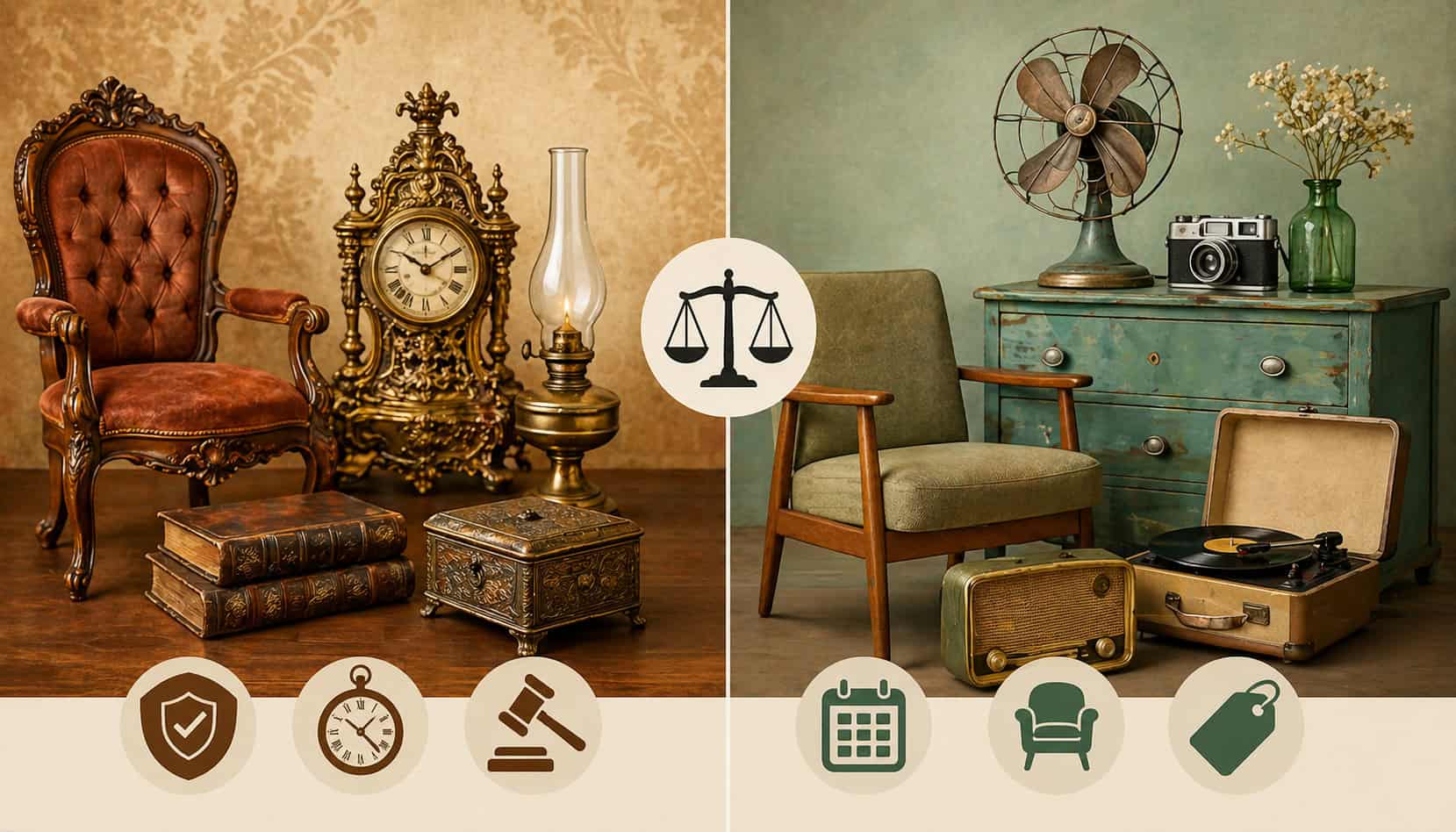
The words “antique” and “vintage” are used everywhere: in flea markets, estate sales, online listings, décor blogs, jewelry cases, resale shops, and family conversations about inherited objects. A dresser may be called antique by one seller, vintage by another, and “old” by someone simply trying to clear out a garage.
That confusion matters. When you understand antique vs vintage, you can shop with more confidence, ask better questions, avoid overpaying for mislabeled pieces, and recognize when an item’s charm is decorative rather than collectible.
For collectors, the label can influence value. For decorators, it can help define a room’s mood. For resellers, it affects how an item should be described. For beginners, it turns secondhand shopping from guesswork into a more informed, enjoyable experience.
The key is simple: antique usually refers to greater age, while vintage usually refers to a recognizable past era with style, quality, or cultural appeal. But age is only part of the story. Condition, rarity, craftsmanship, materials, maker, provenance, and current demand all shape how an item is categorized and valued.
Antique vs Vintage Definition: What Does Antique Mean?
An antique is generally understood as an item that has reached a widely accepted older age benchmark. In everyday buying and collecting, antique items are usually older pieces with historical, decorative, or collectible interest.
They may include furniture, jewelry, clocks, ceramics, silver, textiles, books, art, tools, toys, glassware, and architectural pieces.
Age alone does not automatically make something valuable. A damaged mass-produced chair may be old but not especially desirable. A well-preserved handmade cabinet, signed painting, early ceramic piece, or documented family heirloom may attract more interest because it offers quality, history, rarity, or provenance.
Antique value often depends on several factors working together:
- Age: Older items may be more desirable when they are authentic and well-preserved.
- Condition: Cracks, missing parts, heavy repairs, or refinishing can affect value.
- Rarity: Hard-to-find forms, patterns, makers, or materials may increase collector interest.
- Craftsmanship: Hand-cut joinery, hand painting, carving, casting, or fine materials can matter.
- Provenance: Documentation, ownership history, receipts, labels, or exhibition records can support authenticity.
- Demand: Even genuine antiques can fluctuate in desirability depending on taste and market trends.
Antique furniture often shows construction details that differ from newer pieces. Look for hand-cut dovetails, irregular tool marks, older fasteners, solid wood construction, aged patina, and wear that makes sense for how the item was used.
In jewelry, clues may include hallmarks, older clasp styles, hand-setting, natural stone wear, or period-specific design.
What Does Vintage Mean?
Vintage usually describes items from a past era that have recognizable style, quality, nostalgia, or cultural appeal. Vintage items are not typically as old as antiques, but they are old enough to represent a previous period rather than current production.
A vintage dress, lamp, record player, cocktail glass set, handbag, kitchen canister, poster, or armchair may be valued because it captures the look and feel of a particular design era. Vintage often connects strongly to fashion, décor, lifestyle, and popular culture.
Vintage does not simply mean “used.” A secondhand coffee mug from a recent big-box store may be pre-owned, but that does not necessarily make it vintage. A vintage mug, by contrast, may have a distinctive pattern, maker, glaze, shape, or cultural connection that places it in a recognizable past style.
Vintage appeal often comes from:
- distinctive design;
- better materials than many current mass-market alternatives;
- nostalgia;
- collectibility;
- usefulness;
- decorative character;
- recognizable maker or brand;
- connection to an era, trend, or lifestyle.
For example, mid-century glassware, embroidered linens, enamel kitchenware, studio pottery, retro lamps, old denim jackets, vinyl records, and vintage décor can all appeal to buyers for different reasons. Some people collect them. Others simply enjoy using them at home.
If you are decorating, vintage pieces can add warmth and personality without making a room feel like a museum. A single vintage mirror, brass lamp, woven basket, framed print, or side table can make a modern room feel more layered.
For styling inspiration, this guide to vintage home décor ideas offers useful ways to mix older pieces into everyday spaces.
The Difference Between Antique and Vintage
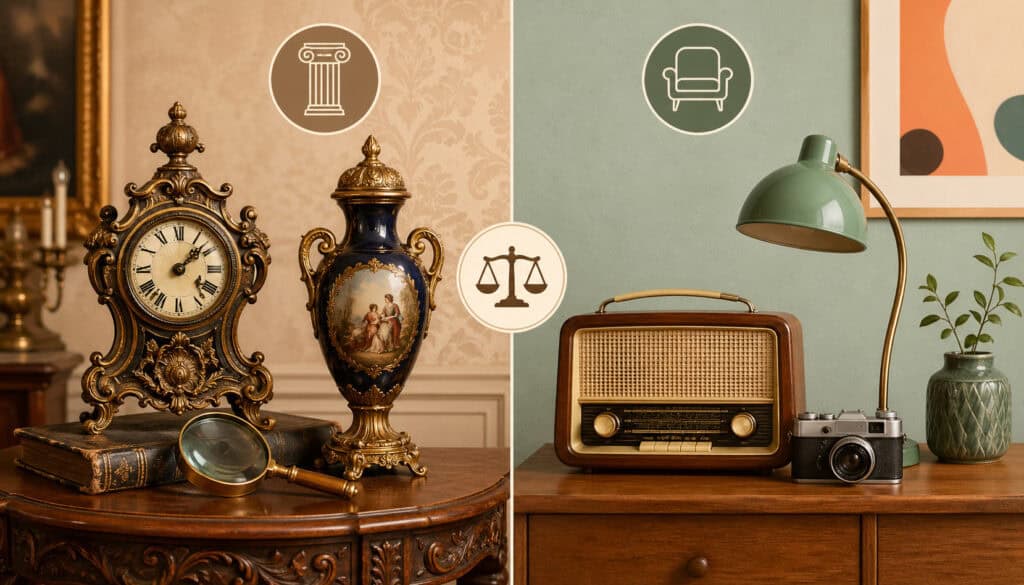
The main difference between antique and vintage is age, but the practical difference is broader than that. Antique items are usually older and may be judged more heavily by historical significance, craftsmanship, rarity, condition, and authenticity. Vintage items are often judged by style, desirability, era recognition, usability, and cultural appeal.
A hand-carved wooden chest with old joinery, aged surface, and documented history may be antique. A colorful ceramic pitcher from a recognizable past design period may be vintage. Both can be valuable, but for different reasons.
Here is a helpful comparison:
| Category | Antique | Vintage |
| Main idea | Older item with historical, collectible, or decorative interest | Past-era item with recognizable style, quality, or cultural appeal |
| Age focus | Usually significantly older | Usually from a previous era, but not old enough to be antique |
| Value drivers | Age, rarity, condition, craftsmanship, provenance, maker | Style, demand, maker, condition, nostalgia, trend cycles |
| Common examples | Early furniture, old silver, antique ceramics, old books, period jewelry | Mid-century furniture, vintage clothing, glassware, lamps, records, kitchenware |
| Buying risk | Repairs, refinishing, reproductions, missing provenance | Modern reproductions, “vintage-style” labeling, condition wear |
| Best for | Collectors, decorators, history lovers, heirloom buyers | Decorators, fashion lovers, casual collectors, resellers, style-focused shoppers |
The distinction also affects price expectations. An antique may command a higher price because it is older, rarer, or more difficult to find in good condition. A vintage item may command a high price because it is trendy, useful, stylish, or associated with a desirable maker.
For example, a simple antique chair may be less expensive than a highly desirable vintage designer chair. Similarly, a vintage toy in original packaging may sell for more than a much older but common damaged household object.
Antique vs Vintage Collectibles: How Categories Affect Value
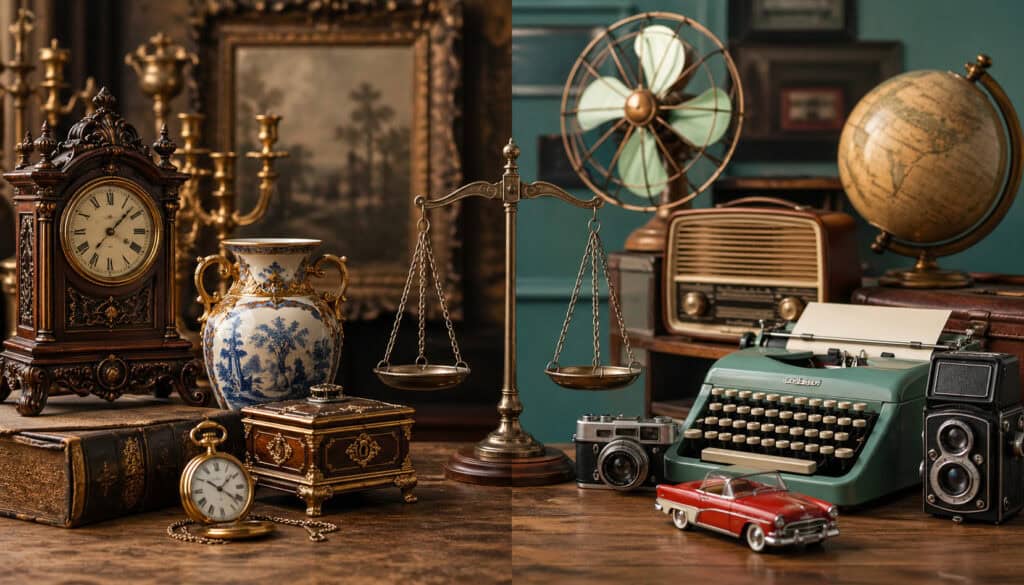
When people discuss antique vs vintage collectibles, they often assume antiques are always worth more. That is not always true. Collectible value is shaped by demand as much as age.
A vintage concert poster, designer handbag, rare toy, collectible glass pattern, or discontinued kitchenware color may attract strong demand. Meanwhile, some antique items may be beautiful but slow to sell if the style is not currently popular or if the piece is difficult to display, ship, or use.
Collectors often look at:
- maker or brand;
- age and era;
- scarcity;
- condition;
- originality;
- documentation;
- completeness;
- current trend demand;
- display appeal;
- functional use.
In furniture, original finish can be important. In toys, original boxes and working parts matter. In books, edition, dust jacket, binding, and condition are key. In jewelry, metal content, stones, hallmarks, and design period influence interest. In ceramics and glassware, maker marks, patterns, chips, repairs, and rarity all play a role.
Trend cycles also matter. Vintage décor can become more desirable when a certain look returns to popularity. Colored glass, brass accents, mid-century lines, folk art, stoneware, rattan, and patterned textiles may rise or fall in demand as decorating tastes shift.
A helpful companion resource is this guide on determining the value of vintage and antique items, which explains how authenticity, marks, rarity, and condition can influence what shoppers and sellers should consider.
Retro vs Vintage vs Antique
Understanding retro vs vintage vs antique helps prevent one of the most common shopping mistakes: assuming every old-looking item is old.
Retro usually refers to a newer item made in the style of an earlier era. A brand-new toaster with rounded lines and pastel color may look retro, but it is not vintage if it was recently manufactured. Retro is about design inspiration, not necessarily age.
Vintage refers to an actual older item from a past era. A lamp, dress, vase, or record cabinet that was made during the period it represents may be vintage.
Antique refers to a much older item that has crossed the commonly used age threshold and may carry historical or collectible significance.
Here is a simple way to think about it:
- Retro: Newer item inspired by the past.
- Vintage: Older item from a recognizable past era.
- Antique: Significantly older item with historical or collectible age.
Other related terms are useful too. “Collectible” means people seek the item as part of a category, set, maker, style, or theme. “Reproduction” means a newer item made to imitate an older one.
“Estate” usually means the item came from a household or personal property sale, but it does not automatically mean antique. “Secondhand” simply means previously owned.
A secondhand item can be antique, vintage, collectible, retro, or none of these. That is why labels need evidence.
Practical Examples by Category
The easiest way to understand antique vs vintage is to apply the terms to real objects. Most shoppers encounter these categories in furniture, jewelry, clothing, décor, ceramics, glassware, books, art, toys, kitchenware, and small collectibles.
Furniture
An antique dresser may have hand-cut joinery, irregular drawer interiors, solid wood construction, older hardware, and wear that matches decades of use. If the piece has original finish, documented maker, or unusual craftsmanship, it may be more desirable.
A vintage dresser may have clean mid-century lines, laminate top, tapered legs, sculptural pulls, or a recognizable design style from a past era. It may be valued less for age and more for its look, usefulness, and fit with modern interiors.
A retro dresser might be newly made but styled to look mid-century. It may still be attractive, but it should not be priced as an authentic vintage piece unless it truly is one.
Jewelry
Antique jewelry may show older metalwork techniques, hand engraving, hallmarks, older clasp designs, natural stone wear, or period-specific settings. Provenance and professional evaluation can be especially helpful for fine jewelry.
Vintage jewelry may include costume jewelry, brooches, charm bracelets, cocktail rings, signed pieces, or designer fashion jewelry from a past era. Some vintage costume jewelry is highly collectible, especially when signed, well-made, and in excellent condition.
Watch for missing stones, replaced clasps, worn plating, loose settings, and repairs. These issues may not make a piece undesirable, but they should affect the price.
Clothing and Textiles
Vintage clothing is often categorized by silhouette, fabric, label, stitching, zipper placement, buttons, and construction. A dress with a period label, quality fabric, and strong design may be desirable even if it needs minor mending.
Antique textiles may include quilts, lace, samplers, embroidered linens, garments, or ceremonial pieces. These often require careful storage because older fibers can become fragile.
For beginners, vintage clothing is usually more wearable than antique clothing. Antique textiles may be better suited for display, preservation, or light decorative use.
Décor, Ceramics, and Glassware
Vintage décor includes lamps, mirrors, vases, wall art, baskets, barware, candleholders, and decorative objects that bring character into a room. These items are often chosen for mood, color, texture, and styling potential.
Antique ceramics and glassware may be valued for maker, pattern, age, rarity, and condition. Chips, cracks, staining, crazing, and repairs can significantly affect value, especially for collectors.
For collecting ideas, this article on hidden collectibles and décor pieces offers useful examples of what shoppers often inspect when browsing small furniture, lighting, and decorative finds.
Books, Art, Toys, and Kitchenware
Antique books may be valued for edition, binding, illustrations, inscriptions, scarcity, or subject matter. Vintage books may be valued for cover art, nostalgia, photography, cookery, design, or pop culture appeal.
Art can be antique, vintage, or contemporary. Look for signatures, labels, gallery tags, framing methods, paper type, canvas condition, and provenance.
Vintage toys are often priced according to condition, completeness, brand, character, packaging, and demand. Antique toys may be rarer, but missing parts or unsafe materials can affect desirability.
Kitchenware is a broad category. Vintage mixing bowls, enamelware, canisters, cast iron, Pyrex-style pieces, utensils, and small appliances often appeal because they are useful and decorative. Antique kitchen tools may be more collectible or display-oriented.
How Age, Rarity, Condition, Craftsmanship, and Demand Work Together
Classification begins with age, but value depends on a combination of factors. A shopper who understands this will make better decisions than someone who only asks, “How old is it?”
Age helps place an item in context. Rarity tells you how often similar examples appear. Condition shows how well it survived. Craftsmanship reveals quality. Materials influence durability and desirability. Provenance supports authenticity. Demand determines whether buyers are actively looking for that type of item.
For example, two vintage lamps may appear similar. One may have a known maker, original shade, intact wiring, and a desirable shape. The other may be unsigned, damaged, rewired poorly, and missing parts. Both may be vintage, but they should not be priced the same.
The same is true for antique furniture. A refinished antique table can still be useful and beautiful, but refinishing may reduce collector value if the original surface was important. On the other hand, a sensitive restoration may make a piece stable and usable without erasing its character.
How to Evaluate an Item’s Age
Learning to estimate age is one of the most useful skills in any secondhand shopping guide. You do not need to be an appraiser to notice clues. You simply need to slow down, look closely, and compare details.
Start with maker marks. These may appear on the bottom of ceramics, inside drawers, on jewelry clasps, behind frames, on labels, under chairs, or inside handbags. A mark can help identify maker, origin, production period, or pattern.
Next, inspect construction. Furniture may show dovetails, screws, nails, saw marks, veneer thickness, drawer bottoms, and hardware changes. Older handmade elements are often less uniform than modern machine-made parts.
Labels are helpful in clothing, textiles, luggage, toys, and household goods. Fabric content tags, union labels, sizing, typography, and brand names can all provide clues. Packaging, instruction booklets, and receipts may also help.
Materials matter. Bakelite, celluloid, certain plastics, old glass formulas, solid woods, early synthetics, hand-blown glass, and older metal finishes can point toward a period. However, materials can be reused or reproduced, so use them as clues rather than proof.
Wear patterns should make sense. A chair should show wear where hands, feet, and bodies touched it. A vase may show base wear. Jewelry may show soft wear around edges and clasps. Artificial distressing can look too even, too intentional, or mismatched with the item’s supposed use.
Condition: When Wear Adds Character and When Damage Reduces Value
Conditions can make or break value. Some wear adds character. Other damage lowers value, limits use, or signals costly repairs.
Patina is natural surface aging that can add depth and beauty. On wood, metal, leather, and stone, patina may show honest use and age. Collectors often appreciate patina when it is stable, attractive, and consistent with the item.
Damage is different. Chips, cracks, missing parts, heavy odors, rust, water damage, structural weakness, stains, fading, poor repairs, and replacement components can reduce value. Some damage is cosmetic. Some affect safety or function.
Common condition issues include:
- chips on glass or ceramics;
- cracks in pottery, frames, wood, or stone;
- old glue repairs;
- missing knobs, lids, stones, buttons, or hardware;
- fading from sunlight;
- musty odors in textiles, books, and drawers;
- rust on metal;
- refinished surfaces;
- replaced legs, handles, clasps, shades, or cords;
- warping, looseness, or instability.
When does wear add character? Light scuffs on a vintage leather bag, gentle fading on a textile, surface darkening on brass, or worn edges on a wooden table may make an item feel authentic and lived-in.
When does damage reduce value? A cracked ceramic bowl, unstable chair, repaired glass stem, missing jewelry stone, strong odor, or poorly refinished antique cabinet may be less desirable, especially to collectors.
Antique Shopping Tips for Beginners
Antique shopping is part research, part patience, and part instinct. Beginners often feel pressure to know everything immediately, but strong buying decisions usually come from careful observation and thoughtful questions.
Start with categories you enjoy. Furniture, ceramics, books, jewelry, art, clocks, tools, and textiles each have their own clues. Learning one category deeply is often better than trying to master everything at once.
Before buying, ask:
- What makes the seller believe it is antique?
- Are there maker marks, signatures, labels, or receipts?
- Has it been repaired or refinished?
- Are all parts original?
- Is it sturdy, safe, and usable?
- Are there comparable sold examples?
- Do I want it for collecting, decorating, resale, or personal use?
Measure furniture before buying. Check whether drawers slide, chairs wobble, doors close, and mirrors are stable. For lighting, assume rewiring may be needed unless the seller can clearly explain its condition.
For delicate antiques, consider care and storage. Antique textiles may need acid-free storage. Old books need dry conditions. Antique wood furniture should avoid harsh humidity changes. Silver, brass, and copper may require gentle cleaning, not aggressive polishing.
This guide on collecting antiques on a budget includes practical advice for building confidence without overspending.
Vintage Shopping Tips for Beginners
Vintage shopping is often more flexible than antique collecting because many vintage items are bought for style and use. Still, careful inspection matters.
Set a budget before browsing. Vintage items can feel affordable one by one, but small purchases add up quickly. Decide whether you are shopping for function, décor, wardrobe, resale, or collection building.
For vintage décor, look for pieces that work with your home now. A lamp, framed print, small table, mirror, vase, or textile can add character without overwhelming a room. Choose pieces that complement your existing colors, scale, and lifestyle.
For clothing, check seams, zippers, buttons, lining, stains, odors, stretch, and fabric strength. Try items on when possible, because older sizing can differ from current sizing.
For kitchenware, inspect chips, cracks, dishwasher damage, worn finishes, and food safety concerns. Some older items may be better for display than daily use.
For electronics, lamps, and small appliances, be cautious. Even if a vintage item looks great, wiring and internal components may need professional attention.
Common Mistakes Shoppers Make
One of the biggest mistakes is assuming old means valuable. Many old items are common, damaged, incomplete, or simply not in demand. Age can support value, but it does not guarantee it.
Another mistake is believing every vintage-style item is truly vintage. Retailers often sell new items designed to look aged. These can be attractive and useful, but they should be priced and described honestly.
Shoppers also sometimes ignore reproductions. Reproductions are not automatically bad. A reproduction can be decorative and affordable. The problem happens when it is mistaken for an authentic antique or vintage piece.
Relying only on seller labels is another risk. Sellers may use terms loosely because they sound appealing. “Antique,” “vintage,” “retro,” “rare,” and “collectible” should be starting points for questions, not final proof.
Other common mistakes include:
- failing to inspect condition closely;
- not measuring furniture;
- overlooking odors;
- ignoring replaced parts;
- overcleaning patina;
- assuming brand names always mean value;
- buying only because something seems trendy;
- forgetting repair, delivery, or restoration costs;
- confusing sentimental value with market value.
A smart shopper stays curious. When in doubt, take photos of marks, compare similar items, ask questions, and step away before making an expensive impulse purchase.
Realistic Classification Scenarios
Imagine you find a wooden dining chair with uneven hand-cut joinery, old finish, worn arms, and older hardware. The seller says it has been in one family for generations. It may be antique, but you would still check stability, repairs, replaced parts, and comparable examples.
Now imagine a walnut coffee table with tapered legs, clean lines, and a recognizable mid-century look. It is not old enough to be antique, but it may be vintage if it was made during that design period. If it is newly made in the same style, it is retro or reproduction.
A floral dress with an older label, metal zipper, period silhouette, and age-appropriate stitching may be vintage. A new dress printed with nostalgic flowers is vintage-inspired, not vintage.
A ceramic pitcher with a maker mark, light crazing, and a documented older pattern may be antique or vintage depending on age. A similar pitcher from a current home goods store is simply secondhand if previously owned.
A box of toys may include several categories: an antique tin toy, vintage action figures, retro-style modern toys, reproductions, and ordinary used toys. Each should be judged separately.
These scenarios show why collectible age categories are not just labels. They are conclusions based on evidence.
Step-by-Step Antique vs Vintage Buyer Checklist
Use this checklist before buying antique vs vintage items, especially when price, condition, or authenticity matters.
| Step | What to Check | Why It Matters |
| 1 | Identify the object type | Furniture, jewelry, glass, books, art, and textiles require different clues |
| 2 | Look for marks | Maker marks, labels, signatures, stamps, and hallmarks can support age |
| 3 | Inspect construction | Joinery, stitching, hardware, fasteners, and materials reveal period clues |
| 4 | Check condition | Damage, repairs, odors, fading, rust, and missing parts affect value |
| 5 | Ask about provenance | Receipts, family history, documentation, and prior ownership may help |
| 6 | Compare examples | Sold listings, collector guides, and reputable references provide context |
| 7 | Decide category | Antique, vintage, retro, reproduction, collectible, estate, or secondhand |
| 8 | Consider use | Will you display it, wear it, resell it, restore it, or use it daily? |
| 9 | Calculate extra costs | Repairs, cleaning, framing, rewiring, delivery, or storage may add expense |
| 10 | Buy with purpose | Choose pieces that fit your budget, taste, space, and confidence level |
Personal Value, Decorative Value, and Market Value
Not every meaningful object has high resale value, and not every valuable object will suit your home or lifestyle. This is one of the healthiest lessons in secondhand shopping.
Personal value is emotional. A chipped mixing bowl from a grandparent may be priceless to you even if it has little market value. A vintage record, travel poster, or old book may matter because it connects to memory, identity, or taste.
Decorative value is about how well an item works in a space. A vintage mirror may brighten a hallway. An antique trunk may serve as a coffee table. A worn stool may add texture to a modern kitchen. These items may not be rare, but they can be deeply useful.
Market value is what buyers are currently willing to pay. It depends on demand, condition, maker, rarity, and comparable sales. Market value can change over time, especially with trend-driven vintage items.
The best purchases often balance all three. You like the item, it works in your space, and the price makes sense for its condition and category.
Frequently Asked Questions
What is the easiest way to remember antique vs vintage?
Antique usually means significantly older, while vintage usually means from a recognizable past era. Antique is more focused on age, while vintage is more connected to style, era, and cultural appeal.
Can something be both antique and vintage?
In casual conversation, people sometimes use both words for older items. However, in careful descriptions, antique and vintage usually refer to different age categories. If an item is old enough to be antique, antique is usually the more accurate label.
Is retro the same as vintage?
No. Retro usually describes a newer item made to look like an earlier style. Vintage means the item was actually made in a past era.
Are antique items always more valuable than vintage items?
No. A desirable vintage designer piece, rare toy, signed jewelry item, or collectible décor object can be worth more than a common or damaged antique item. Value depends on demand, condition, maker, rarity, and usefulness.
How can I tell if something is a reproduction?
Look for overly uniform aging, modern screws, current labels, new materials, inconsistent wear, suspiciously perfect distressing, and missing signs of genuine use. Comparing the item with documented originals can also help.
Does refinishing antique furniture reduce value?
It can. Refinishing may reduce collector value if it removes the original surface, patina, or historical character. However, careful restoration may improve usability when a piece is damaged or unstable.
Is patina the same as dirt?
No. Patina is natural aging that develops over time on materials like wood, metal, leather, and stone. Dirt is surface grime. Cleaning should be gentle because aggressive polishing or stripping can remove desirable age character.
Should beginners buy antique or vintage items for resale?
Beginners should be cautious with resale expectations. It is better to start by learning categories, condition, and comparable sold prices. Avoid assuming every antique or vintage item will generate profit.
What should I bring when shopping for antique or vintage items?
Bring measurements, a small flashlight, a magnifying glass, your phone for photos and research, a list of needed items, and a realistic budget. For furniture, know your doorway, stairway, and vehicle dimensions.
Is secondhand always vintage?
No. Secondhand simply means previously owned. A secondhand item may be recent, vintage, antique, retro, collectible, or simply ordinary used merchandise.
Conclusion
Understanding antique vs vintage helps you shop more thoughtfully, describe items more accurately, and appreciate older objects for the right reasons.
Antique items are usually valued for greater age, historical character, craftsmanship, rarity, condition, and provenance. Vintage items are often valued for recognizable era style, quality, nostalgia, usefulness, and cultural appeal.
The smartest shoppers do not rely on labels alone. They inspect materials, maker marks, construction, wear patterns, condition, repairs, and design details. They compare examples, ask good questions, and stay realistic about value.
Most importantly, they understand that an item can be meaningful even when it is not rare, and useful even when it is not expensive. A vintage lamp can transform a room. An antique chair can carry history. A secondhand bowl can become part of daily life. A collectible toy can connect generations.
When you know the difference between antique and vintage, you gain more than vocabulary. You gain confidence, patience, and a better eye for the pieces worth bringing home.