
Finding bric-à-brac treasures in Mont-Royal is less about rushing toward the first attractive object and more about developing patience, curiosity, and a careful eye. A shelf that initially looks cluttered may contain a hand-painted ceramic bowl, an unusual brass candlestick, a solid-wood box, or a framed print that perfectly suits an empty wall.
The appeal of bric-à-brac shopping comes from its unpredictability. One visit might reveal retro lamps and old records, while another might uncover mirrors, glassware, handmade objects, vintage books, baskets, kitchenware, small furniture, or decorative pieces with years of character.
For collectors, vintage shoppers, students, apartment decorators, tourists, resellers, and bargain hunters, the Mont-Royal area offers an enjoyable setting for slow, discovery-focused shopping.
Its walkable commercial streets and varied shopping culture make it possible to compare curated vintage pieces, everyday secondhand goods, community-sale finds, and unusual objects during the same outing.
Montréal’s tourism guide also highlights the wider city’s strong vintage-shopping culture, where shoppers can encounter everything from preserved curiosities to carefully selected statement pieces.
This guide explains how to find hidden bric-à-brac treasures in Mont-Royal without assuming that every old object is rare or valuable. You will learn how to identify quality, inspect condition, research unfamiliar markings, compare prices, negotiate respectfully, plan for restoration, and choose pieces that bring genuine usefulness or enjoyment.
What Are Bric-à-Brac Treasures?
Bric-à-brac is a broad term for small decorative, useful, collectible, vintage, or secondhand objects that do not always fit into a single category. Some pieces may have recognizable historical or design significance, while others are simply attractive household objects with personality.
A bric-à-brac treasure does not have to be expensive. It may be a sturdy serving tray, a well-made lamp, a colorful vase, an old cookbook, or an unusual framed picture that works beautifully in your home. What makes it a treasure is often the combination of condition, craftsmanship, usefulness, individuality, and personal meaning.
Common Types of Bric-à-Brac
Common Mont-Royal bric-à-brac includes ceramic vases, bowls, figurines, clocks, decorative boxes, baskets, framed prints, paintings, mirrors, trays, records, books, glassware, and small pieces of furniture. Kitchen items such as serving utensils, enamelware, storage containers, and durable cookware may also appear among more decorative objects.
Lamps are especially worth examining because older bases may feature interesting shapes, solid materials, or details that are difficult to find in newer products. Small stools, side tables, wall shelves, and plant stands can also be practical discoveries for apartments where space is limited.
Other possibilities include handmade pottery, folk art, textiles, brass objects, carved wooden pieces, retro office accessories, bookends, candlesticks, picture frames, and unusual sculptures.
Why Bric-à-Brac Appeals to Shoppers
People are drawn to bric-à-brac for many reasons. Some appreciate affordable home accents, while others enjoy collecting objects related to a theme, design period, material, artist, or personal memory. A vintage teapot may remind someone of a family kitchen, while an old travel poster may create a sense of place and nostalgia.
Secondhand objects also allow people to decorate more personally. Instead of purchasing an entire room from one collection, shoppers can combine pieces gathered gradually from different sources. The result often feels layered, lived-in, and distinctive.
There is also pleasure in the search itself. Treasure hunting in Mont-Royal encourages shoppers to slow down, examine unfamiliar objects, ask questions, and learn from repeated visits. Even when a trip produces no purchase, it can improve your understanding of materials, design, condition, and pricing.
Why Mont-Royal Is a Good Place for Bric-à-Brac Hunting

Mont-Royal appeals to secondhand shoppers because browsing can become part of a wider neighborhood experience. Local shopping streets, cafés, bookstores, community activity, and varied storefronts make it practical to explore slowly rather than treating the search as a single rushed transaction.
Before planning a weekend browsing route, shoppers can check the City of Montréal’s Avenue du Mont-Royal visitor information for practical details about the street, seasonal pedestrian access, nearby businesses, and transportation.
Avenue du Mont-Royal is recognized by the city as an active commercial and gathering street, with shops and terraces contributing to its neighborhood atmosphere. That kind of environment suits bric-à-brac hunting because shoppers can walk between sources, pause to reconsider a purchase, and return to an item after comparing alternatives.
Local Character and Unique Finds
The character of a neighborhood influences what enters its secondhand market. Older homes and apartments may release framed art, dishes, lighting, books, mirrors, and furniture when residents move, downsize, renovate, or reorganize storage.
Mont-Royal’s mix of households can produce an equally varied mix of objects. One sale may contain practical kitchenware and inexpensive décor, while another may include handmade ceramics, inherited books, retro furniture, or pieces collected during travel.
This variety is why hidden secondhand treasures in Mont-Royal cannot be reduced to a predictable list. The most interesting item may not be displayed as a valuable antique. It could be sitting beneath a stack of trays, behind a larger picture, or inside a box of ordinary household goods.
Learning more about why the neighborhood attracts thrift and vintage shoppers can also help you plan a more focused route for finding hidden treasures in Mont-Royal.
Why Inventory Changes Often
Secondhand inventory changes whenever people donate, sell, relocate, redecorate, clear an estate, or make room in their homes. This means an unproductive visit does not indicate that a shop or sale is never worth revisiting.
Some useful pieces are purchased quickly, but other treasures remain because they are dusty, placed in a dark corner, mixed with unrelated objects, or difficult to imagine in a different setting. A lamp without a shade or a picture in an unattractive frame may be ignored despite having restoration potential.
Regular visits also teach you how different sources operate. You may notice that one location receives ceramics frequently, another is better for books and records, and another occasionally has small furniture.
Bric-à-Brac Treasures in Mont-Royal at a Glance
The following table provides a quick inspection guide for common vintage finds in Mont-Royal. It is not an appraisal tool, but it can help you slow down and examine an object before buying it.
| Item Type | What to Look For | Hidden Value Clues | What to Check |
| Ceramics | Vases, bowls, figurines | Maker marks, hand-painted details | Chips, cracks and repairs |
| Glassware | Cups, decanters, dishes | Weight, color and pattern | Cloudiness, sharp edges and damage |
| Framed art | Prints, paintings, posters | Signatures, quality frames and unusual subjects | Water damage, fading and loose backing |
| Books | Vintage books and albums | Editions, illustrations and specialist subjects | Missing pages, odor and loose bindings |
| Lamps | Table and floor lamps | Shape, materials and period styling | Wiring, switches and stability |
| Mirrors | Wall and tabletop mirrors | Frame detail, construction and patina | Silver loss, cracks and hanging hardware |
| Small furniture | Stools, side tables, shelves | Solid wood, joinery and craftsmanship | Wobble, repairs and structural damage |
| Kitchenware | Trays, utensils and cookware | Durable materials and distinctive design | Corrosion, coatings, cracks and cleanliness |
| Records | Vinyl albums and music items | Label, pressing details and complete packaging | Scratches, warping and sleeve damage |
| Décor accents | Baskets, boxes and sculptures | Texture, handmade details and originality | Odor, staining, pests and missing parts |
How to Use the Table and Why Condition Matters
Use the table as a pause point rather than a promise of value. Begin by identifying what the object is made from, how it was constructed, and whether it can serve the purpose you have in mind. Then inspect it under better light and from several angles.
Condition affects appearance, usability, safety, repair cost, and possible resale interest. A tiny chip on a decorative vase may be acceptable if the price is low and the damage is unobtrusive. The same damage may be unacceptable on a drinking glass or an object represented as being in excellent condition.
Furniture, mirrors, lamps, and cookware deserve additional attention because defects may affect safe use. A beautiful lamp with damaged wiring is not ready to plug in, and an unstable stool should not be treated as seating until it has been repaired properly.
The goal is not to demand perfection. It is to understand the condition clearly enough to make an informed decision.
Step One: Know What You Are Looking For
A basic plan makes secondhand shopping more productive. Before leaving home, identify the rooms, surfaces, or collections you want to improve and decide how much space is actually available.
Think about your preferred materials, colors, shapes, and practical needs. A small apartment may benefit from wall-mounted décor, nesting tables, compact lamps, and objects that provide storage as well as style.
Create a Treasure List but Leave Room for Surprise
Your treasure list can be as simple as “small table lamp, two frames, ceramic planter, narrow mirror, and old books with attractive covers.” Add maximum dimensions for furniture, art, and mirrors so you do not rely on visual guesses.
Separate genuine needs from optional discoveries. A lamp required for a reading corner should take priority over another decorative bowl when your shelves are already full. You can also set category budgets to avoid spending everything at the first stop.
At the same time, do not make the list so rigid that you ignore an unexpected one-of-a-kind piece. Bric-à-brac shopping is partly about encountering objects you would never have searched for by name.
A useful approach is to classify finds as “needed,” “planned decoration,” or “surprise.” Surprise items should pass a stricter test for usefulness, storage, condition, and budget before you buy them.
Step Two: Learn the Best Times to Browse
Timing influences selection, crowd levels, and the pace at which you can inspect objects. Weekend mornings may provide access to newly arranged community sales, while quieter weekday visits can make it easier to examine shelves and speak with sellers.
Seasonal changes, moving periods, neighborhood events, and household cleanouts may also increase the amount of secondhand inventory available.
Early and Late Browsing Can Both Work
Early browsing is useful when selection matters most. At estate sales, flea markets, and community events, arriving near the beginning may provide access to furniture, lighting, art, and collectibles before other shoppers make decisions.
However, early shoppers may face greater competition and less price flexibility. Sellers may prefer to wait before reducing prices, particularly when an item is newly offered.
Later browsing has different advantages. Overlooked objects can become easier to see after crowds thin, and informal sellers may be more open to reasonable offers when they are preparing to pack remaining goods. The trade-off is that popular items may already be gone.
Neither strategy guarantees a better find. Choose early visits when you need a specific category and later visits when you are flexible, patient, and comfortable walking away without buying.
Step Three: Explore More Than One Source
Hidden treasures Mont-Royal shoppers seek may appear in thrift stores, curated vintage shops, flea markets, community sales, estate clear-outs, donation-based shops, online listings, and neighborhood events.
Each source has a different balance of selection, presentation, price, information, and negotiation. Comparing several sources helps you understand what is common and what is genuinely unusual.
Compare Local Shops, Vintage Corners and Community Sales
Local bric-à-brac shops may organize objects by category or style, making inspection easier. Curated vintage sellers may clean, repair, research, or selectively acquire pieces, which can be reflected in their prices.
Thrift environments usually require more searching, but they may contain affordable treasures Mont-Royal decorators can use immediately. Community and estate sales often feel less predictable, yet they can reveal groups of related objects that belonged to one household.
Online marketplaces are useful for locating furniture and specific categories, but photographs can conceal odors, repairs, scale, and surface damage. Inspect an item in person whenever practical, especially when it is fragile, upholstered, electrical, expensive, or difficult to transport.
A beginner’s guide to bric-a-brac shopping in Mont-Royal can provide additional ideas for combining shops, markets, and neighborhood browsing into one route.
Step Four: Train Your Eye for Quality
Quality is not determined by age alone. A newer handmade bowl may be better constructed than an older mass-produced one, while a modest vintage side table may have stronger joinery than an expensive decorative reproduction.
Train yourself to notice material, weight, finish, balance, hardware, seams, edges, and construction rather than relying only on an object’s first impression.
Look Beyond Dust and Learn Basic Quality Clues
Dust, poor lighting, and crowded shelves can hide good design. Lift objects carefully, turn them around, inspect the underside, and imagine how they might look after gentle cleaning.
Solid materials often feel substantial without being unnecessarily heavy. Wood furniture may show visible grain, secure joints, smooth drawer movement, and hardware attached with proper screws. Ceramic decoration may appear carefully applied rather than blurred or uneven.
On metal objects, inspect edges, seams, bases, and areas where plating may have worn away. With glass, look for clarity, balanced shaping, clean rims, and well-defined patterns. Handmade irregularities can be appealing, but cracks and structural weaknesses are different from intentional variation.
Maker marks and labels can provide research clues, but craftsmanship should still be evaluated directly. A detailed guide to spotting quality bric-à-brac without overpaying can help you compare material, construction, condition, and usefulness.
Step Five: Check Condition Carefully
Condition inspection should happen before price negotiation and before you become emotionally committed to an item. Move slowly enough to find damage that may not be visible from the front.
Use natural light or a phone flashlight when necessary. Ask permission before opening compartments, removing shades, testing moving parts, or lifting fragile objects.
Condition Checklist for Small Items, Furniture and Lamps
For ceramics and glassware, run your eyes around rims, handles, feet, and bases. Look for hairline cracks, chips, adhesive residue, discoloration, and rough edges. Gently tap only when appropriate and never use force.
Inspect books for missing pages, detached covers, moisture waves, staining, insect damage, and strong odors. Hold records at an angle to see scratches and warping. Examine framed art around the lower corners and backing for moisture damage.
Furniture should sit evenly and remain stable under gentle pressure. Check joints, drawers, hinges, legs, veneer, upholstery seams, and evidence of rushed repairs. Small holes, powdery residue, or unusual debris may require further investigation before bringing an item home.
Treat used lamps as unverified electrical objects. Examine cords, plugs, sockets, switches, and exposed metal, but do not assume that a lamp is safe because it turns on. Health Canada advises secondhand shoppers to put safety ahead of savings and check applicable product recalls.
Step Six: Understand Price and Value
Price and value are connected, but they are not identical. Price is what the seller requests. Value depends on condition, quality, usefulness, scarcity, demand, restoration needs, and what the object means to the buyer.
An old appearance does not guarantee rarity, authenticity, or high resale value. Many charming objects were produced in large quantities.
Balance Personal Value With Careful Research
A decorative object can be a successful purchase even when it has little resale demand. If it fits your space, works with your décor, and provides lasting enjoyment, its personal value may justify the price.
Ask yourself whether you would still want the item if you learned that it was not rare. This question separates genuine appreciation from excitement created by a seller’s description.
Research is more important when an object has an unfamiliar signature, maker mark, unusual material, high price, or claim of historical importance. Search completed sales or comparable listings rather than relying only on optimistic asking prices. Compare condition, size, material, and completeness.
For rare, expensive, historic, or potentially significant items, seek an independent professional appraisal or specialist review. General online research can provide context, but it cannot reliably confirm authenticity or market value in every case.
Step Seven: Look for Maker Marks and Labels
Marks can help identify where an object came from, who made it, or how it was distributed. They may include stamps, signatures, labels, edition numbers, impressed symbols, inventory codes, model numbers, or handwritten notes.
Not every mark is important, and the absence of a mark does not mean an item lacks quality.
Find Marks Carefully and Treat Them as Clues
Ceramic marks are commonly found underneath the base. Frame labels may appear on the backing, while signatures may be hidden beneath a mat or along the edge of an image. Furniture marks can appear inside drawers, beneath seats, behind panels, or under tabletops.
Record information is usually found on the label, sleeve, and runout area. Books may contain edition details near the title page, while metal objects can be stamped near a base, clasp, or handle.
Photograph a mark straight on, then take a second photograph showing the whole object. Researching only the symbol without considering shape, material, and construction can lead to mistaken identification.
Marks may be copied, altered, applied later, or misunderstood. They should guide further research rather than prove age or authenticity. When the potential purchase is costly, unusual, or historically important, consult someone with appropriate subject expertise.
Step Eight: Think About Home Décor Potential
A successful vintage find should have a realistic place in your home. Before buying, imagine the exact shelf, wall, table, or corner where it will be used.
Consider scale, nearby colors, visual weight, cleaning needs, and whether the item will make a small room feel more interesting or simply more crowded.
Style Small Treasures and Mix Old With New
Small objects usually look more intentional when grouped by a connecting feature. You might combine three ceramic pieces in related colors, display several brass objects at different heights, or arrange old books beneath a small sculpture.
Varying height creates rhythm, while repeated materials create unity. Leave open space around a group so individual pieces remain visible. A tightly packed shelf can make distinctive objects look like storage rather than decoration.
Vintage décor Mont-Royal shoppers find can work naturally beside modern furniture. A carved wooden box can warm a simple white shelf, while an old mirror can add texture above a contemporary console. The objective is balance, not recreating a historical room.
Use practical layouts in small apartments. Avoid blocking walkways, overloading shelves, or placing fragile objects where they are likely to be knocked over. The best display supports daily life instead of competing with it.
Step Nine: Consider Restoration and Upcycling
Restoration aims to preserve or return an object to usable condition, while upcycling adapts it for a new purpose. Both approaches can make overlooked items more useful, but they require realistic expectations.
Before buying a project, consider the object’s material, condition, repair complexity, required tools, and whether changes could remove desirable original details.
Begin With Easy Refreshes and Know When to Stop
Beginner-friendly refreshes include cleaning glassware, replacing removable drawer pulls, polishing suitable wood, fitting a new lampshade, adding protective felt, or reframing a print. Test cleaning methods on a hidden area because water, polish, solvents, and abrasives can damage finishes.
Do not assume that every patina should be removed. Natural wear may contribute to an object’s character, and aggressive cleaning can permanently change metal, painted surfaces, paper, and wood.
Avoid do-it-yourself structural repairs when furniture must support weight and you do not understand the joint failure. Electrical work, valuable art, fragile antiques, damaged mirrors, and objects made from unfamiliar materials may also require specialist help.
For rare or potentially important pieces, obtain expert guidance before repainting, stripping, rewiring, polishing, or replacing original parts. A quick cosmetic improvement can sometimes erase information that helps establish an object’s history.
Step Ten: Shop With a Budget
A budget helps separate discovery from impulse. Decide what you can spend during the outing and how much of that amount may go toward decorative objects, furniture, or restoration.
Carry costs can extend beyond the marked price, particularly when an item needs delivery, professional cleaning, framing, replacement parts, or storage.
Budget for the Total Cost, Not Just the Tag
A low-priced chair may require fabric, foam, tools, transport, and structural repair. An inexpensive print may need a new mat and frame, while a lamp may require professional rewiring before use.
Estimate these costs before buying. When exact costs are unknown, use a conservative range rather than assuming you can complete every repair cheaply.
Avoid buying an object solely because it is inexpensive. A bargain that has no place in your home still consumes money and space. Cheap purchases can accumulate into a larger amount than one carefully chosen piece.
Be cautious about purchases based on expected resale profit. Demand changes, selling takes time, fees may apply, and condition differences can make comparisons unreliable. Treat resale possibilities as uncertain unless you have appropriate experience and evidence.
A practical budget should protect your essential expenses, prevent clutter, and allow you to enjoy the search without regretting the result.
Step Eleven: Ask Smart Questions
Sellers may know when an object arrived, whether it has been repaired, what pieces are included, or whether similar items are expected. Questions should be specific, polite, and open to an honest “I don’t know.”
Do not treat a seller’s uncertainty as proof that an object is rare. Use the available information as one part of your own inspection.
Questions for Shops, Estates and Community Sales
In a shop, you might ask:
- Has this item been repaired or altered?
- Do you know what material it is made from?
- Are all parts included?
- Has the lamp or appliance been professionally inspected?
- Do similar pieces arrive often?
- Is the price fixed?
- What is the return policy, if any?
At an estate or community sale, ask whether drawers contain included parts, whether a key belongs to the item, and whether furniture has already been disassembled. Clarify the pickup deadline, access route, stairs, parking limitations, and who is responsible for moving the object.
Ask about condition directly, but confirm the answer through inspection. A seller may not have noticed a hairline crack or loose joint.
Record important information in writing for higher-priced purchases, particularly details about included components, collection arrangements, or stated repairs.
Step Twelve: Learn How to Negotiate Respectfully
Negotiation can be part of secondhand shopping, but it is not appropriate in every setting. Fixed-price stores may have firm policies, while flea markets, informal sales, and estate clear-outs may allow reasonable offers.
A respectful negotiation protects the enjoyment of the exchange for both buyer and seller.
Know When to Negotiate and Make a Fair Offer
Before making an offer, determine the highest amount you are genuinely comfortable paying. Base your reasoning on visible condition, missing parts, comparable objects, repair needs, and whether you are purchasing several items.
Ask rather than demand. A simple question such as “Would you consider a lower price because the hinge needs repair?” is more constructive than criticizing the object or declaring that it is overpriced.
Bundle offers can be useful when you want several modest items, but the proposed amount should remain reasonable. Do not invent damage, hide parts, or pressure a seller near closing time.
Accept “no” without argument. The seller may have costs, knowledge, or sentimental considerations that are not obvious to you. Walking away politely keeps the interaction positive and prevents a purchase that exceeds your limit.
Step Thirteen: Watch for Red Flags
Some flaws are cosmetic and manageable. Others indicate safety concerns, contamination, structural failure, or misleading value claims.
When you find a serious red flag, the correct response may be to leave the object behind rather than trying to justify it as a project.
Safety should take priority when considering used lamps, electrical goods, children’s products, cookware, or items with uncertain materials. Review Health Canada’s guidance for buying secondhand products and check whether a product has been recalled before bringing it home.
Recognize Safety and Value-Claim Red Flags
Strong musty odors, active mold, pest evidence, unexplained powder, severe corrosion, sharp broken edges, unstable legs, exposed wires, and overheating marks deserve caution. Upholstered furniture can conceal odors, moisture, pests, and damaged internal support that photographs do not reveal.
Used cookware should be inspected for cracking, severe pitting, loose handles, damaged coatings, and materials that cannot be identified confidently. Children’s products, helmets, smoke alarms, electrical goods, and other safety-related items may be subject to specific standards or recalls.
Value-related red flags include unsupported claims that an object is “rare,” “museum quality,” “authentic,” or “extremely valuable.” A high asking price is not evidence of significance.
Be cautious when a seller discourages inspection, refuses basic questions, creates artificial urgency, or gives a detailed story that cannot be connected to any documentation. Interesting stories can add enjoyment, but they should not replace evidence.
Step Fourteen: Bring the Right Shopping Tools
A small shopping kit can prevent measurement mistakes, broken purchases, and forgotten details. You do not need specialized equipment for ordinary browsing.
A measuring tape, reusable bag, phone, flashlight, notebook, gloves, and protective wrapping will cover most situations.
Measure First and Use Your Phone Wisely
Record the maximum width, depth, and height available for furniture. For mirrors and framed art, note wall dimensions, nearby furniture width, and the type of hanging surface.
Measure doorways, stair turns, elevators, vehicle openings, and narrow hallways for larger pieces. A side table that fits the room may still be impossible to carry through the entrance.
Use your phone to photograph maker marks, surface damage, measurements, price tags, and the item from several angles. These images help with comparison and prevent confusion when you visit several sources.
Price research should be brief and relevant. Compare similar materials, dimensions, makers, and conditions rather than choosing the highest listing you can find. Remember that an asking price does not show whether an object sold.
Bring reusable bags for sturdy items and bubble wrap or towels for ceramics and glass. Keep heavy objects separate from delicate pieces during transport.
Step Fifteen: Shop Sustainably and Responsibly
Secondhand shopping can extend the usable life of household objects and reduce demand for unnecessary replacement. It also keeps useful materials in circulation and encourages repair, reuse, donation, and thoughtful consumption.
RECYC-QUÉBEC presents reuse as a practical way to give products another life instead of discarding them. However, sustainable shopping still requires restraint. Buying unwanted secondhand objects simply transfers clutter from one place to another.
Buy What You Will Use or Love
Choose objects you expect to use, display, gift, repair, or resell responsibly. Ask where each item will go and what role it will serve before paying.
Avoid taking damaged objects with unrealistic plans to restore them “someday.” A manageable project has a clear purpose, reasonable cost, available space, and a repair method you can complete or arrange.
Review your belongings periodically. Donate usable items that no longer suit your needs, sell them with accurate condition descriptions, or share them with someone who will use them. Dispose of unsafe or unusable materials through an appropriate local service rather than passing problems to another buyer.
Responsible secondhand buying also means respecting community events, handling objects carefully, following sale rules, and communicating honestly during resale.
Bric-à-Brac Treasure Hunting Checklist
Use this checklist when excitement makes it difficult to judge an object objectively.
| Checklist Area | What to Check | Why It Matters | Priority |
| Purpose | Do you know why you want it? | Prevents unnecessary clutter | High |
| Condition | Chips, cracks, stains and odors | Reduces avoidable regret | High |
| Material | Wood, ceramic, glass, metal or textile | Helps assess quality and care needs | Medium/High |
| Maker marks | Stamps, labels and signatures | Provides research clues | Medium |
| Size | Measurements and available space | Prevents fit problems | High |
| Price | Compare price with condition | Supports a fair decision | High |
| Repair needs | Cleaning, fixing or restoration | Affects total cost and effort | Medium/High |
| Safety | Wiring, sharp edges and stability | Protects users and the home | High |
| Style fit | Color, form and décor compatibility | Encourages long-term use | Medium |
| Transport | Weight, protection and access | Prevents logistical problems | Medium/High |
How to Use the Checklist and Record Special Finds
Pause before paying and review the high-priority items first: purpose, condition, size, price, and safety. A failure in one of these areas may be enough to reconsider the purchase.
For a low-cost decorative item, the review may take less than a minute. Furniture, electrical objects, fragile collectibles, and higher-priced items deserve a slower inspection.
Collectors may want to keep a basic record containing photographs, measurements, seller notes, receipts, maker-mark images, and research links. Add details about cleaning, framing, replacement parts, or professional work completed later.
Records can help you avoid buying duplicates and remember which information came from a seller rather than from independent research. They are also helpful when moving, insuring significant possessions, sharing collection history, or seeking an appraisal.
Do not alter a rare-looking object before documenting its original condition. Clear photographs taken before cleaning or repair can preserve useful evidence.
Best Practices for Finding Hidden Bric-à-Brac Treasures in Mont-Royal
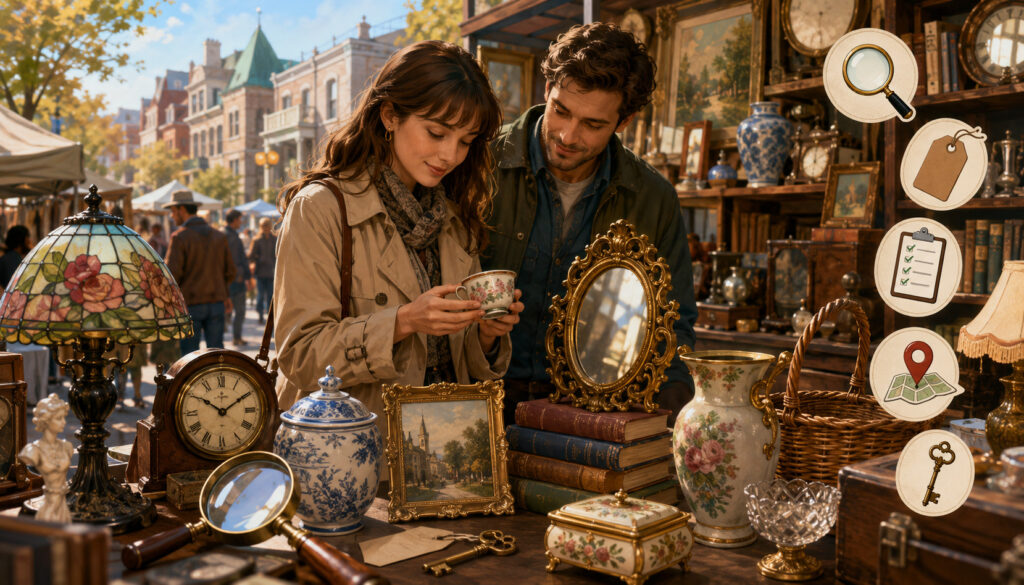
Successful treasure hunting is built on repeatable habits rather than luck alone. The most useful practices are simple:
- Visit shops and sales regularly.
- Browse slowly and look behind ordinary objects.
- Keep a flexible wish list.
- Inspect condition under good light.
- Learn basic material and construction clues.
- Check labels, signatures and maker marks.
- Measure your space before shopping.
- Set a realistic total-cost budget.
- Research unusual or expensive items.
- Ask sellers polite, specific questions.
- Negotiate only when appropriate.
- Avoid unsafe electrical or structurally damaged objects.
- Consider use and placement before buying.
- Seek professional guidance for potentially significant pieces.
Create a Routine and Build Knowledge Over Time
Plan a weekly, monthly, or seasonal browsing routine that matches your budget and available space. Rotate among different types of sources instead of visiting only one shop.
Track what you see even when you do not buy. Repeated exposure helps you recognize common reproductions, typical price ranges, construction methods, recurring patterns, and materials that age well.
Handle permitted objects carefully and study their undersides, backs, joints, fasteners, and finishes. Quality often becomes clearer when you compare several examples of the same category.
Over time, you will become faster at separating surface charm from durable construction. You will also learn your own weaknesses, such as buying too many baskets, ignoring frame sizes, or underestimating furniture transport.
Experience should make you more selective, not more eager to label everything valuable. The strongest knowledge produces better questions and more comfortable decisions.
How to Build a Personal Bric-à-Brac Collection

A collection becomes more satisfying when it has direction. Direction does not require strict rules, but it helps each new purchase relate to pieces you already own.
Choose a theme, material, color family, function, subject, or display area and establish a budget for gradual growth.
Choose a Theme and Edit the Collection Regularly
Possible themes include vintage glass, ceramic animals, old illustrated books, brass objects, framed botanical art, records, handmade bowls, small lamps, travel souvenirs, or kitchenware in a particular color.
Start with a limited display area. A single shelf, cabinet, wall, or tabletop creates a natural boundary and encourages thoughtful choices. Photograph the display so you can see where color, height, or scale feels unbalanced.
Do not purchase every object that fits the theme. Compare new candidates with your strongest existing pieces. The question is not merely “Does this belong?” but “Does this improve the collection?”
Edit periodically by removing duplicates, damaged objects you will not repair, and pieces that no longer interest you. Sell, donate, gift, or repurpose them responsibly.
A well-edited collection communicates personal curiosity without overwhelming the home. Empty space is part of the display because it allows special objects to be noticed.
Common Mistakes When Shopping for Bric-à-Brac
Most disappointing purchases are caused by rushing, incomplete inspection, unrealistic repair plans, or the assumption that age automatically creates value.
Understanding common mistakes allows you to enjoy secondhand shopping without turning every outing into a purchase.
Avoid Impulse Buying and Hidden Repair Costs
Impulse purchases often happen because an object feels scarce. Since secondhand inventory may be unique, shoppers fear that leaving to think will mean losing the item.
Use the five-minute pause for anything unplanned. Walk to another section, review your photographs, check measurements, and ask whether the object has a real place in your life.
Repair costs are another frequent problem. A damaged frame, unstable table, cloudy decanter, or nonworking lamp may require more money and skill than expected. Some damage cannot be reversed economically.
Transport is part of the calculation. Delivery, vehicle rental, protective materials, and help carrying furniture can turn a low ticket price into an expensive purchase.
Finally, do not let an unverified resale estimate justify overspending. Buy based on the information available, the object’s actual condition, and the value it provides to you—not an imagined future buyer.
How to Decide Whether a Find Is Worth Buying
A final decision should consider condition, usefulness, uniqueness, price, repair needs, transport, space, and personal interest together.
No single clue should control the purchase. A recognized maker does not erase serious damage, and a low price does not create space in your home.
Use the Five-Question Test and Know When to Walk Away
Before purchasing, ask:
- Do I genuinely love or need it?
- Will I use or display it?
- Is its condition acceptable for that purpose?
- Is the total price fair for me?
- Can I transport, store and care for it properly?
A confident “yes” to all five questions usually indicates a thoughtful purchase. Uncertainty does not always require rejection, but it should lead to more inspection or research.
Walk away when there is severe structural damage, a persistent odor, active mold, unsafe wiring, unknown contamination, incomplete parts, unclear high value, or no realistic purpose. You should also leave when a seller’s pressure prevents careful inspection.
Passing on an item is not a failed treasure hunt. It protects your budget and leaves space for a better discovery. Patience is one of the most valuable skills in secondhand shopping.
Frequently Asked Questions
What are bric-à-brac treasures in Mont-Royal?
Bric-à-brac treasures in Mont-Royal are interesting decorative, practical, collectible, vintage, or secondhand objects found through local shops, sales, markets, and listings.
They may include ceramics, glassware, lamps, books, records, framed art, mirrors, kitchenware, handmade objects, and small furniture. A treasure does not have to be rare or expensive. It may simply be well made, useful, visually appealing, or personally meaningful.
How can I find hidden bric-à-brac treasures in Mont-Royal?
Visit several types of sources and return regularly because secondhand inventory changes. Browse shelves slowly, inspect boxes and lower displays, and look behind ordinary objects when permitted.
Carry measurements and maintain a flexible wish list. Early visits may provide better selection, while later visits may reveal overlooked pieces or reasonable negotiation opportunities.
What should I look for when shopping for Mont-Royal bric-à-brac?
Look for appropriate materials, stable construction, balanced design, secure hardware, clean joinery, readable maker marks, and a condition suitable for the item’s intended use.
Check for chips, cracks, stains, odors, missing parts, rust, loose joints, water damage, pests, and unsafe wiring. Consider total cost, including transport and repair.
How do I know whether a secondhand item is worth buying?
Evaluate the item’s usefulness, condition, quality, uniqueness, price, required repairs, and fit within your home. Ask whether you would still like it if it proved to be common rather than rare.
Research unfamiliar marks or expensive claims before buying. Seek professional review for items that may be rare, historic, or especially valuable.
What are common bric-à-brac shopping mistakes?
Common mistakes include buying too quickly, failing to measure, ignoring hidden damage, underestimating repair expenses, and assuming that every old object has significant resale value.
Other mistakes include buying without a display location, overlooking transport challenges, and purchasing unsafe electrical or structurally damaged items because the price appears low.
How can I decorate with vintage finds in Mont-Royal?
Group smaller pieces by color, material, theme, or shape. Vary their height, leave open space around them, and combine decorative objects with useful items such as books, trays, boxes, lamps, and baskets.
Mix old pieces with simple modern furniture rather than trying to match an entire period. One distinctive mirror, lamp, or framed print can provide character without overwhelming the room.
Should I negotiate when buying bric-à-brac?
Negotiation may be appropriate at flea markets, community sales, estate clear-outs, and informal sales. Some shops use fixed prices, so ask politely before making an offer.
Base the offer on condition, missing parts, comparable pieces, or a multiple-item purchase. Know your limit and accept a refusal gracefully.
When should I get a professional appraisal?
Consider professional appraisal or specialist review when an item is expensive, historically significant, unusually marked, attributed to a recognized maker, or difficult to identify through reliable research.
Expert help is also sensible before altering, cleaning, repairing, or selling a potentially important object. An appraisal should be independent of unsupported promises made during the sale.
Conclusion
Finding bric-à-brac treasures in Mont-Royal requires more than arriving at the right shop at the right moment. The most rewarding results come from patience, repeated browsing, careful inspection, local knowledge, and a willingness to look beyond dust, clutter, and imperfect presentation.
Prepare a flexible wish list, measure your space, visit different sources, and learn how materials and construction affect quality. Examine condition closely, research unfamiliar marks, ask thoughtful questions, and negotiate respectfully only when the setting permits it.
Remember to include restoration, framing, delivery, and safety work in the total cost. Avoid purchases based only on low prices, unverified rarity claims, or uncertain resale expectations. Rare, expensive, historic, or potentially important items should be reviewed by an appropriately qualified professional.
Secondhand shopping is also an opportunity to reuse well-made objects and develop a home that reflects personal experience rather than temporary trends. Buy pieces you can use, display, repair, gift, or pass along responsibly.
Ultimately, the best bric-à-brac treasures in Mont-Royal are not necessarily the oldest or most expensive. They are the objects that combine character, quality, usefulness, story, and personal meaning—and that continue to feel like discoveries long after the shopping trip ends.