
Bric-à-brac shopping in Montreal can turn an ordinary afternoon into an enjoyable treasure hunt. Thrift stores, flea markets, estate sales, vintage shops, community sales, antique booths, and resale stores may hold everything from vintage glassware and ceramics to framed art, lamps, mirrors, records, old books, kitchenware, collectibles, and used furniture.
The variety is part of the appeal, but it can also make thoughtful decision-making difficult. An attractive object may appear inexpensive until cleaning, repair, framing, transportation, or restoration costs are added. A chair may look compact in a crowded shop but feel oversized in an apartment. A lamp may have a beautiful base while hiding unsafe wiring.
Many bric-à-brac shopping mistakes in Montreal happen because shoppers feel pressure to decide quickly. They may worry that another buyer will take the item, assume an old-looking object is valuable, or purchase something simply because the price seems low.
Successful secondhand shopping does not require expert-level knowledge. It requires patience, realistic expectations, careful inspection, a clear budget, and the willingness to leave an unsuitable item behind.
This guide explains how to avoid common bric-à-brac shopping mistakes in Montreal while preserving the excitement of local browsing and secondhand treasure hunting. The goal is not to remove spontaneity. It is to help you bring home fewer regrets and more items that are safe, useful, fairly priced, and genuinely suited to your space.
What Are Bric-à-Brac Shopping Mistakes in Montreal?
Bric-à-brac shopping mistakes are avoidable errors made while purchasing decorative, practical, collectible, vintage, antique, or unusual secondhand objects. They usually happen when a shopper focuses on appearance or price without considering condition, dimensions, usefulness, safety, repair needs, or long-term enjoyment.
Examples include buying a mirror without measuring the wall, purchasing ceramics without checking for cracks, or assuming a seller’s “rare” description guarantees high value.
Other common thrift shopping mistakes involve ignoring odors, buying unstable furniture, forgetting transportation arrangements, or collecting more décor accents than a home can comfortably display.
These mistakes do not mean bric-à-brac shopping Montreal experiences are risky or unwise. They simply show that used items require a different buying process from standardized new products. Every secondhand object has its own history, level of wear, repairs, missing parts, and storage conditions.
Why Bric-à-Brac Shopping Requires Patience
Secondhand inventory changes constantly, so successful shopping is rarely about locating every desired item in one trip. The lamp, bowl, framed print, or side table you want may not appear during your first visit. Accepting that uncertainty makes it easier to resist unsuitable purchases.
Patience also gives you time to inspect items from several angles. A ceramic vase may look perfect from the front but have a hairline crack near the base. A wooden table may appear sturdy until pressure is placed on its joints. Old books may have attractive covers but contain mildew odors or water-damaged pages.
Experienced shoppers understand that leaving without a purchase can be a successful outcome. It means they protected their budget and space when nothing met their needs. For additional preparation ideas, this guide to bric-à-brac shopping tips for beginners in Montreal explains how focused browsing and careful inspection can make first trips more manageable.
Why Beginners Often Make Mistakes
Beginners may be influenced by low prices, unusual designs, emotional nostalgia, or labels describing items as vintage, collectible, or rare. Because the inventory feels unpredictable, they may believe they must purchase immediately or lose a unique opportunity.
A low price can also reduce caution. Spending a small amount on one figurine may not seem important, but several unplanned purchases can quickly consume a shopping budget and create clutter. Beginners may also underestimate how much cleaning, framing, rewiring, refinishing, or transporting an item will require.
The solution is not to distrust every seller or object. It is to separate excitement from evaluation. Ask whether the item is useful, safe, affordable, and appropriate for your home. When the price is significant, take time to research the material, maker marks, condition, and comparable items before committing.
Common Bric-à-Brac Shopping Mistakes at a Glance

The following table summarizes frequent secondhand shopping mistakes Montreal shoppers may encounter. It can be saved on a phone and reviewed before paying for an item.
| Shopping Mistake | What Usually Happens | Why It Matters | Better Approach |
| Buying too fast | The item is purchased without inspection | Damage or poor fit is discovered later | Pause before buying |
| Ignoring condition | Chips, cracks, stains, or odors are missed | The item may be unusable | Inspect every surface |
| Not measuring | Furniture or décor does not fit | Money and space are wasted | Carry home measurements |
| Overpaying | The price is accepted without comparison | The purchase may not offer fair value | Compare similar items |
| Assuming old means valuable | Age is mistaken for rarity or demand | Expectations become unrealistic | Check quality and context |
| Skipping safety checks | Wiring, stability, or sharp damage is ignored | The item may create a household risk | Avoid unsafe goods |
| Buying for resale only | Demand and expenses are misunderstood | Inventory may remain unsold | Research before sourcing |
| Ignoring repair costs | Restoration is underestimated | The total expense increases | Estimate fixes first |
| Following trends blindly | The piece does not suit the buyer’s home | It becomes clutter | Buy for personal style |
| Not asking questions | Condition or policy details remain unknown | The buyer accepts avoidable uncertainty | Ask politely before paying |
How to Use the Table
Use the table as a quick decision screen rather than a rigid set of rules. When an item catches your attention, identify which risks are most relevant. A small ceramic dish may mainly require a condition and price check, while a large lamp requires inspection, measurement, electrical caution, and transportation planning.
The table is particularly useful when you feel rushed. Flea market shopping Montreal environments can be busy, and estate sales may create a sense of urgency. Instead of allowing that pressure to make the decision, review the four or five factors that matter most.
You can also adapt the table to your shopping habits. Someone who regularly buys framed art may add glass condition, hanging hardware, frame dimensions, and professional framing costs. A record collector may add scratches, warping, sleeve condition, pressing details, and whether the album is complete.
The best checklist is one you will actually use. Keep it short enough to review but detailed enough to interrupt impulsive decisions.
Why Small Mistakes Can Add Up
One poor purchase may not significantly affect your budget or home. The larger problem develops when several small errors become a pattern. A shopper may overpay for a vase, buy a damaged frame, overlook odors in a basket, and purchase a table that does not fit—all during the same outing.
Each item may have seemed affordable on its own. Together, they may require transportation, repairs, cleaning supplies, storage, or disposal. Instead of enjoying budget décor shopping Montreal opportunities, the shopper ends up managing unwanted projects.
Small objects can create similar problems. Inexpensive bowls, figurines, books, candleholders, trays, and decorative boxes occupy shelves and cupboards surprisingly quickly. When they do not have a clear purpose, the excitement of finding them may disappear soon after they reach home.
Avoiding these outcomes does not require perfection. It requires a consistent habit of checking condition, purpose, space, total cost, and personal interest before paying.
Shopping Without a Plan, Budget, or Clear Purpose
Three of the most common bric-à-brac shopping mistakes in Montreal are entering a shop without a plan, ignoring spending limits, and buying items only because they are cheap. These behaviours often overlap.
A flexible plan helps you notice relevant items while still allowing unexpected discoveries. A budget protects you from accumulating numerous small purchases. A clear purpose helps you distinguish between an appealing object and one that belongs in your home.
Before leaving, decide which rooms or collections need attention. Take photographs of shelves, walls, tabletops, and empty corners. Record important colours, materials, and approximate dimensions. A simple plan might include one lamp, two small frames, a fruit bowl, or several old books for a particular shelf.
Create a Simple Shopping List
A useful shopping list identifies categories rather than exact products. Secondhand shopping is unpredictable, so searching for one precise model or pattern may lead to frustration. Instead of writing “green ceramic lamp with brass base,” write “small table lamp for reading corner.”
Your list could include:
- A sturdy basket for entryway storage
- Framed art for a narrow wall
- A small table for a plant
- Ceramics for open kitchen shelving
- Books or records connected to a genuine interest
- A mirror within specific dimensions
- A tray for keys, jewellery, or serving
Add a brief note about what you do not need. If you already own many vases, mugs, or decorative boxes, identify those as skip categories. This small reminder helps prevent duplicate purchases.
Keep the list on your phone beside photographs and measurements. During a visually busy thrift store shopping Montreal visit, it will redirect your attention toward useful possibilities.
Set a Limit and Calculate the Total Cost
Set a maximum amount you can spend without regret. Consider dividing it between planned purchases and one unexpected find. For example, most of the budget can be reserved for needed items, with a smaller portion available for something unusual.
The sticker price is only one part of the cost. Depending on the object, you may also need to pay for:
- Delivery or vehicle rental
- Cleaning products
- Replacement hardware
- A lampshade or electrical work
- Professional framing
- Upholstery cleaning
- Refinishing materials
- Missing components
- Secure storage
A low-priced chair requiring structural repair and upholstery work may cost more than a sound chair in better condition. Similarly, an inexpensive print may become costly if it needs custom framing.
This guide to shopping for bric-à-brac on a budget offers further context on combining price, condition, usefulness, and clutter control.
Do Not Buy Only Because It Is Cheap
A cheap item is not automatically a bargain. It may be the wrong size, damaged, difficult to clean, unsafe, or unrelated to your style. Even a small amount is wasted when an item goes directly into storage.
Ask yourself whether you would still want the piece if the price were slightly higher. This question separates genuine interest from the emotional pull of a discount. If your enthusiasm disappears when you imagine a higher price, the bargain itself may be the main attraction.
Also ask where the item will go and how it will be used. A tray might organize a desk, a bowl might hold keys, and an old book might support a collection. A decorative object can have a purely visual purpose, but it should still contribute to a room rather than disappear into a crowded shelf.
Ignoring Condition, Odors, and Hidden Damage
Condition checks are essential when buying secondhand items in Montreal. Unlike new products, secondhand goods may have been repaired, stored in damp conditions, exposed to smoke, or used in ways that are not immediately visible.
Inspect the entire object, including its underside, back, interior, edges, seams, joints, and moving parts. Good lighting is important because hairline cracks, scratches, stains, fading, and repairs can disappear in dim corners.
Common warning signs include chips, cracks, rust, warping, peeling veneer, loose handles, missing screws, water marks, mould, pest evidence, sticky finishes, strong odors, and poorly applied glue. Some flaws are harmless for decorative use, while others affect safety or function.
Condition Checks for Small Décor Items
Ceramics should be checked around rims, handles, feet, spouts, and bases. Hold the piece near a light source and rotate it slowly. Hairline cracks may appear as thin dark lines, while repaired handles may show glue residue or slight misalignment.
Inspect glassware for rim chips, cracks, scratches, and cloudiness. Run a finger carefully near the edge without pressing against a sharp area. Cloudiness may be mineral residue, but some dishwasher damage is permanent.
For mirrors and framed art, check corners, backing, glass, hanging wire, moisture marks, and frame stability. Old books require an odor check as well as an inspection of the spine, pages, and covers. Records should be examined for deep scratches, warping, and missing sleeves or inserts.
Detailed guidance on spotting quality bric-à-brac items can help shoppers develop a repeatable category-by-category inspection process.
Condition Checks for Furniture and Lamps
Test furniture gently on a level floor. Press lightly on the top, back, and arms to detect movement. Check whether chairs rock, drawers open smoothly, legs are secure, and joints show separation.
Look underneath furniture rather than judging only the visible surfaces. The underside may reveal replacement parts, water damage, insect holes, weak repairs, missing hardware, or swollen composite material. Cosmetic scratches may be manageable, but loose joints and structural cracks deserve greater caution.
For lamps, inspect the base, cord, plug, socket, switch, shade support, and any exposed metal. Do not assume that a lamp is safe because it turns on. Old, brittle, frayed, loose, or modified wiring may require professional attention.
Official secondhand product safety guidance recommends checking for recalls, missing labels, cracks, loose pieces, absent parts, and previous repairs before purchasing used products.
Check for Odors, Moisture, Mould, and Pests
Smell books, baskets, textiles, upholstered furniture, wooden drawers, storage boxes, suitcases, and rugs before buying. Open closed compartments because odors may be stronger inside than on an exposed surface.
Mild dust or a closed-storage smell may improve with cleaning and ventilation. Strong smoke, mildew, pet, chemical, or musty odors can penetrate porous materials and remain after repeated treatment.
Look for water lines, dark spotting, powdery residue, damaged fabric, insect casings, small holes, or suspicious material around seams and joints. Upholstered goods require particular care because hidden interiors are difficult to examine completely.
Walk away when an object has active mould, strong persistent odor, extensive water damage, pest signs, or contamination you cannot confidently address. A low price does not compensate for bringing a difficult hygiene problem into your home.
Forgetting Measurements, Transportation, and Safety
Used furniture shopping Montreal trips can fail before the item even reaches home. A dresser may not fit in an elevator, a mirror may not pass through a staircase, or a lamp may be too large for the intended table.
Measurements should cover more than the final location. Doorways, hallways, elevator interiors, stair turns, vehicle openings, and building entrances may all affect whether an object can be transported safely.
Safety also includes the object’s intended use. A damaged decorative bowl may be acceptable for displaying dried flowers but unsuitable for serving food. An unstable stool may look attractive but should not be used for seating.
Measure Your Space and the Item
Before shopping, record the height, width, and depth of the available space. For wall décor, note the maximum dimensions and the location of nearby switches, furniture, and architectural features. For shelving, measure the interior opening rather than only the outer shelf.
Keep the measurements on your phone and carry a small measuring tape. Do not rely on visual estimates because objects often appear smaller in large stores and market stalls than they do in compact rooms.
Measure the item itself, including protruding handles, feet, shades, or decorative details. Consider weight as well as dimensions. A mirror that technically fits may still be too heavy for the available wall or difficult to carry safely.
Use removable painter’s tape at home to outline the approximate size of a planned purchase. This creates a clearer picture of how a large frame, table, mirror, or cabinet will affect room scale.
Be Careful With Electrical and Household Items
Electrical pieces should be treated as unverified unless their condition and history are clear. Check for brittle insulation, frayed cords, damaged plugs, loose sockets, flickering, buzzing, scorch marks, and burnt smells.
Do not attempt complex electrical repairs without suitable knowledge. A desirable lamp may still be worth purchasing if professional rewiring is practical and included in your budget, but questionable wiring should never be ignored.
Be equally cautious with unstable furniture, sharp metal, cracked glass, damaged cookware, children’s goods, safety equipment, or objects made from unknown materials. Requirements and recalls can change, particularly for products designed to protect children or prevent injuries.
When safety cannot be established through inspection, labelling, recall checks, seller information, or professional review, leaving the item behind is the responsible decision.
Plan Packing, Pickup, and Delivery
Bring basic supplies when you expect to purchase fragile or awkward objects. Reusable bags, boxes, paper, bubble wrap, blankets, straps, and cardboard dividers can prevent damage during travel.
Never place glass, ceramics, records, or framed art loosely in a large bag. Wrap pieces individually and keep heavy objects below lighter ones. Mirrors and framed glass should remain upright and protected from pressure.
For furniture, confirm who will carry it, whether tools are needed for disassembly, where a vehicle can stop, and when pickup must occur. Ask about delivery costs before paying rather than assuming arrangements can be made later.
Public transit may work for small Montreal bric-à-brac finds, but oversized lamps, framed art, or delicate glassware can be difficult to move during crowded periods. Transportation should be part of the buying decision, not an afterthought.
Assuming Old Means Valuable and Skipping Research
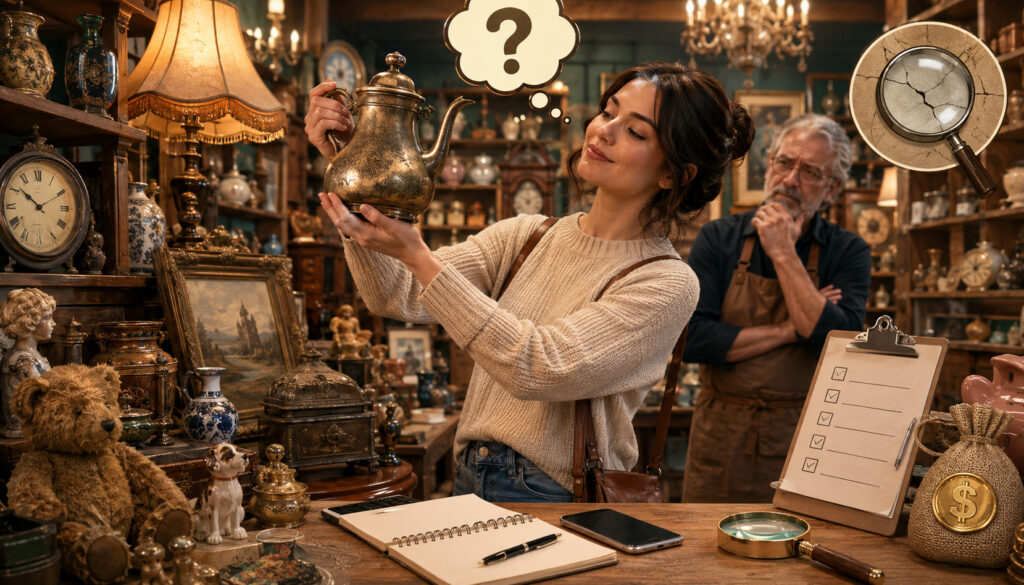
Age, value, rarity, and personal appeal are related only sometimes. Many old household goods were mass-produced and remain widely available. Other pieces may be scarce but attract little current interest.
Value may depend on maker, materials, craftsmanship, condition, completeness, provenance, rarity, authenticity, and demand. An older item with major damage may be less desirable than a well-made, later piece in excellent condition.
Personal value is different. A common bowl may be worth purchasing because it fits your kitchen and will be used regularly. A rare object may offer little enjoyment if it does not suit your collection or home.
Old, Vintage, Antique, and Collectible Are Not Identical
“Old” is a general description, not a guarantee of quality. “Vintage” often describes items associated with an earlier period or style, but sellers may use the word broadly. “Antique” commonly suggests greater age, although precise definitions can vary by category and context.
A collectible is desirable to a particular group because of its maker, pattern, subject, scarcity, condition, nostalgia, or cultural interest. Collectibility can change as tastes change.
These terms can help describe an object, but none proves financial value. A recently made item can become desirable, while an older object may remain common. Condition and buyer demand frequently matter as much as age.
When shopping for enjoyment, focus on usefulness, quality, and personal meaning. When a seller requests a premium price because of age, rarity, or attribution, conduct additional research or seek expert review.
Look for Maker Marks, Labels, and Construction Clues
Maker marks may appear underneath ceramics, inside lids, behind frames, under furniture, on metal bases, inside drawers, on record labels, or near the opening pages of books.
Photograph marks clearly and search using the exact wording, symbols, material, colour, pattern, and approximate dimensions. A mark can help identify a manufacturer, region, production line, or period.
Construction details can provide additional clues. Joinery, fasteners, moulding lines, glaze, printing methods, hardware, material thickness, and signs of hand-finishing may help distinguish one object from another.
However, marks are not final proof of authenticity or value. Labels can be replaced, copied, misread, or associated with later production. Expensive, rare, historic, or potentially significant objects should be examined by a qualified professional rather than evaluated from one stamp or online image.
Compare Truly Similar Items
Two objects may look similar while differing in material, size, condition, maker, age, completeness, or quality. Compare like with like rather than using the first visually similar listing you find.
Review several examples. Pay attention to whether prices are asking prices or completed-sale evidence, where that information is available. A high listing that remains unsold does not establish what buyers commonly pay.
Condition must be included in every comparison. A complete set with original packaging cannot be compared directly with one damaged piece. Signed studio pottery is not automatically equivalent to an unsigned factory-made item with a similar colour.
This overview of value versus personal charm is useful when deciding whether you are paying for market interest, craftsmanship, practical use, or personal enjoyment.
Negotiating Poorly, Ignoring Policies, and Not Asking Questions
Negotiation is only one part of bric-à-brac shopping. Some flea markets, community sales, estate sales, and informal sellers may expect respectful offers. Curated shops and clearly marked fixed-price stores may not.
A shopper who negotiates aggressively can damage a pleasant interaction, while a shopper who never asks questions may miss important information. The better approach is polite curiosity.
Before paying, understand the item’s condition, included parts, price, return policy, pickup deadline, and whether the sale is final. These details are especially important for fragile, large, electrical, or higher-priced goods.
Negotiate Respectfully When Appropriate
Negotiation is more reasonable when a seller has indicated flexibility, the item has a documented flaw, several items are being purchased together, or the setting commonly allows bargaining.
Ask rather than demand. Phrases such as “Is there any flexibility on the price?” or “Would you consider a bundled price for these three items?” keep the conversation respectful.
Base an offer on relevant facts. A missing lid, damaged frame corner, or absent hardware may justify discussing the price. Avoid inventing faults or making extremely low offers merely to test the seller.
Once the seller answers, accept the response gracefully. A fair negotiation can end with an adjusted price, the listed price, or a decision to walk away. Respecting the answer is part of responsible flea market shopping Montreal etiquette.
Ask About Returns and Final-Sale Conditions
Return and exchange policies vary widely. Some shops may permit limited returns, while flea market vendors, estate sales, community sales, and individual sellers may consider every purchase final.
Ask before paying:
- Can the item be returned or exchanged?
- Is there a deadline?
- Are electrical or clearance items excluded?
- Can a large item be held for pickup?
- What happens if pickup is delayed?
- Are all components included?
When the sale is final, inspect more carefully. Test drawers, hinges, switches, and moving parts when permitted. Confirm dimensions and photograph the item’s condition.
Do not assume that an issue discovered at home will qualify for a refund. A clear understanding of the policy protects both buyer and seller from later disagreement.
Ask Useful Questions About the Item
Questions may reveal repair history, missing pieces, previous use, material, origin, or storage conditions. Useful questions include:
- Is anything damaged or missing?
- Has the item been repaired?
- Are all parts included?
- Has the electrical component been tested?
- Do you know where the item came from?
- Has it been stored in a damp area?
- Is the price firm?
- Is pickup required by a specific time?
Treat answers as information rather than guarantees. Continue inspecting the item yourself. A seller may answer honestly but lack detailed knowledge of an object’s history.
The willingness to ask calm, specific questions is one of the easiest ways to avoid common bric-à-brac shopping mistakes in Montreal.
Underestimating Cleaning, Repair, and Restoration
Project pieces can be rewarding, but shoppers frequently underestimate the time, tools, materials, and skill required. A minor cosmetic issue is different from structural damage, unsafe wiring, severe mould, or deteriorating artwork.
Before buying, identify the exact repair rather than saying, “I can fix it later.” Determine whether the task involves cleaning, polishing, tightening hardware, replacing a shade, refinishing wood, reupholstering furniture, repairing a frame, or restoring a delicate surface.
For special or historic objects, aggressive cleaning can remove original finishes, decoration, patina, labels, or evidence important to the item’s history. General object-care resources explain that ceramics, glass, furniture, metals, books, textiles, and other materials require different handling and care approaches.
Easy Fixes and Difficult Repairs
Beginner-friendly improvements may include gentle dusting, replacing removable hardware, adding felt pads, changing a modern lampshade, or tightening an accessible screw when the structure is otherwise sound.
More complex work includes electrical rewiring, structural furniture repair, veneer replacement, upholstery, mould remediation, clock repair, art restoration, and work involving unknown coatings or materials.
Do not assume that a video or brief guide makes every repair suitable for a beginner. Some methods require specialist equipment, ventilation, electrical knowledge, conservation training, or experience with fragile materials.
Separate cosmetic imperfections from structural and safety issues. A scratched tabletop may remain useful and attractive. A cracked chair joint may fail under weight. A faded frame may be charming, while mould behind the backing requires greater caution.
Budget Before Committing to Restoration
Estimate four costs: materials, tools, professional services, and your time. Then add transportation and the possibility that the repair may reveal further damage.
Ask whether you would still want the item if restoration costs doubled. If the answer is no, the purchase may depend on an unrealistically optimistic budget.
Consider the intended result. Some buyers purchase a worn piece expecting it to become perfect, only to discover that age-related marks cannot be removed without altering the object. Decide whether you can appreciate the item with some wear remaining.
For rare, expensive, signed, historic, or potentially valuable pieces, consult an appropriate appraiser, conservator, electrician, repair professional, or category specialist before cleaning or altering the item.
Shopping Only in Obvious Places
Limiting your search to one busy store or fashionable shopping area can narrow both selection and price range. Montreal bric-à-brac finds may appear in thrift stores, vintage shops, flea markets, community sales, estate sales, resale stores, antique booths, online listings, and neighbourhood events.
Each source has advantages and limitations. Curated shops may offer organized displays and researched pieces. Thrift stores may offer lower prices but require more inspection. Estate sales may provide household groupings, while flea markets allow comparison across multiple sellers.
The goal is not to visit every location. It is to understand that different sources serve different needs.
Try Different Shopping Sources
Use curated vintage shops when you want a more focused selection or are learning a category. Explore thrift stores for practical kitchenware, frames, books, baskets, and general décor. Flea markets can be helpful for collectibles, records, tools, lamps, and conversations with specialized sellers.
Community and estate sales may offer furniture, household collections, art, and objects that have remained together for many years. Online listings can be useful for targeted searches, but photographs may hide damage, scale, odors, or structural problems.
Compare the experience as well as the price. A higher price may reflect cleaning, testing, research, organized display, or a return policy. A lower price may require more work and greater risk tolerance.
Remain cautious regardless of the setting. A polished display does not eliminate the need for inspection, and an informal sale does not automatically mean poor quality.
Visit Regularly Rather Than Expecting Instant Results
Secondhand inventory changes frequently. A disappointing visit does not mean the source is never worthwhile. Another visit may offer completely different furniture, glassware, books, lamps, or collectibles.
Regular browsing teaches you normal local prices and recurring condition problems. It also improves your ability to spot unusual materials, good construction, complete sets, and fairly priced objects.
Keep visits purposeful and reasonably short. Repeated focused trips are often more productive than exhausting attempts to inspect every object in one day.
Shopping regularly does not mean buying regularly. Some of the most useful learning happens when you compare items, study marks, note prices, and leave empty-handed. Over time, you gain a clearer understanding of what is common, what suits your home, and what deserves closer research.
Buying for Trends and Bringing Home Too Much
Social media can make particular colours, patterns, furniture shapes, ceramics, glassware, or decorative themes feel urgently desirable. Trend awareness can provide inspiration, but copying every popular look often creates a home that feels disconnected from the person living in it.
Trend-driven demand may also raise prices temporarily. An item may seem essential because it appears repeatedly in styling content, not because it fits your space or habits.
The more sustainable approach is to develop a personal filter. Evaluate colour, texture, material, size, maintenance, usefulness, and emotional connection before buying.
Choose Items That Fit Your Real Space
Consider your home as it currently exists, not as an imagined future renovation. A large ornate mirror may look impressive in a market stall but overwhelm a narrow room. A delicate ceramic collection may be unsuitable for a busy household without protected display space.
Review photographs of your rooms while shopping. Compare the item with existing wood tones, metals, fabrics, colours, and available surfaces.
Function should also influence the decision. A decorative basket may look attractive but be inconvenient to clean. A low table may not work beside your seating. A vintage lamp may not provide the type of light the room needs.
Good vintage décor shopping Montreal decisions balance visual appeal with daily life. The item should support the room rather than forcing the room to adapt around an impulsive purchase.
Use a One-In, One-Out or One-In, One-Review Rule
A one-in, one-out rule means donating, gifting, selling, or responsibly recycling one existing object when a new one enters the home. This can work well for categories that multiply easily, such as mugs, vases, baskets, frames, books, and small décor.
A less strict alternative is one-in, one-review. Every purchase triggers a review of the same category. You may decide nothing needs to leave, but the process keeps you aware of quantity.
Montreal’s circular-economy overview emphasizes reuse, longer resource life, and reduced environmental impact. Thoughtful secondhand shopping supports those goals most effectively when it replaces unnecessary new consumption rather than adding unchecked volume.
Build Personal Style Gradually
A satisfying collection usually develops over time. Repeated shopping helps you notice patterns in what you consistently love: hand-thrown ceramics, botanical prints, brass accents, old books, coloured glass, simple wood furniture, or objects connected to local history.
Do not rush to fill every shelf or wall. Empty space allows individual pieces to be noticed. It also leaves room for future discoveries that may suit the home better.
Live with new purchases before adding more. Place the item, use it, and observe whether it improves the room. This experience may reveal that you need fewer objects, a different scale, or another material.
The strongest personal style is not built by following every trend. It is built through thoughtful editing and purchases that remain meaningful after the initial excitement fades.
Ignoring Resale Realities and Skipping Documentation
Collectible shopping Montreal interests sometimes overlap with resale. Reselling can be enjoyable, but beginners should avoid assuming that every vintage or unusual object has profitable demand.
An item may be attractive yet difficult to photograph, pack, ship, store, or describe. Large furniture may require local pickup. Fragile ceramics may involve packaging expenses and breakage risk. Platform fees and the time spent cleaning or communicating with buyers also affect the result.
Documentation is useful even when resale is not the main goal. It creates a record of what was purchased, where it came from, and what work has been completed.
Resale Value Is Never Guaranteed
Resale depends on the right buyer being available at the right time and price. Online asking prices do not guarantee completed sales, and local demand may differ from wider online interest.
Before buying for resale, consider:
- Purchase price
- Cleaning and repair expenses
- Research time
- Storage space
- Photography and listing work
- Selling fees
- Packing materials
- Shipping or delivery risk
- Time before the item sells
Buy only within categories you understand. Learn common makers, materials, reproductions, condition standards, and typical demand before increasing your spending.
For most beginners, buying for use first and resale second offers better protection. Choose items you would be comfortable keeping if they do not sell.
Document Special or Higher-Priced Finds
For a significant purchase, photograph the object before cleaning or repair. Capture the front, back, underside, interior, maker marks, labels, damage, and included components.
Record:
- Where it was purchased
- Price paid
- Date of purchase
- Measurements
- Condition at purchase
- Seller-provided information
- Maker marks or signatures
- Research links
- Cleaning or repair work
- Professional opinions or receipts
Documentation can support collection organization, restoration planning, future resale descriptions, insurance questions, or discussions with an appraiser. It can also prevent you from forgetting how much was spent after several purchases.
Do not treat personal notes as proof of authenticity or value. They are a practical history of your ownership and research.
Bric-à-Brac Shopping Mistakes Checklist
A checklist is most useful when it is reviewed at the moment of greatest excitement. Before paying, step aside and examine the item using the following areas.
| Checklist Area | Mistake to Avoid | Better Shopping Habit | Priority |
| Budget | Spending without a limit | Set a clear maximum | High |
| Condition | Missing damage | Inspect under good light | High |
| Size | Guessing measurements | Carry exact dimensions | High |
| Safety | Ignoring wiring or stability | Check before buying | High |
| Price | Assuming the price is fair | Compare similar pieces | Medium/High |
| Purpose | Buying without a use | Decide where it will go | High |
| Repairs | Underestimating work | Estimate total cost | Medium/High |
| Transport | Having no pickup plan | Arrange packing or delivery | Medium/High |
| Authenticity | Believing every claim | Research marks and labels | Medium |
| Clutter | Buying too many items | Edit possessions regularly | Medium/High |
How to Use the Checklist
Start with high-priority dealbreakers: safety, serious condition problems, budget, and size. If an object fails one of these checks, do not allow charm or scarcity pressure to override the problem.
Next, review total cost, purpose, and transport. Ask where the item will go, how it will reach your home, and what must happen before it can be used.
Authenticity research becomes particularly important when a seller requests a premium price. For inexpensive decorative items, personal enjoyment may matter more than exact attribution. For expensive claims, pause and investigate.
The checklist is not designed to eliminate every imperfect item. Minor scratches, patina, fading, or wear may add character. Its purpose is to help you distinguish acceptable imperfections from expensive, unsafe, or unsuitable problems.
Records to Keep After Buying
Keep receipts when available, especially for large, fragile, electrical, collectible, or higher-priced purchases. Photograph the item before and after cleaning or restoration.
Save measurements, seller notes, maker-mark photographs, research, replacement-part details, and professional invoices. Store the information in a labelled digital folder so it is easy to locate.
For a collection, create a simple spreadsheet with item category, description, purchase source, price, condition, dimensions, storage location, and notes. This makes duplicate purchases less likely and helps track how much space or money a category is consuming.
Documentation can also reveal shopping patterns. After several months, you may notice that some categories are used frequently while others remain in storage. That information can improve future buying decisions.
Best Practices to Avoid Common Bric-à-Brac Shopping Mistakes in Montreal

The most dependable strategy is a repeatable routine. Good shopping habits reduce emotional pressure and make it easier to compare items consistently.
Before shopping:
- Create a flexible list.
- Set a spending limit.
- Measure your space.
- Photograph the intended room.
- Review categories you already own in excess.
- Pack a measuring tape and basic wrapping supplies.
While shopping:
- Browse once before selecting.
- Inspect every side of the item.
- Check for chips, cracks, stains, odors, missing parts, and unsafe repairs.
- Test furniture stability when permitted.
- Treat electrical goods cautiously.
- Compare prices for higher-cost purchases.
- Research maker marks and premium claims.
- Ask polite questions.
- Negotiate only when appropriate.
- Include repair and transport costs.
After shopping:
- Clean items using material-appropriate methods.
- Document special purchases.
- Place the item in its intended location.
- Review whether it met the original need.
- Donate, gift, resell, or responsibly recycle unwanted purchases promptly.
Seek qualified appraisal or specialist review for rare, expensive, historic, signed, or potentially valuable objects.
Create a Repeatable Shopping Routine
Begin every trip by reviewing your list, photographs, measurements, budget, and dealbreakers. When you enter a store or market, make an initial pass without purchasing. Notice the layout, prices, categories, and items that deserve a closer look.
During the second pass, inspect selected pieces. Photograph uncertain items and compare them with alternatives. For a higher-priced object, research materials, marks, and comparable examples before deciding.
At checkout, conduct a final review. Confirm condition, parts, policy, transport, and total cost. The final review is particularly helpful when you have selected several small items whose combined cost is greater than expected.
After returning home, clean and place the purchases. Record which decisions worked well and which created frustration. This turns each outing into useful experience rather than a series of disconnected buying decisions.
Learn From Every Shopping Trip
A trip does not need to produce a purchase to be valuable. Browsing helps you learn common prices, recurring designs, maker marks, construction methods, condition language, and seller practices.
Take notes on objects that interest you. Research them later without the pressure of making an immediate decision. Over time, you will develop stronger knowledge in categories such as ceramics, glassware, records, furniture, books, or framed art.
Review your regrets without judging yourself harshly. Perhaps you repeatedly underestimate size, purchase too many projects, or respond strongly to discounted prices. Identifying the pattern makes it easier to change.
Confidence grows from repeated observation, not from trying to know everything immediately. Every careful trip improves your ability to recognize quality, fair pricing, manageable flaws, and objects that match your life.
How Beginners Can Shop More Confidently
Bric-à-brac shopping tips for beginners in Montreal should emphasize manageable decisions. Beginners do not need to begin with expensive antiques, complex furniture projects, or objects requiring uncertain attribution.
Start with categories that are easy to inspect, transport, clean, and use. Learn how different materials feel and how prices vary between thrift stores, vintage shops, flea markets, and estate sales.
Ask questions and take photographs. Avoid purchases that depend on urgent repair or unverified value claims. Confidence comes from making several small, thoughtful decisions.
Start With Lower-Risk Items
Books, trays, baskets, simple ceramics, frames, small mirrors, candleholders, and affordable prints can be practical starting categories. They are generally easier to measure, carry, inspect, and place.
Even lower-risk categories need evaluation. Books may have mould, frames may be warped, baskets may contain pest evidence, and ceramics may have sharp chips. The difference is that inspection is usually straightforward.
Choose items with an immediate use. A tray can organize toiletries, a basket can hold blankets, and a frame can display artwork you already own. Functional purchases teach you how secondhand goods fit into daily life.
Delay expensive antiques, delicate artwork, complex clocks, upholstered furniture, and major restoration projects until you understand the relevant condition and cost issues.
Build Knowledge Before Spending More
Choose one or two categories to study. Learn common materials, construction methods, maker locations, damage patterns, and price ranges. Repeated observation develops a more reliable eye than isolated online searches.
Handle objects carefully when permitted. Compare weight, texture, joinery, glaze, printing, hardware, and finish. Look at both high-quality and ordinary examples so you understand the differences.
Use trustworthy reference materials and professional expertise for important purchases. Online communities can provide useful clues, but confident comments are not substitutes for examination.
Increase spending gradually. A good rule is to avoid paying an amount that would cause significant regret if your assumptions about age, maker, or resale potential proved incorrect.
How to Decide Whether a Secondhand Item Is Worth Buying
A worthwhile item does not need to be rare, old, fashionable, or extremely cheap. It needs to make sense for your circumstances.
Evaluate condition, usefulness, size, price, repair cost, transport, safety, style, personal value, and research needs. An object that performs well across these factors is more likely to remain enjoyable after the shopping excitement fades.
The decision becomes easier when you replace “Is this a great deal?” with “Is this a good purchase for me?”
The Five-Question Buying Test
Before paying, ask:
- Do I have a specific place or use for it?
- Is it in a condition I can accept?
- Is the total price fair for my budget?
- Can I transport and care for it safely?
- Would I still want it next month?
A “no” does not always require rejection. It indicates where more thought is needed. For example, an item without an immediate location might still be suitable if you are actively furnishing a room. An item needing repair may be reasonable if the work is minor and clearly budgeted.
However, several uncertain answers usually indicate that the purchase depends more on excitement than suitability.
When It Is Better to Walk Away
Walk away from unsafe wiring, unstable furniture, active mould, pest evidence, sharp damage, severe water exposure, strong persistent odors, or missing structural parts.
Also leave overpriced pieces when the seller’s claim cannot be verified and the price exceeds your comfort level. Uncertain authenticity is especially important when an object is presented as rare, historic, signed, or highly collectible.
A purchase may also be wrong simply because it does not fit. An attractive mirror that overwhelms your wall or a cabinet that cannot enter your building is not a useful bargain.
Walking away is not failure. There will be other thrift stores, estate sales, vintage shops, and flea markets. Protecting your budget, safety, and space makes future secondhand treasure hunting Montreal trips more enjoyable.
Frequently Asked Questions
What are the most common bric-à-brac shopping mistakes in Montreal?
The most common mistakes include buying impulsively, failing to inspect condition, forgetting measurements, overpaying, ignoring repair costs, assuming old means valuable, and bringing home too many small objects.
Shoppers may also overlook odors, missing parts, unstable furniture, unsafe wiring, final-sale policies, or transportation difficulties. A written budget, shopping list, measuring tape, and inspection routine can prevent many of these problems.
How can beginners avoid common thrift shopping mistakes?
Beginners should start with useful, lower-cost categories and avoid major restoration projects. Before shopping, take room photographs, record measurements, and set a firm spending limit.
During the trip, inspect every item from multiple angles and ask questions about damage, repairs, included parts, and policies. A beginner does not need to purchase something during every visit. Observation and price comparison are valuable forms of learning.
What should I check before buying secondhand items in Montreal?
Check condition, safety, completeness, dimensions, price, repair needs, transportation, and return policies. Look for chips, cracks, stains, odors, rust, mould, water damage, weak joints, loose parts, missing hardware, and poor repairs.
Electrical goods require special caution. For children’s products, safety equipment, or regulated household goods, check current labels, requirements, and recalls before purchasing.
How do I know whether a bric-à-brac item is overpriced?
Compare several genuinely similar objects by material, size, maker, condition, completeness, and quality. Do not rely on one online asking price.
Consider how much the item is worth for your own use, but research carefully when the price is high or the seller makes claims about rarity, history, or authenticity. Repair, framing, cleaning, delivery, and restoration costs should be included in the comparison.
Should I negotiate when shopping for bric-à-brac?
Negotiation may be appropriate at flea markets, community sales, estate sales, and some informal settings. It may be less appropriate in fixed-price or curated shops.
Ask politely whether the price is flexible, make a reasonable offer, or request a bundled price when buying several items. Do not insult the seller or exaggerate flaws. Accept the answer respectfully, whether the seller adjusts the price or keeps it firm.
What secondhand items should I avoid buying?
Avoid objects with unresolved safety concerns, strong mildew or smoke odors, active mould, pest evidence, severe water damage, unstable structures, sharp cracks, or questionable electrical components.
Be careful with children’s goods, protective equipment, damaged cookware, unknown materials, and incomplete objects that cannot function without missing parts. When product history, recalls, or safety cannot be verified, choosing another item is usually wiser.
How can I avoid clutter when buying vintage décor?
Create boundaries for each category and decide where an item will be displayed before buying. Use a one-in, one-out or one-in, one-review rule.
Leave some shelves and walls intentionally empty, and rotate decorative objects rather than displaying everything simultaneously. Buy fewer pieces with stronger personal meaning, practical use, or visual impact instead of many objects that only seem appealing because they are inexpensive.
When should I get a professional appraisal?
Consider professional appraisal or specialist review when an object is expensive, rare, signed, historically important, associated with a notable maker, or potentially valuable enough to affect insurance, sale, inheritance, or major restoration decisions.
An online search or maker mark can provide clues but does not establish authenticity or market value. Avoid cleaning, refinishing, repairing, or altering a potentially significant object until appropriate expert guidance has been obtained.
Conclusion
Avoiding bric-à-brac shopping mistakes in Montreal requires patience, inspection, budgeting, measurement, research, and realistic expectations. The most important habit is slowing down long enough to evaluate an item beyond its price tag or first impression.
Shop with a flexible list, but remain open to unexpected discoveries. Inspect ceramics, glassware, books, records, furniture, lamps, mirrors, and framed art carefully. Check dimensions, safety, odors, missing parts, transportation needs, return policies, and the true cost of repair or restoration.
Do not assume every old object is rare or valuable. Maker marks, labels, signatures, and construction details are useful clues, but important claims may require qualified professional review. Resale value is uncertain, while personal usefulness and long-term enjoyment can often be judged more directly.
Most importantly, give yourself permission to walk away. The best bric-à-brac finds are not always the cheapest, oldest, or most fashionable pieces. They are the items that are safe, useful, fairly priced, suitable for your space, aligned with your style, and meaningful enough to remain enjoyable long after the shopping trip is over.