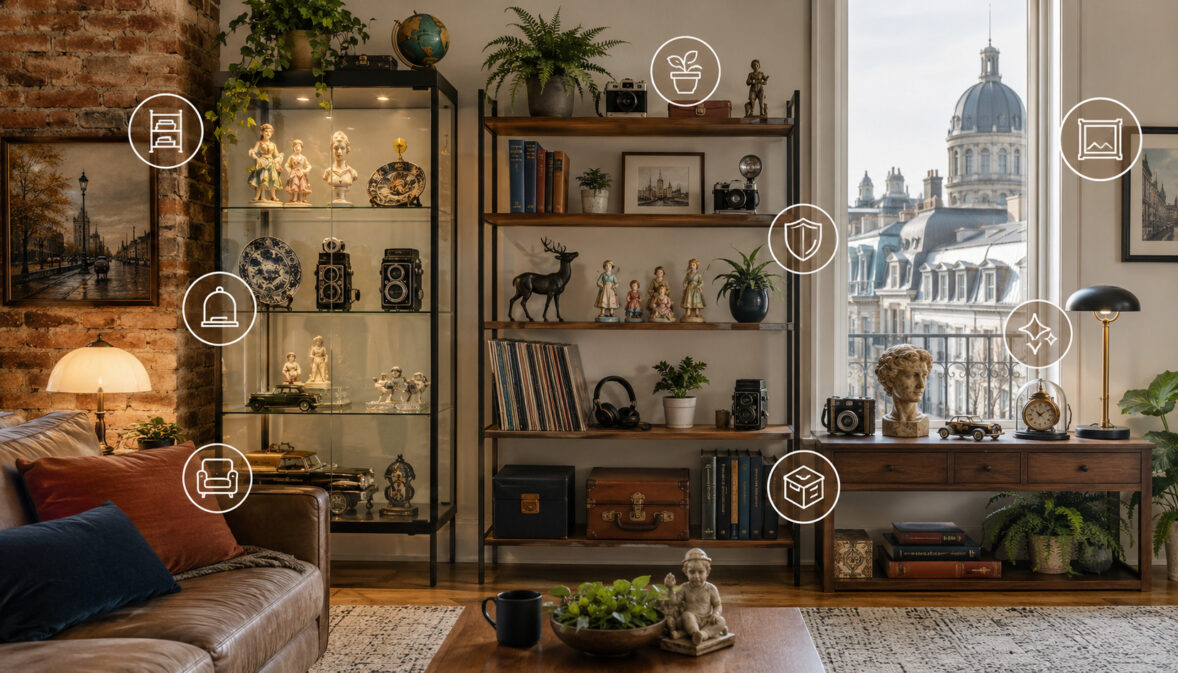
Collectibles can turn an ordinary room into a personal record of places visited, interests explored, and memories preserved. Vintage ceramics, framed art, old books, records, postcards, glassware, figurines, inherited objects, and flea-market discoveries can all contribute warmth and character to a home.
Learning how to display collectibles in Montreal homes is especially useful when working with compact apartments, shared spaces, older architectural details, rental restrictions, and rooms that serve several purposes.
A studio may need one shelf to provide both storage and decoration, while an older flat might offer high walls, narrow alcoves, built-in cabinets, or decorative moulding that can inspire creative arrangements.
The goal is not to put every treasured object on view. Successful collectible displays feel intentional, remain easy to maintain, protect delicate pieces, and allow the most meaningful items to stand out.
This guide explains practical collectibles display ideas for homeowners, renters, students, vintage décor lovers, antique enthusiasts, and anyone who wants to decorate with secondhand objects. It covers sorting, shelves, cabinets, gallery walls, lighting, storage, safety, clutter control, maintenance, and responsible collecting.
What Does It Mean to Display Collectibles in Montreal Homes?
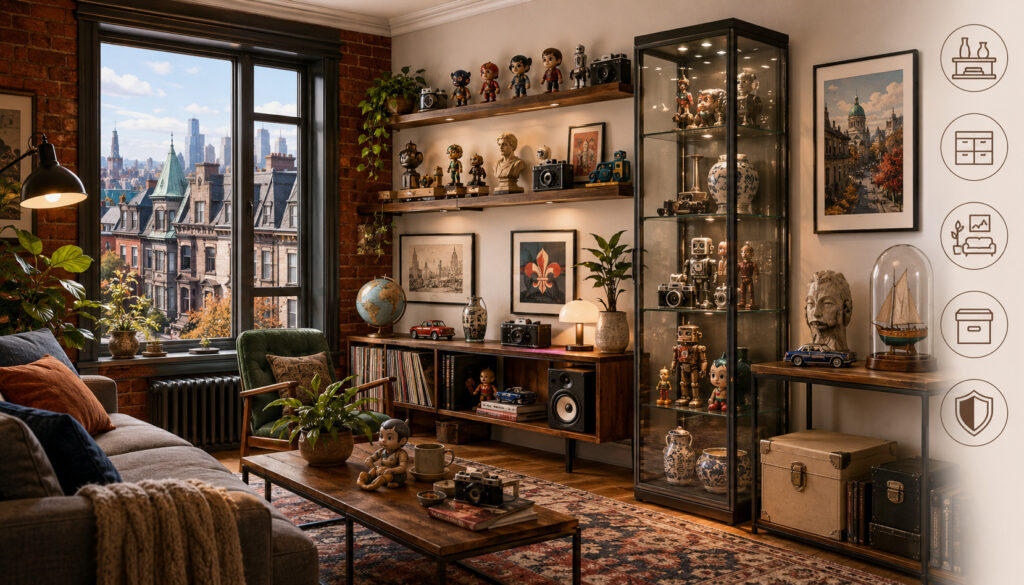
To display a collection means arranging selected objects so they look connected to the room rather than temporarily placed there. The arrangement should support the objects visually, provide adequate protection, and make the collection easy to enjoy.
The best ways to display collectibles at home depend on the type of collection, available space, household activity, and the amount of maintenance the owner is willing to manage. Open shelves may work beautifully for sturdy ceramics, while paper, fragile glass, or inherited keepsakes may benefit from enclosed cases, frames, or shadow boxes.
A successful display normally combines three elements:
- A clear visual relationship between the objects
- A safe and practical location
- Enough empty space to appreciate individual pieces
Collectibles Are More Than Clutter
Collectibles often represent personal history rather than simple decoration. A postcard may recall a trip, a bowl may have belonged to a relative, and a record collection may reflect years of musical discovery. Even inexpensive bric-à-brac can carry emotional meaning when it is connected to a particular neighbourhood, occasion, hobby, or relationship.
Thoughtful home styling with collectibles helps communicate these stories. Grouping objects by memory, place, colour, material, or purpose allows visitors to understand why the pieces belong together.
A collection also gives Montreal home decor a sense of individuality. Vintage finds prevent a room from looking copied directly from a catalogue, while handmade objects, local art, old books, and thrifted decor can introduce texture and history.
The difference between a meaningful collection and visual clutter is usually editing. When collectors choose what to show, arrange it with care, and leave room around important objects, even humble pieces can feel special.
Why Display Planning Matters
Without a plan, collectibles tend to spread across tables, counters, windowsills, and bookcases. Each item may be interesting on its own, but the overall room can begin to feel disorganized. Fragile pieces may also end up near edges, heat sources, direct sunlight, or busy walkways.
Planning begins by examining the collection and the room together. A collector should consider shelf dimensions, wall strength, furniture placement, natural light, pets, children, dust, cleaning routines, and rental requirements before deciding where an object belongs.
A basic plan also prevents unnecessary purchases. Someone who knows that only one narrow wall is available can search for a suitable wall cabinet rather than buying several tabletop stands that occupy valuable surfaces.
Good planning does not make a home feel formal. It creates a flexible structure within which personal, playful, and eclectic objects can be enjoyed safely.
Collectibles Display Ideas at a Glance
Different display methods solve different decorating problems. Before buying shelves or moving furniture, compare the collection’s size, material, fragility, and visual character with the available space.
| Display Method | Best For | Why It Works | What to Watch |
| Floating shelves | Small objects, framed art and ceramics | Saves floor space | Wall type and weight limits |
| Glass cabinets | Fragile or detailed collectibles | Reduces dust and handling | Floor space and reflections |
| Shadow boxes | Pins, medals, postcards and keepsakes | Creates a framed story | Interior depth and secure mounting |
| Gallery walls | Art, plates, photographs and prints | Uses vertical space | Spacing and visual balance |
| Open shelving | Books, records and sturdy decor | Easy to rearrange | Dust buildup |
| Tray displays | Small grouped objects | Defines a clear boundary | Overcrowding |
| Wall hooks | Baskets, textiles and lightweight tools | Adds texture without shelving | Secure installation |
| Bookcase styling | Mixed collections | Combines storage and display | Too many competing objects |
| Rotating displays | Large collections | Keeps rooms fresh | Organized storage |
| Tabletop vignettes | Favourite pieces | Adds character to furniture | Loss of usable surface space |
These methods can be combined. A bookcase might hold books and ceramics, while a shadow box above it presents small paper keepsakes.
How to Use the Table
Start by identifying the most vulnerable object in the group. When a collection contains fragile glass, paper, textiles, and sturdy metal objects, the display decision should account for the item most likely to fade, fall, collect dust, or be damaged through handling.
Next, identify the available location. A narrow apartment may offer more wall space than floor space, making ledges, shadow boxes, or floating shelves more practical than a large cabinet. A home with active children or pets may require enclosed storage or higher placement.
Maintenance also matters. Open shelving provides immediate access but requires regular dusting. Glass display case ideas offer greater protection, yet glass doors and panels still need cleaning.
Finally, consider how often the collection changes. Permanent displays can use fitted shelves and carefully planned framing. Collections that grow quickly are better suited to adjustable shelving, modular bookcases, trays, or rotating arrangements.
Why the Best Display Depends on Space
A display that works in a large detached home may overwhelm a small apartment. Large rooms can accommodate freestanding curio cabinets, broad gallery walls, and oversized furniture. Compact homes often benefit from narrow cabinets, wall-mounted storage, shelf ledges, and displays that occupy unused corners.
A small apartment collectible display should preserve clear walkways and useful surfaces. Instead of placing objects on every table, create one concentrated display area. This approach makes the collection more noticeable while allowing the rest of the room to remain functional.
Rental units introduce another consideration. Residents may need to avoid heavy mounting systems or permanent wall alterations. Freestanding bookcases, leaning frames, tabletop arrangements, and lightweight ledges may be more appropriate.
These collectible display ideas for Montreal apartments offer additional inspiration for using vertical storage, renter-friendly features, and carefully selected vintage pieces in compact rooms.
Steps One and Two: Sort Collectibles and Choose a Theme
Sorting is the foundation of organized collectible storage and display. Bring related objects together and examine their materials, sizes, colours, condition, sentimental importance, and protection needs.
Useful sorting categories include:
- Ceramics, porcelain and glass
- Books, records and magazines
- Framed art, photographs and prints
- Figurines and small sculptures
- Coins, stamps, pins and medals
- Postcards, letters and maps
- Textiles, baskets and handmade objects
- Heirlooms and travel souvenirs
Once the collection is visible as a whole, decide whether the display will be based on colour, material, era, subject, location, shape, mood, or story. A theme gives mixed objects a shared visual purpose.
Group by Type, Colour or Story
Grouping by type is one of the easiest approaches for beginners. Several ceramic vases placed together appear more intentional than the same vases scattered throughout a home. Books, cameras, glass bottles, figurines, records, and framed postcards can each form a recognizable collection.
Colour grouping works well when objects come from unrelated periods or categories. Blue glass, blue-and-white ceramics, illustrated books, and a small framed print can form a coordinated shelf even when their histories are different. Repeating one colour elsewhere in the room strengthens the connection.
Story-based themes offer greater personal meaning. A shelf might combine travel photographs, a ticket, a small sculpture, and a book associated with one destination. Another display could present family objects, neighbourhood discoveries, music memorabilia, or handmade pieces.
The theme should be easy to explain in one sentence. If the connection is difficult to identify, remove a few items and simplify the arrangement.
Choose What Deserves to Be Seen
Not every collectible needs to remain on display. Editing helps valuable, beautiful, or sentimental pieces receive attention instead of becoming lost in a dense arrangement.
Select objects according to:
- Emotional importance
- Visual interest
- Condition
- Compatibility with the room
- Safety in the proposed location
- Ease of cleaning
- Relationship to the display theme
Duplicates, seasonal pieces, highly fragile items, and objects that do not fit the current arrangement can be stored for later rotation. Storage does not make them less important; it protects them while creating space for other pieces to be appreciated.
Try placing the chosen objects on a table before moving them to their final location. Remove one item at a time and observe whether the group becomes clearer. This editing process is especially helpful when organizing bric-à-brac, where different shapes and materials can compete for attention.
Steps Three to Five: Match the Room, Use Vertical Space and Build Vignettes
Every room has different display opportunities. Living rooms can support bookcases, cabinets, gallery walls, and coffee-table trays. Kitchens and dining rooms can feature selected ceramics, serving pieces, glassware, vintage tins, cookbooks, or food-related art.
Bedrooms suit personal keepsakes, framed photographs, books, jewellery boxes, and small artwork. Hallways can hold shallow picture ledges or carefully spaced frames, while home offices provide natural settings for books, cameras, maps, records, or hobby-related pieces.
Avoid forcing a collection into a room where it feels unrelated or inconvenient. The best apartment decor with collectibles supports how the room is already used.
Living Rooms, Kitchens and Small Nooks
In a living room, anchor the collection to an existing piece of furniture. A cabinet, console, mantel, sideboard, or bookcase provides visual structure. Keep frequently used surfaces partly clear so the display does not interfere with drinks, reading, entertaining, or everyday movement.
Kitchen and dining displays should be selective. A row of attractive plates, sturdy vintage tins, or decorative glassware can add character, but objects should not crowd food-preparation areas. Pieces that are difficult to clean may be better placed behind glass or away from cooking residue.
Do not overlook small nooks. The wall above a desk, the end of a hallway, a corner beside a window, or the space over a low cabinet may accommodate a focused display.
Collections usually feel more connected to the home when their materials, colours, and scale complement the surrounding furniture.
A room-by-room guide to Montreal home decor with vintage finds provides useful ideas for styling shelves, gallery walls, ceramics, framed pieces, entryways, kitchens, and living-room focal points without making rooms feel crowded.
Floating Shelves, Tall Bookcases and Grouped Vignettes
Vertical space is valuable in Montreal apartments because it allows residents to decorate without reducing usable floor area. Floating shelves and picture ledges work well for lightweight framed pieces, small sculptures, ceramics, and changing arrangements. Always follow the shelf manufacturer’s weight guidance and choose mounting hardware appropriate for the wall.
Tall bookcases provide both visible display and hidden storage. Place visually heavier objects on lower shelves and lighter pieces higher up. Narrow cabinets can fit beside desks, between windows, or in shallow corners where wider furniture would obstruct movement.
Within each shelf, create a vignette rather than a straight line of unrelated objects. Combine three to five items with different heights. Use a short stack of books, a sturdy box, or a purpose-made stand as a riser.
Leave empty areas around the group. Negative space gives the eye somewhere to rest and helps small objects appear more important.
Steps Six to Eight: Protect Fragile Pieces and Use Cabinets and Walls Wisely
Protection should influence every display decision. Fragile items need stable surfaces, adequate spacing, and locations away from repeated contact. Paper, textiles, photographs, and some finishes can be sensitive to light, heat, moisture, and poor handling.
Before displaying any object, examine the base, frame, hanging hardware, joints, and existing damage. Do not assume an old hook, wire, adhesive strip, shelf, or stand remains secure simply because it has held the item before.
For rare, historic, inherited, insured, unusually delicate, or potentially valuable objects, seek appropriate professional guidance before cleaning, mounting, repairing, or exposing them for extended periods.
Glass Cabinets for Fragile Collectibles
Display cabinets for collectibles are useful when a collection includes glassware, porcelain, miniature objects, intricate figurines, or items that attract frequent handling. Enclosed shelving limits dust and provides a physical barrier from pets, children, visitors, and everyday accidents.
A cabinet should still be styled with restraint. Arrange items by height and give each piece enough room to be seen from the front. Use stable risers to lift smaller objects at the back, but avoid stacking fragile pieces or allowing objects to touch the doors.
Check that shelves sit securely and can support the intended weight. Heavy ceramics and glass should generally remain on lower, stable shelves.
Enclosures reduce some risks but do not eliminate concerns involving light, heat, moisture, or unstable furniture. General preventive collection-care guidance emphasizes considering the display location, fittings, handling procedures, and surrounding environment together.
Gallery Walls, Shadow Boxes and Wall-Mounted Displays
Wall display ideas for collectibles can include framed prints, paintings, photographs, plates, mirrors, textiles, shallow ledges, baskets, peg rails, and small shelves. A gallery wall becomes easier to plan when one element connects the pieces, such as a repeated frame colour, similar subject matter, consistent spacing, or shared visual tone.
Lay framed pieces on the floor first and photograph several arrangements. Begin with the largest item and build outward, checking the total width against the furniture below. The composition should feel related to the sofa, console, bed, or desk rather than floating randomly on the wall.
Shadow boxes are effective for postcards, pins, medals, tickets, shells, small tools, jewellery, and tiny vintage finds. They keep related objects together while turning them into a single framed story.
Use secure mounting methods and avoid placing heavy or breakable objects directly over beds or frequently occupied seating.
Steps Nine to Twelve: Display Books, Paper, Ceramics, Art and Larger Objects
Different materials should not automatically receive the same display treatment. A ceramic bowl can usually tolerate open shelving better than a fragile letter or faded photograph. Books require proper support, while framed works need reliable hanging hardware.
Material awareness also helps collectors avoid unsuitable cleaning methods. A product that appears harmless on modern glass may damage an old finish, label, painted surface, adhesive, or repair.
The following ideas are educational starting points rather than conservation instructions. Special objects should be reviewed by a qualified professional before significant cleaning, repair, framing, or long-term display.
Books, Records and Paper Collectibles
Books and records add colour, texture, height, and personality to shelves. Arrange books upright with adequate support, or place a small number horizontally to create a riser. Avoid forcing books into a shelf that is too short or allowing heavy volumes to lean sharply for long periods.
Records should be supported vertically rather than stacked in an unstable tower. Display a favourite album cover on a secure stand while keeping the remaining records organized nearby.
Postcards, maps, prints, magazines, letters, and photographs can be shown in frames, archival-quality sleeves selected for the material, or enclosed cases. Avoid taping original paper directly to walls or placing it where condensation, cooking moisture, or frequent touching is likely.
Paper and books are vulnerable to light, heat, pests, physical forces, and moisture-related problems, so collectors should consult reliable paper and book care guidance for special pieces.
Ceramics, Glassware, Figurines and Small Sculptures
Display vintage collectibles made from ceramic or glass on shelves that are level, stable, and deep enough to support the entire base. Avoid crowding. When objects touch one another, a small bump can transfer force across the group and cause chips or breakage.
Group pieces by shape, colour, glaze, transparency, origin, or function. A row of similar forms creates rhythm, while one contrasting piece can become the focal point. Place taller items toward the back only when they remain visible and cannot tip onto smaller objects.
Do not lift a vessel by a handle, rim, spout, or decorative projection unless its construction is known to be secure. Support the body with both hands when moving it.
Detailed ceramic and glass care information discusses risks from physical force, unsuitable handling, deposits, moisture, and other environmental factors.
Framed Art, Prints and Mirrors
Hang framed art at a comfortable viewing height and relate it to nearby furniture. A single work above a sofa or sideboard should feel connected to the furniture’s width. A group of small works can occupy a similar visual area when the spacing remains consistent.
Mixing old and new frames can produce a relaxed, collected appearance. Create unity through one repeated element: dark wood, gold accents, white mats, similar spacing, or a shared colour in the artwork. Avoid making every frame compete for attention.
Inspect wires, hooks, backing materials, frame corners, and wall anchors before hanging anything. Large mirrors and heavy frames require mounting appropriate for their weight and the wall structure.
Keep framed paper and textiles away from persistent direct sunlight. Light damage accumulates over time, and highly sensitive materials may fade or weaken even when the change is not immediately visible.
Functional Furniture and Larger Collectibles
Some collectibles can contribute practical value. A vintage trunk may provide storage, a small table can hold a lamp, and a decorative chair may offer occasional seating. Baskets can organize blankets, records, or magazines while adding texture to a room.
Function should not come at the cost of damaging the object. Do not place drinks, plants, hot items, or heavy equipment on a collectible surface without considering the finish, construction, condition, and stability.
Large objects should not block doors, windows, heating equipment, vents, or natural walking routes. Leave enough clearance to move comfortably through the room and to clean around the object.
A large collectible often works best as a single focal point. Instead of surrounding an unusual chair, screen, trunk, or lamp with many smaller objects, allow it to define the area and use a limited number of supporting accessories.
Steps Thirteen to Fifteen: Add Lighting, Balance Storage and Control Clutter
Lighting makes collections easier to appreciate, but the brightest location is not always the safest. Soft lamps, low-heat cabinet lighting, picture lights, and carefully positioned LED strips can highlight shape, colour, and texture without turning the display into a harsh showroom.
Visible display should also be balanced with organized storage. Large collections become easier to enjoy when only a selected portion is shown at once. Rotation protects visual breathing room and allows different objects to receive attention.
Clutter control is not about removing personality. It is about deciding where the collection begins and ends.
Soft Lighting and Sunlight Awareness
Warm, indirect lighting can make ceramics, books, wood, brass, glass, and framed art feel welcoming. Position lamps so they illuminate the arrangement without creating glare on cabinet doors or mirrors. Conceal cords where possible and keep bulbs, fixtures, and electrical components safely separated from objects.
Cabinet lights should not produce noticeable heat around sensitive materials. Check the enclosure after the lights have been operating and follow the lighting system’s installation and ventilation requirements.
Natural light changes throughout the day and across seasons. Observe the proposed display location in the morning, afternoon, and evening before placing sensitive objects there.
Direct sunlight can fade paper, textiles, photographs, artwork, book covers, and some surface finishes. Curtains, blinds, relocation, reduced display time, or rotating sensitive pieces can help limit exposure, although specialist advice is appropriate for valuable materials.
Rotating Collections and Using Negative Space
Rotating displays allows collectors to keep a large collection without filling every available surface. Choose a manageable group for the current arrangement and store the rest by category, material, fragility, or theme.
Label storage containers clearly and keep a simple inventory. Photographs can help identify which items are stored together. Use supportive packing materials appropriate for the object, and avoid placing heavy items on top of delicate ones.
When changing a display, remove everything and clean the surface before rebuilding it. Starting with an empty shelf encourages a fresh arrangement rather than simply squeezing new objects into existing gaps.
Negative space is an active part of the design. Empty shelf areas create separation, improve visual balance, and make cleaning easier. Before adding another object, ask whether it strengthens the theme or merely fills an available spot.
Steps Sixteen and Seventeen: Create Rental-Friendly Displays and Maintain Them
Renters can create stylish collectible displays without making major structural changes. Freestanding bookcases, modular cubes, narrow cabinets, carts, tabletop trays, leaning frames, and furniture-backed arrangements can move between homes and adapt to different layouts.
Before using wall-mounted storage, review the lease and building rules. Understand what types of fasteners, holes, adhesives, or repairs are permitted. Lightweight does not automatically mean safe for every wall surface, so follow product instructions and avoid unsupported improvisation.
Maintenance should be planned before a display is installed. A beautiful shelf that is difficult to reach, dust, or inspect may eventually become neglected.
Renter-Friendly Ideas for Small Apartments
A freestanding bookcase can provide a small apartment collectible display without requiring permanent shelving. Choose a unit that fits the available wall, does not block heating or ventilation, and can be stabilized appropriately.
Picture ledges supported on approved surfaces allow framed pieces to lean rather than requiring a separate hook for every item.
Decorative trays create movable collections on dressers, consoles, desks, or carts. Lightweight objects can sometimes be displayed with removable systems, but users should verify compatibility with both the product and the wall finish.
Furniture can also become part of the display. A low cabinet provides enclosed storage below and a controlled vignette above. A desk hutch can combine books, framed art, and small objects without consuming another wall.
The most useful collectible display ideas for Montreal apartments are flexible, compact, and easy to revise when furniture or living arrangements change.
Dusting and Routine Maintenance
Dust open displays regularly so buildup does not become difficult to remove. Clear nearby surfaces before handling objects, work with one item at a time, and use gentle methods suitable for the material. Avoid spraying cleaner directly onto collectibles.
Check shelves, brackets, frames, hooks, cabinet doors, stands, and furniture stability during cleaning. Look for new cracks, loose parts, leaning frames, moisture, pest activity, fading, corrosion, or changes in the object’s surface.
A practical schedule might include light dusting as needed, a monthly stability check, and a more detailed seasonal review. Displays near kitchens, open windows, entrances, or high-traffic areas may require more frequent attention.
Do not experiment with harsh chemicals, household polishes, adhesives, or repairs on special objects. Seek qualified advice for rare, historic, inherited, fragile, or potentially valuable pieces.
Steps Eighteen to Twenty: Tell a Story, Shop Intentionally and Blend Old With New
A strong display is more than a coordinated group of colours. It communicates why the objects matter. Stories may relate to family, travel, music, art, literature, local shopping, craftsmanship, or a particular period.
Collectors can strengthen these stories through simple labels, small cards, notebooks, photographs, or digital records. Documentation is especially helpful when an object’s history might otherwise be forgotten.
Future purchases should support the available space and collection theme. Intentional shopping reduces clutter and makes responsible collecting more sustainable.
Personal Stories and Simple Documentation
A shelf becomes more memorable when viewers understand the relationship between its objects. A camera beside a photograph it captured, a cookbook beside inherited serving pieces, or a travel book beside postcards and a small souvenir creates an immediate narrative.
Labels do not need to make a home resemble a museum. A discreet card inside a cabinet, a note beneath a shadow box, or a private collection notebook may be enough. Record names, dates when known, locations, maker marks, measurements, purchase information, family stories, and condition observations.
Photograph important pieces from several angles. Keep related receipts, research notes, professional reports, and restoration records together where appropriate.
These records support organization and responsible collecting. They can also help family members understand why an apparently modest object carries personal significance.
Shop With the Future Display in Mind
Before buying another collectible, ask where it will be displayed and whether it supports an existing theme. Measuring the available shelf, wall, cabinet, or tabletop can prevent purchases that eventually become storage problems.
This guide to shopping for bric-à-brac without bringing home clutter explains how planning, condition checks, space limits, and thoughtful selection can lead to fewer but more suitable finds.
A useful purchase should meet at least one of these goals:
- Strengthen an existing collection
- Complete a visual group
- Replace a less meaningful item
- Serve a practical function
- Introduce a needed colour, shape, or scale
- Preserve a story or personal connection
Browsing vintage decor Montreal selections can provide inspiration, but inspiration should not become an obligation to buy. Pause when an object has no clear location or requires storage you do not have.
Responsible collecting values quality, meaning, and compatibility over quantity. It also leaves room for future discoveries.
Blending Old and New Without Creating a Museum Look
Vintage and antique pieces can add warmth to modern interiors, while contemporary furniture can give old objects a cleaner visual setting. The contrast often works best when one element is repeated across both styles.
A modern black bookcase can connect with dark details in old frames. A simple sofa can provide a calm background for a patterned textile or sculptural lamp. Contemporary white shelves can make colourful ceramics feel fresh rather than formal.
Avoid arranging every old object together simply because it is old. Mix pieces according to colour, scale, function, or mood. One antique frame among modern prints may feel more natural than a wall where every frame demands attention.
Collectible Display Checklist
Use this checklist before installing shelves, rearranging a room, buying a cabinet, or adding a new collection.
| Checklist Area | What to Review | Why It Matters | Priority |
| Theme | Colour, material, story or category | Creates visual order | High |
| Space | Wall, shelf, cabinet or tabletop | Matches display to the room | High |
| Safety | Stability, mounting and breakage risk | Protects people and objects | High |
| Light | Sunlight and accent lighting | Reduces fading and heat exposure | High |
| Dust | Open or enclosed display | Determines maintenance needs | Medium/High |
| Scale | Object size and room size | Prevents crowding | High |
| Storage | Extra items and rotation system | Controls clutter | High |
| Material | Paper, glass, ceramic, wood, textile or metal | Guides handling and placement | High |
| Rental limits | Lease and wall requirements | Avoids unsuitable alterations | Medium/High |
| Story | Labels, notes and grouping | Preserves meaning | Medium |
The checklist can also be applied to individual objects. A fragile framed letter may receive different answers from a sturdy ceramic vase, even when both belong to the same collection.
How to Use the Checklist
Review the high-priority areas first. Confirm that the proposed location is physically suitable, the object is stable, the mounting method is appropriate, and the light exposure is acceptable. If one of these conditions cannot be met, choose another display method.
Next, evaluate visual considerations. Does the object support the theme? Is its scale appropriate for the shelf or wall? Will it remain visible, or will larger objects hide it? Is there enough negative space?
Finally, consider maintenance and future growth. Can the display be cleaned without moving ten fragile objects? Is storage available when the collection rotates? Can the arrangement accept one additional piece, or is it already complete?
Repeating this review before every major rearrangement helps collectors organize collectibles at home without relying on impulse or guesswork.
Records to Keep for Special Collectibles
Special objects benefit from simple, organized documentation. Keep clear photographs showing the front, back, base, maker marks, labels, signatures, and existing damage. Record dimensions so future shelves, frames, cabinets, or storage containers can be planned accurately.
Retain receipts, family notes, research, correspondence, professional reports, and known repair or restoration details. Store physical documents separately from objects when direct contact could create damage.
A digital inventory can include:
- Object description
- Material and approximate size
- Acquisition source
- Known history
- Current display or storage location
- Condition observations
- Related documents
- Date of the latest photograph
Documentation should not be treated as an informal appraisal. Rare, expensive, inherited, historic, insured, or potentially valuable items should be reviewed by an appropriate professional when appraisal, conservation, restoration, insurance, or authentication questions arise.
Common Mistakes and Best Practices for Stylish Collectible Displays
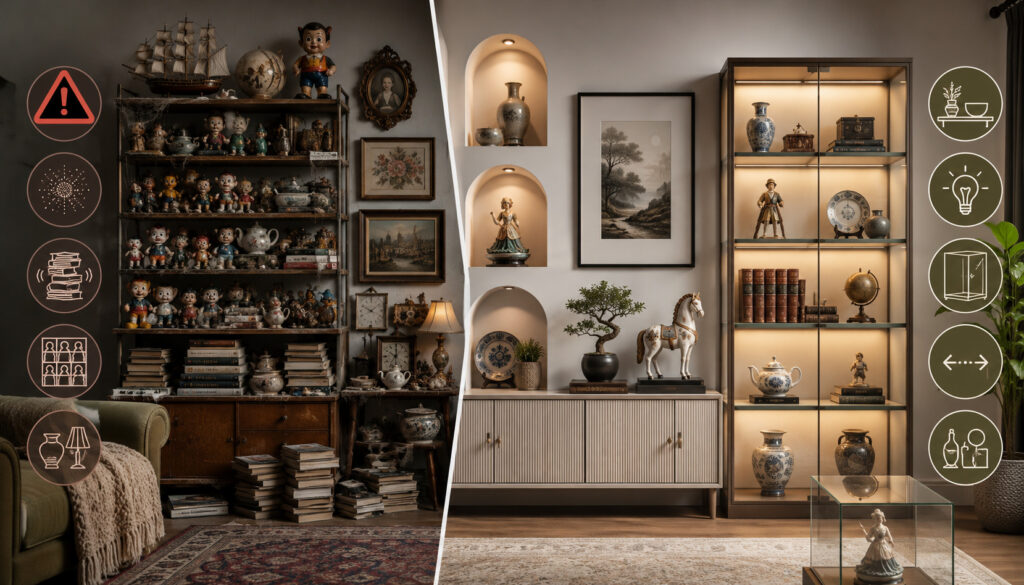
Many display problems come from adding objects without reviewing the room as a whole. Too many themes, crowded surfaces, unstable shelves, direct sunlight, inaccessible cleaning areas, and unsuitable mounting systems can reduce both safety and visual appeal.
Another common mistake is purchasing display furniture before measuring the collection. A cabinet may look attractive but contain shelves that are too shallow, too weak, or too widely spaced for the intended objects.
Successful home collectible display ideas begin with the collection, the room, and the household’s daily routines—not with a decorative product.
Overcrowding and Ignoring Protection Needs
When every shelf, table, windowsill, and cabinet top is full, individual objects disappear into the background. Overcrowding also makes dusting more difficult and increases the chance that one item will be knocked into another.
Limit each display to a clear visual group. Repeat colours or materials, vary heights, and leave visible gaps. Store or rotate anything that weakens the arrangement.
Protection needs should never be sacrificed for appearance. Avoid placing fragile objects on narrow ledges, unstable furniture, table edges, radiators, busy passageways, or surfaces regularly reached by pets or children.
Paper, textiles, old books, photographs, wood finishes, ceramics, and glass each respond differently to their surroundings. When the care requirements are uncertain, choose a conservative placement and seek appropriate guidance before cleaning, repairing, framing, or mounting the object.
Best Practices to Display Collectibles in Montreal Homes
Use these practical habits when planning or refreshing a collection:
- Sort objects before displaying them.
- Choose a clear theme, colour relationship, or story.
- Use vertical space in compact rooms.
- Group similar pieces instead of scattering them.
- Leave negative space around focal objects.
- Use enclosed cabinets for delicate or dust-sensitive pieces.
- Keep paper and textiles away from persistent direct sunlight and moisture.
- Measure walls, shelves and furniture before installation.
- Confirm weight limits and mounting requirements.
- Rotate collections rather than displaying everything.
- Keep arrangements accessible for cleaning.
- Store extra pieces by category and fragility.
- Follow lease and building rules.
- Ask where a new purchase will go before buying it.
- Seek professional help for rare, historic, inherited, fragile, insured, or valuable objects.
These principles support stylish collectible displays without making the home feel crowded or overly formal.
How to Refresh Displays and Decide What to Store
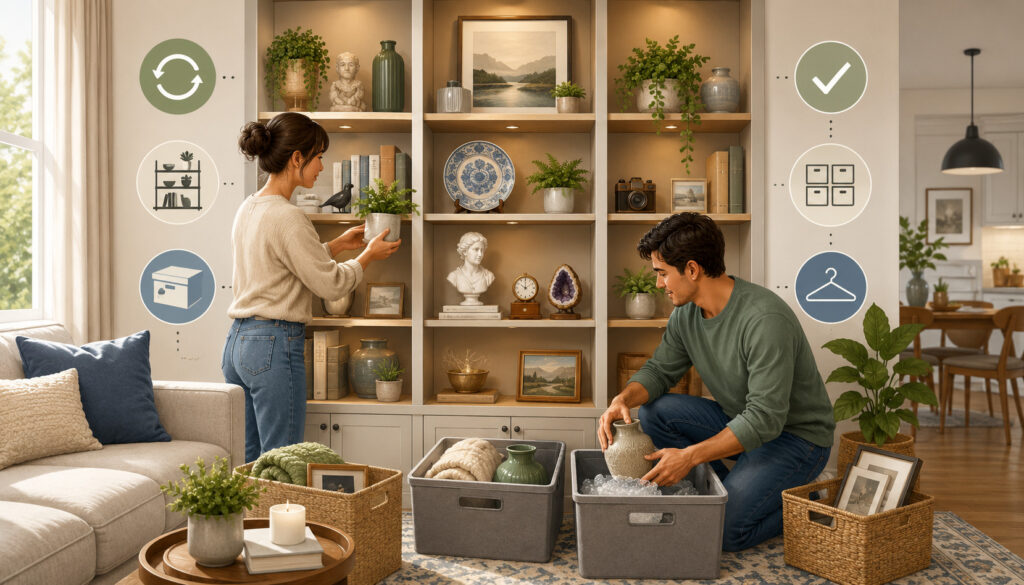
Displays should change as a collection, home, or lifestyle changes. A rearrangement may be helpful after moving furniture, adding a new piece, changing room use, or noticing that a shelf feels crowded.
Refreshing does not require buying more. Moving objects between rooms, changing the background, adjusting lighting, introducing a different book stack, or rotating stored pieces can make familiar collections feel new.
The final decision should balance emotional value, appearance, safety, space, theme, and maintenance.
Seasonal Changes and Reviewing What Still Fits
Seasonal rotation can refresh a collection without requiring additional purchases. A few ceramics, framed prints, books, textiles, or small decorative objects can be exchanged while the main shelves and furniture remain unchanged.
Readers looking for practical rotation and storage inspiration can explore these seasonal vintage décor ideas for Mont-Royal homes, which include renter-friendly arrangements, small-space styling, vignettes, and methods for keeping seasonal objects organized.
Personal taste also changes. An object that once defined a collection may no longer fit the room or the collector’s interests. It can be stored, moved elsewhere, passed on responsibly, or incorporated into a different display.
Do not retain an arrangement solely because it took time to create. A home should respond to the people living in it. Regular editing helps secondhand decor Montreal enthusiasts maintain collections that feel personal rather than burdensome.
The Five-Question Display Test
Before placing an object, ask:
- Do I enjoy seeing it regularly?
- Does it fit the room’s scale, colour, function, or story?
- Is the object safe in this location?
- Does it strengthen the collection rather than crowd it?
- Can I clean and maintain it here?
An object that receives five positive answers is a strong display candidate. One that fails on safety, light, stability, or maintenance should be moved or stored, even if it looks attractive in the proposed location.
Storage is often the better choice for light-sensitive paper, rare pieces, seasonal objects, duplicates, extremely fragile items, and anything that cannot be displayed securely. Rotation allows these objects to be enjoyed later without sacrificing protection or visual order now.
The best display is not the one that holds the most. It is the one that makes each selected object easier to notice and appreciate.
Frequently Asked Questions
How can I display collectibles in Montreal homes without creating clutter?
Choose one or two defined display areas rather than spreading objects across every surface. Group pieces by colour, material, category, or story, and leave empty space around important items.
Store or rotate the remaining collection. A cabinet, bookcase, gallery wall, or shelf usually looks more intentional when it contains a limited number of connected objects. Remove one item whenever a display begins to feel crowded, and reassess before adding anything new.
What are the best collectibles display ideas for small apartments?
Use floating shelves, narrow bookcases, picture ledges, shadow boxes, wall cabinets, trays, and vertical gallery arrangements. These methods use walls and furniture without occupying excessive floor space.
Choose multifunctional furniture where practical. A cabinet can provide concealed storage below and a display surface above. Avoid blocking windows, doors, heating equipment, or walking routes. Concentrating objects in one feature area often makes a small home feel more organized.
How do I protect collectibles from dust and sunlight?
Use enclosed cabinets, framed displays, shadow boxes, or covered containers for items that are difficult to dust. Keep sensitive materials away from persistent direct sunlight and observe how natural light changes throughout the day.
Clean displays gently and regularly. Do not spray products directly onto objects, and avoid assuming one cleaning method is suitable for every material. Special paper, textiles, photographs, finishes, and fragile objects may require professional care recommendations.
What is the best way to display vintage collectibles?
Begin with a theme and choose the strongest pieces. Combine different heights, use stable risers where appropriate, and repeat colours or materials to create unity.
Balance old objects with simple furniture or neutral backgrounds so their details remain visible. Display vintage collectibles where they can be enjoyed without frequent handling, impact, heat, moisture, or excessive light. Rare or delicate pieces may need enclosed or professionally designed display solutions.
How can I create a stylish collectible shelf?
Start with one focal object, then add a small number of supporting pieces. Vary heights and shapes while maintaining a shared colour, material, subject, or story.
Use books or stable boxes as risers, but do not create unsafe stacks. Leave part of the shelf empty and avoid lining every object along the front edge. Step back frequently to check balance. The shelf should look appealing from across the room as well as at close range.
Should collectibles be displayed in glass cabinets?
Glass cabinets are useful for fragile, detailed, dust-sensitive, or frequently handled collections. They create a visible boundary and reduce contact from pets, children, visitors, and cleaning activities.
A cabinet is not automatically suitable for every object. Check shelf strength, furniture stability, internal heat, natural light, humidity concerns, and access. Avoid overcrowding the interior, and leave enough room to remove individual pieces safely.
How do I organize a large collection at home?
Divide the collection into categories and select a limited group for display. Store the remainder in clearly labelled containers according to material, size, fragility, or theme.
Keep a simple photographic inventory showing where objects are displayed or stored. Rotate groups periodically instead of expanding the display onto every surface. A consistent system makes it easier to find pieces, notice condition changes, and decide whether new purchases genuinely strengthen the collection.
When should rare or valuable collectibles be stored instead of displayed?
Storage may be more appropriate when an object is extremely fragile, light-sensitive, unstable, difficult to secure, rarely used, or unsuitable for the home environment. It may also be preferable when the only available location creates risks from moisture, heat, impact, pets, children, or direct sunlight.
Rare, historic, inherited, insured, or potentially valuable items should receive appropriate professional review. Do not rely only on general decorating guidance when deciding how such objects should be cleaned, repaired, mounted, framed, displayed, or stored.
Conclusion
Learning how to display collectibles in Montreal homes requires creativity, restraint, practical planning, and attention to the needs of each object. A successful arrangement does not depend on having a large home, an expensive cabinet, or an extensive collection.
Begin by sorting objects and deciding which pieces deserve to be seen. Choose a theme, match the display to the room, and use shelves, cabinets, shadow boxes, gallery walls, bookcases, and trays according to the available space. In smaller homes, vertical arrangements and concentrated vignettes can provide personality without sacrificing useful floor area.
Protect fragile items with stable surfaces, sensible spacing, suitable enclosures, careful lighting, and regular maintenance. Rotate larger collections, maintain organized storage, and leave negative space so important objects can stand out.
Most importantly, let the collection tell a personal story. The strongest displays are not necessarily the largest or most valuable. They are the ones that feel meaningful, organized, safe, easy to enjoy, and naturally connected to the home.